The 23 Minutes That Broke Music Festivals Forever: Limp Bizkit’s “Break Stuff” at Woodstock ’99
On the night of July 24, 1999, in front of an estimated 200,000 people on a former U.S. Air Force base in Rome, New York, Fred Durst stepped to a microphone, looked out at one of the largest crowds of his life, and said the words that would follow him for the rest of his career: “Time to reach deep down inside, and take all that negative energy, all that negative energy, and let that shit out of your fucking system.”
The opening riff of “Break Stuff” detonated across the field. What happened in the next twenty-three minutes — from the first note of that song through the end of Limp Bizkit’s set — would become one of the most studied, debated, and replayed moments in modern rock history. It was the night a song designed as a cathartic anthem about workplace frustration helped trigger the collapse of one of the most ambitious music festivals ever staged. It was the night the entire idea of the American mega-festival died on camera, in front of a global broadcast audience.
And it was the night Limp Bizkit became, depending on who you ask, either the cause of the disaster or the convenient scapegoat for it.
To understand what happened during those twenty-three minutes, you have to understand the festival they happened at, the song that lit the fuse, and the band that had spent the previous twelve months becoming impossible to ignore.
Limp Bizkit had formed in Jacksonville, Florida in 1994. Their 1997 debut album Three Dollar Bill, Y’all had been produced by Ross Robinson, the man who had also produced Korn’s debut, and it had built them a respectable underground following through relentless touring and a ridiculous cover of George Michael’s “Faith.” But the band’s actual breakthrough came in June 1999, just five weeks before Woodstock, when their second album Significant Other was released. It debuted at number one on the Billboard 200. By the end of 1999, it would sell over six million copies in the United States alone and become the ninth-best-selling album of the year. Sixteen million copies worldwide, eventually.
“Break Stuff” was the album’s fourth single. The song had been written by Fred Durst, with a downtuned seven-string guitar riff from Wes Borland that gave it the kind of low-frequency punch that nu metal had been chasing since the genre’s inception. The lyrics were simple, direct, and almost universally relatable: “It’s just one of those days where you don’t wanna wake up. Everything is fucked. Everybody sucks.” It was a song about having a terrible day, hating your job, hating your circumstances, and wanting to break something. Within weeks of its release, it was being chanted in high school parking lots, college dorms, and skate parks across America.
Then came Woodstock ’99.
The festival had been conceived by promoter John Scher and Woodstock Ventures founder Michael Lang as the third installment of the original 1969 festival’s legacy. Three days of peace and music, the brand had once promised. By 1999, the modern equivalent meant something very different. Lang and Scher booked the festival on a decommissioned U.S. Air Force base — concrete, asphalt, and almost no shade. They priced bottled water at $4 ($7.50 in 2025 dollars). They charged $12 for pizza. The temperature on the ground reached 38°C (100°F). Drinking water from the festival’s free taps was reportedly contaminated with sewage from broken plumbing. Showers and bathrooms collapsed within 36 hours. By Saturday night — the second of the three festival days — the 200,000 people on site had been simmering in heat, dehydration, exhaustion, and rage for nearly forty-eight hours.
Limp Bizkit took the East Stage that Saturday evening, around 8 PM, immediately after a comparatively gentle run of acts that had included Counting Crows, Dave Matthews Band, and Alanis Morissette. Verne Troyer — Mini-Me from the Austin Powers films — introduced the band. Lars Ulrich, Puff Daddy, Kid Rock, Jonathan Davis of Korn, and Jennifer Aniston were all watching from the side of the stage. The cameras of MTV, pay-per-view television, and the festival’s own broadcast were rolling. The footage from that set has been preserved, dissected, and uploaded to YouTube tens of millions of times in the decades since.
The opening of the set was already chaotic. By the time the band reached “Nookie” early on, fans were dismantling the plywood barriers around the stage and crowd-surfing on the pieces. By the time they played a cover of Ministry’s “Thieves” about twenty minutes in, the violence in the front rows had reached a level that observers later compared to the berserker crowd scenes from Mad Max: Fury Road. Hundreds of fans were being carried to the festival’s medical tents. Sound technicians were being evacuated from the audio tower as audience members tore at it.
It was at this moment that Fred Durst introduced “Break Stuff.”
Festival staff had reportedly approached him between songs, asking him to calm the crowd. Durst had responded, on stage, with what would become one of the most-quoted statements of his career: “They wanna ask us to ask you to mellow out a little bit. They say too many people are getting hurt. Don’t let anybody get hurt, but I don’t think you should mellow out. Mellowing out? That’s what Alanis Morissette had you motherfuckers do. If someone falls, pick ’em up.”
He briefly riled the crowd up further by asking if they liked NSYNC, drawing a wave of boos and jeers. And then, during the song’s breakdown, came the line that would echo for the next twenty-five years: “Time to reach deep down inside, and take all that negative energy, and let that shit out of your fucking system.”
The crowd did exactly that.
In the minutes that followed, the audio tower was partially dismantled. Plywood from the stage barriers was ripped free and surfed across the crowd. Multiple incidents of sexual assault were later reported during the song. Durst’s microphone was cut off mid-set as the sound team evacuated. The footage from that performance, watched in 2026, is genuinely difficult to process — a band on stage performing one of the most cathartic songs of the era while the infrastructure of one of the largest festivals in American history physically came apart around them.
What happened next has been the subject of arguments for over two decades.
The popular narrative — pushed hardest by John Scher in the years afterward — was that Limp Bizkit had caused the riots that closed the festival. “You had a cheerleader in Fred Durst, who, if I haven’t said enough times, is a complete asshole,” Scher said in one interview. The image of Durst telling the crowd to break stuff while the festival burned down became, for an entire decade, the cultural shorthand for everything that had gone wrong with nu metal and with American festival culture.
The actual timeline tells a different story. The fires, the looting of vendor stalls, the exploding refrigeration truck, the full-scale rioting that ended Woodstock ’99 — these all happened on Sunday night, twenty-four hours after Limp Bizkit’s set, during and after the Red Hot Chili Peppers’ headlining performance. The band’s guitarist Wes Borland would point this out in a 2014 interview: “To watch the news reports of the mash-up of our day and the next day where the fires were — watching them cut footage of the fires, cutting that into our set at the same time, was just like, they were just like, let’s make this worse.”
Brian Hiatt, a journalist who covered the festival for the website Sonicnet and later spent a year investigating it, would write that the conditions of Woodstock ’99 — the heat, the contaminated water, the price-gouging, the lack of shade, the broken infrastructure, the absence of meaningful security — had made some kind of catastrophe inevitable long before Limp Bizkit took the stage. “The festival was a melting pot of sizzling tempers,” one later piece would put it, “before the band took the stage that weekend.”
But footage is footage. And the footage of Fred Durst telling 200,000 sunburned, dehydrated, furious people to let that shit out of your fucking system — while plywood ripped through the air and audience members destroyed the stage from the front — would, for the rest of his career, define him.
Trent Reznor, in an October 1999 Rolling Stone interview, would mock Durst directly: “Fred Durst can surf a piece of plywood up my ass.” The Simpsons would make jokes about the festival in the episode “It’s a Mad, Mad, Mad, Mad Marge.” Within days of Woodstock ’99 ending, Los Angeles concert promoters Goldenvoice would announce a new festival in the California desert — Coachella — designed explicitly as the anti-Woodstock, with free water, real bathrooms, and a curated lineup that would never include the kind of catharsis Limp Bizkit had unleashed in upstate New York.
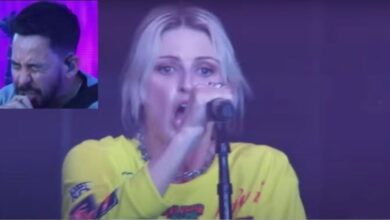
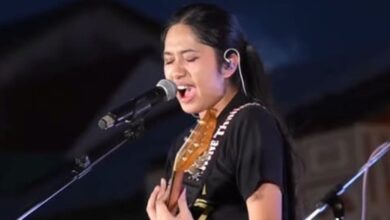
The legacy of those twenty-three minutes is genuinely strange. “Break Stuff” itself would be named Limp Bizkit’s greatest song by both Louder Sound and Kerrang! in 2022. In 2025, EA Games would license it as the main theme for Battlefield 6‘s multiplayer mode, putting the song in front of an entirely new generation of teenagers who had never heard of Woodstock ’99. Pussy Riot would cover it. K.Flay would cover it. The riff would become one of the most instantly recognizable pieces of music from the entire nu metal era.
When Limp Bizkit returned to perform “Break Stuff” at Lollapalooza in Chicago in 2021, twenty-two years after the disaster, Fred Durst stepped to the microphone before launching into the song and said: “Let me make this clear, this is not Woodstock ’99. Fuck all that bullshit.”
The band would never escape the night entirely. Neither would the festival.
Sometimes the most famous concert performances aren’t the ones a band wants to be remembered for. Sometimes they’re the ones that became too historically loud to forget.