‘Put Them On’: Layla Clark’s Band Inspires a Super Bowl Halftime Wish
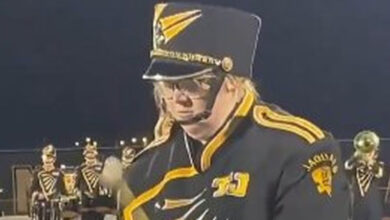
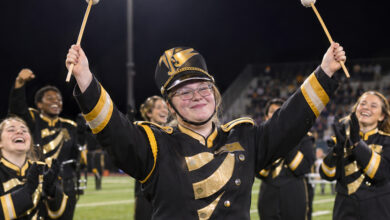
“Come on—put them on as the Super Bowl halftime show!” A fan’s request after watching Layla Clark play AC/DC’s “Thunderstruck” puts the emphasis on a whole group of students. Clark supplies the close-up that draws people into the recording. The Thomas Jefferson Jaguars supply the entrance that turns that opening into a marching-band performance.
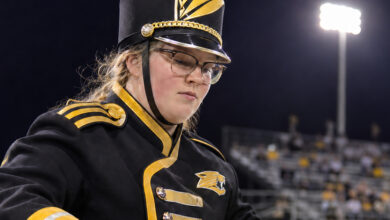
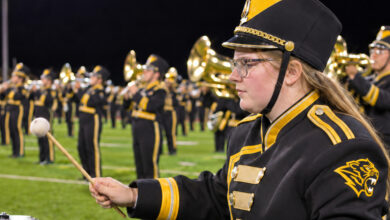
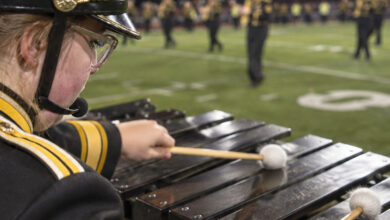
The setting already belongs to football: school uniforms, performers across the field and a familiar rock figure taking shape at the front. Instead of an electric guitar introducing the song, the audience sees mallets moving between bars. The recognizable pattern gives listeners a way into a performance they may have discovered without knowing anything about the school.
Stay with the clip after those first recognizable notes. The repeated figure continues while the players around Clark prepare to enter. When the larger sound arrives, the recording changes scale. A passage watched through one pair of hands becomes the beginning of an arrangement shared across the field.
KDKA Radio reported on November 6 that Clark’s mother recorded the circulating footage during the school’s 2025 marching season, when Clark was a junior. The renewed attention has reached her senior year. A performance originally made for a school crowd is now finding people who have no connection to the game in which it appeared.
Principal Pete Murphy told KDKA that the attention was a chance to recognize Thomas Jefferson’s students and music program. That wider setting remains visible behind the featured musician. The uniforms and the waiting ensemble are part of the recording from the start, even when the camera makes the mallet work the immediate focus.
The Super Bowl suggestion grows out of that relationship between an individual and an ensemble. It is easy to see why a viewer would want to give them another field: the opening establishes a musical expectation, and the Jaguars’ arrival delivers it. Watch the performance through the point at which the band joins.
Another view of the Jaguars’ rock program
A separate recording on the Jaguar Marching Band channel offers a broader look at the group. Its title identifies the performance as the postgame show against Ringgold on October 10, 2025; the upload is dated October 11. The distinction matters when comparing recordings: this is another show, rather than a newly filmed version of the short close-up.
The channel’s description lists “Welcome to the Jungle,” “Enter Sandman,” “Crazy Train,” “Thunderstruck,” “Back in Black” and “Hey Baby.” The program places the recognizable AC/DC opening among a larger run of rock material. It gives viewers a chance to follow the ensemble beyond the passage that first attracted their attention.
The wider framing changes what is easiest to notice. In the circulating clip, the repeated movement of the mallets holds the eye. In the longer recording, the field and the other players become a larger part of the experience. Together, the two views explain why the fan’s suggestion is about putting the band on a bigger stage.
Why a familiar riff makes room for a new audience
“Thunderstruck” asks little preparation from a rock listener. The opening is recognizable before the arrangement has expanded, so someone unfamiliar with school percussion can follow what is happening. The change of instrument adds another reason to watch: the movement across the bars makes the repeating pattern visible.
That visibility is part of the appeal of the close-up. There is time to notice where the next strike will land and how the player returns to the figure. The band’s entrance then gives those repeated movements a destination. Recognition, anticipation and a bigger sound follow one another within the same performance.
The student and the school behind the clip
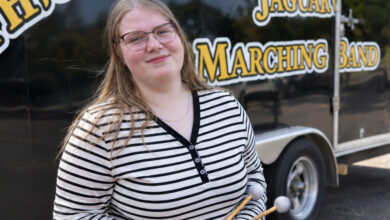
CBS Pittsburgh’s report brings the story back to Clark and Thomas Jefferson High School. The interview is a useful companion to the music: the person whose hands dominate the circulating recording can also be heard beyond the performance itself.
Seen together, the close-up, the separate postgame show and the local report keep the attention connected to a student and a school program. The fan’s halftime-show wish begins with what those recordings already offer: an opening people recognize, a musician they want to cheer for and an ensemble that makes the moment bigger.