The Band-Class Joke Behind Layla Clark’s “Thunderstruck” Praise
A viewer watching Layla Clark play AC/DC’s “Thunderstruck” had a playful suggestion for the school gradebook. “If she ain’t gettin’ high grades in band class, someone needs to examine the teacher,” @kegginstructure wrote on YouTube after praising her command of the instrument, timing and concentration.
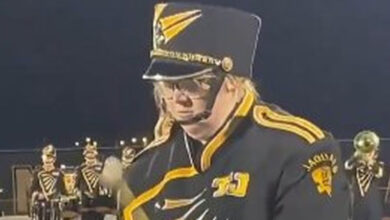
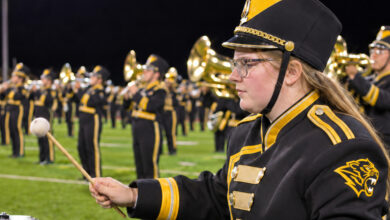
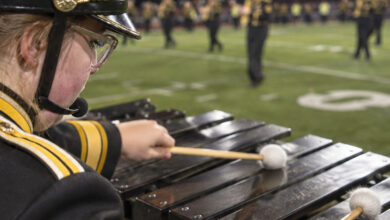
The joke follows a performance whose work is unusually easy to watch. Clark’s mallets move between the bars as the familiar opening repeats. The camera stays close enough for viewers to follow the returns to the figure, rather than seeing only a brief burst of fast movement.
AC/DC’s opening supplies an immediate reference point. Many listeners already know where the phrase is going, so each repetition creates another opportunity to follow the pattern. The change from electric guitar to mallet percussion gives that familiar line a different sound and a different physical shape.
The comment also singled out what appeared to the viewer to be a complex pattern played from memory. That is part of the listener’s appraisal. The visible detail is the continuing movement across the bars and the way the opening maintains its place before the ensemble’s sound grows around it.
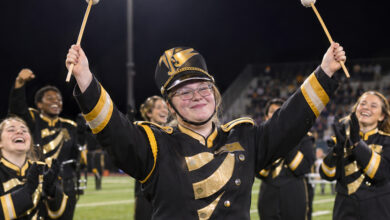
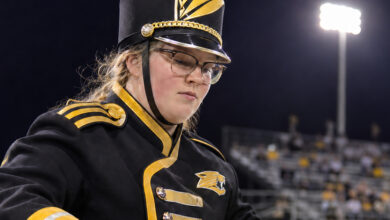
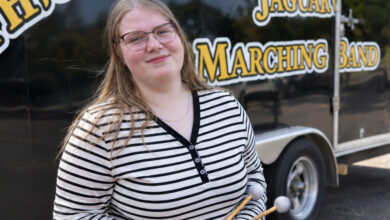
KDKA Radio reported that Clark has played percussion since seventh grade. The circulating recording comes from the school’s 2025 marching season and was filmed by her mother. That history puts the moment in the context of a student developing a part within a school music program.
Watch until the Thomas Jefferson Jaguars join the opening. The repeated mallet figure sets up an entrance for a much larger sound. The viewer’s imagined grade belongs to that sustained passage, with the band’s arrival showing where the preparation has been leading.
What the listener notices before the punch line
The gradebook remark is the final sentence of a longer comment. Before making the joke, the viewer praised Clark’s familiarity with her instrument, her timing and her concentration. Those are specific qualities to follow in the recording, even without knowing the written arrangement.
Begin with the spacing between the notes. The figure keeps returning, so a listener can follow the continuing pulse as well as the speed. Watching the mallets adds another layer: each strike is followed almost immediately by preparation for the next part of the pattern.
The close view gives the opening a clear visual focus, but it remains part of an ensemble arrangement. The other players have somewhere to enter because the repeated figure has already established what the audience is hearing. The impact comes from the relationship between the exposed beginning and the fuller sound.
The Jaguars’ complete program supplies another perspective
A separate recording on the Jaguar Marching Band channel documents the postgame performance against Ringgold on October 10, 2025. The upload, dated October 11, offers a longer view of the group. It is a companion recording, rather than a new date assigned to the circulating close-up.
Its description lists a rock program moving through “Welcome to the Jungle,” “Enter Sandman,” “Crazy Train,” “Thunderstruck,” “Back in Black” and “Hey Baby.” The field view lets the listener hear the recognizable AC/DC material within a set of selections played by the same school ensemble.
The familiar guitar line makes the translation audible
AC/DC’s official video provides a useful comparison after the school recording. Hear the guitar opening, then return to the movement of Clark’s mallets. The sound and the way the notes are produced change, while the opening remains identifiable to listeners who know the song.
That connection helps explain why the school performance reaches people outside a marching-band audience. A rock listener has a familiar line to follow before learning anything about the student playing it. The instrument can then hold the attention through the work visible on the bars.
The viewer’s gradebook joke gives that attention a school setting again. It is an affectionate verdict from a listener who has watched the part unfold and wants the student’s effort recognized. Follow the opening once for the riff, then again for the timing that prompted the compliment.