Why Miley Cyrus’s Metallica Duet Had Fans Asking for a Rock Covers Album
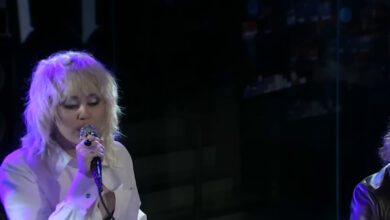
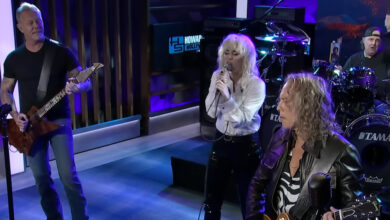
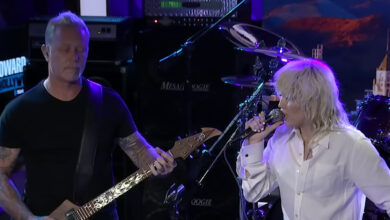
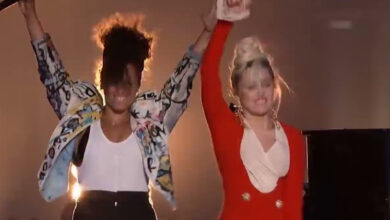
James Hetfield is singing at his own microphone, the electric guitars have opened up, and Miley Cyrus still sounds like the person leading “Nothing Else Matters.” That balance is all over their 2021 Stern Show performance, especially around the point where the two singers are framed together and Cyrus lifts a hand beside the mic. The band is loud enough to remind you whose catalog they’re in. Her voice is distinct enough to make you wonder what she’d choose out of someone else’s next.
Under the performance on YouTube, a viewer suggested Cyrus make a rock covers album and said they’d buy it “in a heartbeat.” The response to that comment, which showed about thirteen thousand likes when reviewed, gives the idea a little more weight than a wish somebody typed in passing. They had just heard her sing with Metallica in the room. The next question for that viewer was how many other songs she could give the same kind of attention.
The 2021 performance came at a particular point in the song’s history. Metallica had invited many artists to interpret tracks from The Black Album for The Metallica Blacklist. Cyrus had already recorded a separate version for that project. The Stern performance gave her a full live band with a long history of playing the material and an arrangement that lets the sound of her voice do much of the changing.
She establishes that right away with the quiet first verse. There are only a few places for a singer to direct your attention when the band is playing something this familiar. A slightly longer vowel, a rough edge at the end of a phrase, and the time spent hovering just above the accompaniment all count. Cyrus gets a lot of mileage from small choices early in the song. When the band gets louder, we’ve had time to get used to her way of telling it.
At the louder end of the arrangement, Hetfield’s voice brings back a sound people associate with the original. Cyrus stays audible and her phrasing still leads the ear, even when the two voices are close together. It’s the sort of balance a rock covers record would need again and again. You would want to recognize each song as you go, while still hearing decisions that could only have come from this singer.
That is a more interesting case for a covers record than a compilation of familiar riffs would be. Cyrus has the option of starting with a song people already sing in their cars, then deciding exactly what experience to give them in the studio or onstage. “Nothing Else Matters” shows one version of that idea working in real time, with the singer who wrote the words close enough to share the chorus.
Watch the performance
There’s a useful test for a good cover. Play the opening and see if you stay in the room after you’ve identified the song. Recognizing Metallica’s ballad takes very little time. What keeps you there is hearing how Cyrus moves through the first verse, then waiting to hear whether she holds that sense of scale when the band gets bigger. A record full of songs people know would have to keep answering that same question from track to track.
There’s room for a studio record and a live performance to reach different conclusions. The Blacklist recording opens up another instrumental world, with Elton John’s piano and Yo-Yo Ma’s cello among the voices on the track. At Stern the live guitars are the familiar starting point. A singer with access to both approaches has options beyond repeating one successful arrangement, and that’s another reason the suggestion in the comments has legs.
Her iHeart Festival performance of Blondie’s “Heart of Glass” gives the idea a different shape. There, the pace and the live drums give her less room to let a line hang. She meets that pressure with harder edges and quick turns at the mic. Compare that with the patience she shows in the Stern ballad. A full project could use that difference in pacing as one of its organizing ideas.
A collaboration with Metallica also offers something a solo set cannot. Cyrus can hear the guitar and bass parts phrased by the players who have brought the arrangement through years of touring, while they can hear where a different singer puts her emphasis. The small changes are happening both ways. Her verse affects what you hear in the accompaniment, and the accompaniment shapes the way her grain and breath sit inside the song.
Metallica’s S&M2 performance provides another model for how to give familiar material a new center. The San Francisco Symphony introduces moving inner lines and a longer sustain behind the band. Some of the familiar spaces are suddenly full of detail. Cyrus’s Stern set takes a simpler route through the same problem, putting the grain and timing of her lead vocal in the foreground while the guitars remain immediately recognizable.
The request for a covers album also reflects how easily fans can imagine a next step from something they can hear. The Stern recording gives them a finished live performance, where guitar tones, drum feel and two voices all have clear roles. There’s no need to guess what Cyrus would sound like with a heavy band. The fun is in imagining which other songs might bring a different side of that sound to the foreground.
What would make the hypothetical album worth putting on is the chance for those choices to vary. The Stern performance gets its lift from the space between a low first verse and the arrival of the full voices. “Heart of Glass” uses a tighter rhythm and a sharper delivery. The listener who said they’d buy the album in a heartbeat had already heard one version of the idea work. The same video gives us enough reason to wonder what the rest of that record could sound like.
Two more versions
The iHeart Festival version of “Heart of Glass” fills the space with a brisk pulse. Cyrus responds with a quicker, sharper delivery than she uses against Metallica’s opening guitar, which suggests how much variety a rock covers set could have.
Metallica’s S&M2 arrangement uses the San Francisco Symphony to give the guitar lines more space and color. It offers a second approach to reinvention alongside Cyrus’s vocal-led take at Stern.