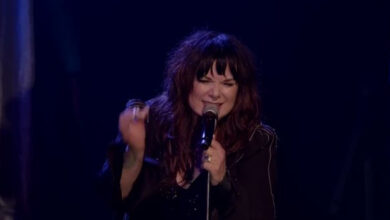
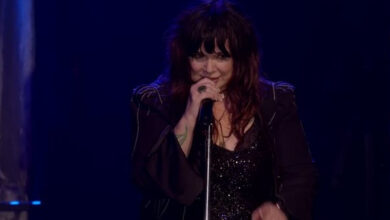
The Words Come First in Ann Wilson’s Hampton Beach Performance of ‘Dream On’
One comment on Ann Wilson’s official “Dream On” video was about being able to understand the words. It is a small compliment on paper and a perceptive one for this performance. The song has a climax that usually becomes the subject of any conversation about who sang it. In the Hampton Beach recording Wilson makes it possible to follow the story from the first low phrases. The arrival of the high notes feels more consequential because she has told you what they are carrying.
The performance was filmed during Wilson’s August 2021 show with the Amazing Dawgs at the Casino Ballroom in Hampton Beach. It begins with enough open space around the microphone for the punctuation of the language to come through. A line ends and there is a chance to hear that it has ended before the next thought begins. For a listener who knows the tune but has let the words blur into the sound of the recording, that timing can be a surprise.
The first decision is where she puts the syllables. Wilson lets the stressed parts of a line sit against the movement of the piano, and she tends to make the starts of important words easy to pick out. You can hear the change from a thought about looking back to a phrase directed outward. The accompaniment gives her enough room to establish those shifts at a volume that still feels close. By the time the band enters more fully, she has already shown you how to follow her phrasing.
Another listener singled out the clarity of her diction. That quality is easy to take for granted because it makes the interpretation feel straightforward. It takes good control for a singer to finish a consonant while keeping the melody moving and to leave enough air to start the next line at the right moment. Wilson is also shaping the weight of the sound at the same time. She can give a word an edge and keep the sentence coherent.
“Dream On” has an unusually useful structure for hearing that work. The song begins as reflection and grows into something closer to a demand. The piano introduces a sense of motion even when the volume is low. Later, drums and guitars give the melody a much wider space to occupy. Wilson keeps enough of the speech rhythm in her singing that you can hear the growing urgency in what she is saying as well as how high she goes to say it.
The official footage puts the first verse and the payoff in the same frame of reference. Start with the voice against the piano and hear how clearly she sets out the lines. Then follow it into the larger arrangement. The sense of a person speaking through the melody stays there as the other musicians take up more space. That continuity is what makes the fan’s observation worth hearing for yourself.
Watch the performance
It helps to pay attention to the places where the music could easily compete with the words. When the band gets bigger, some sounds occupy the same space as the voice. A singer can solve part of that by pushing, but the recording also rewards timing. Wilson makes room at the end of phrases and comes back in when the attack of a word can register. The song keeps gaining weight without losing the feeling that the lines belong to a person you can follow.
There is a difference between making a lyric clear and giving every word the same emphasis. Wilson leaves smaller words inside the flow of the sentence and lets more important ones carry the weight. That makes the interpretation feel like an account of something she is thinking through. The effect is particularly strong at the bottom of the voice, where a smaller change in sound can come across clearly. The piano is spare enough for you to hear those choices take shape.
Once the singing moves higher, the sound of the vowel becomes more prominent. Wilson has already established the shape of the language by then. The release can become more musical and still carry the meaning of the lines before it. This is part of why the high passage works so well on a second listen. You hear the expected lift, and behind it you can still follow the thought that started quietly at the beginning.
Steven Tyler’s original delivery gives the song a shared reference for anyone listening to a cover. The first recording has its own balance of grain, rhythm and tension. Wilson takes the same melodic material and changes where she lets the language sit inside it. Seeing how each voice handles the first verse is a useful way to hear their different instincts. The exercise gives you something specific to compare before reaching for a verdict about either performance.
Wilson was 71 that night. The number explains why some viewers were drawn immediately to the size of her closing sound. Her experience is equally audible when the arrangement is quiet and she can decide how long to leave a word in the air. At a moment when an audience is expecting a vocal display, she trusts the simple sound of a clear line to carry attention. The weight she puts in the words gives the bigger notes someplace to go.
The Amazing Dawgs deserve attention for the support they give those choices. The instrumental sound builds in a way that keeps the verse recognizable beneath the louder passages. The result is that the listener can hear the performance as a story rather than waiting for a single spectacular moment to arrive. Every section gives the next one some context, and the arrangement has enough definition for those connections to register on video.
The opening is worth hearing again after the song ends. This time, follow the sound of a single line from where she begins the first word to where the piano takes over. It turns out the performance has already told you a lot about the singer’s priorities before the famous notes are anywhere near. She wants you to hear where the thought is going. The climax simply lets the whole room hear it at once.
Two more versions
In Aerosmith’s original recording, notice how Steven Tyler stretches the vowel sounds in the early lines and how much character that gives them. Wilson lands some of those same words more squarely against the piano at Hampton Beach. The two approaches make a good listening pair because you can hear the original melody remain intact while the emphasis in the sentences changes.
The Stern Show performance with Steven Tyler, Slash and Train offers a second live example of how much room the early words need before the song reaches its peak. Listen to the way Tyler holds a phrase as the accompaniment grows, then return to Wilson’s performance for the clarity with which she starts her next one. Each singer finds a different way to keep the lyric in front of the band.