The Moment Metallica Turned Elton John’s Piano Suite Into a Guitar Conversation
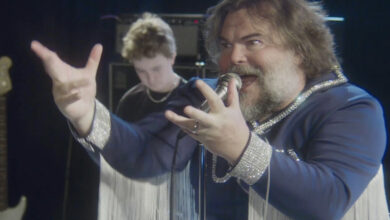
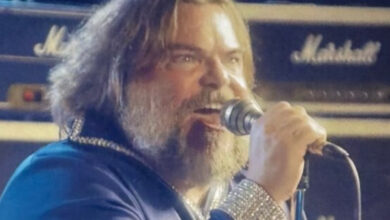
Before James Hetfield has a word to sing, Metallica has a long transition to negotiate. “Funeral for a Friend” earns its name through atmosphere and patience. “Love Lies Bleeding” arrives with a sharper pulse and a voice carrying the story. At the 2024 Gershwin Prize tribute to Elton John and Bernie Taupin, Metallica lets the change between those halves sit at the center of its performance.
The arrangement asks for more than turning up a familiar melody. The opening has to suggest the scale of the studio piece without relying on the same balance of instruments. Guitar can carry that shape if the players leave enough room around it. The quiet takes time to establish itself, which means the later section has somewhere meaningful to go.
Listen to the growing definition of the guitars before the sung part. Long sounds can overlap and make the room feel larger. A riff has shorter edges and gives the listener an exact place to put the beat. The transition works because the band begins to sharpen the rhythm while the slower sounds are still easy to remember.
Hetfield’s entrance has a useful conversational quality in that setting. Elton John made the original melody feel natural beside a rich instrumental opening. Hetfield brings a rougher tone and a different relationship to the guitar. Once he starts, the same song has a singer whose phrasing can feel attached to the riff even when the words are using a much longer line.
The audience shots include Elton John and Bernie Taupin watching a piece they made famous travel through a completely different instrumental lineup. Seeing their reactions adds another vantage point without requiring anyone to put words in their mouths. They are sitting in the room with the audience at the very point the guitars make the tribute personal.
The band’s own Gershwin Prize video shows the full journey. The longer you let the opening play, the easier it is to hear what the harder attack changes. The two sections give each other shape. The sung part has force partly because the band has taken the time to make the instruments do a different job first.
Watch the performance
The scale of the song is not just a matter of how loudly it eventually gets played. The listener has to be able to tell when something has changed. Metallica gives the sharper section a strong enough identity to do that, then trusts the familiar song to carry the connection back to the beginning.
For Elton listeners, a revealing point of comparison is the sound immediately under the singing. For Metallica listeners, it might be what the band is doing with its patience in the opening. Both routes take you to the transition as the source of the live version’s momentum.
The tribute makes an expansive piece feel comfortable in a different vocabulary. The guitars can build atmosphere as convincingly as they can deliver a riff. The fun of the performance is hearing the band let those two roles touch before Hetfield has to choose a place for his voice.
Two more versions
Elton John’s 1974 Madison Square Garden recording is a way to hear the suite in the hands of the artist who established its live shape. The move into the sung section still feels like a change of perspective, and the earlier instrumental stretch gives the audience time to anticipate it. That makes it a close comparison with the patience Metallica brings to the Gershwin Prize.
The original studio recording allows the early textures to bloom and makes the transition sound almost inevitable once the pulse settles. The layered beginning gives a clearer picture of the job the guitars are doing in the tribute. Compare how long both versions let you live in the opening before “Love Lies Bleeding” takes control.