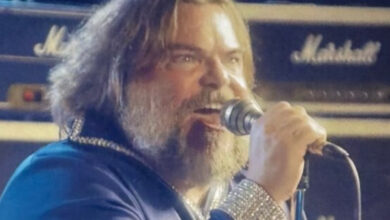
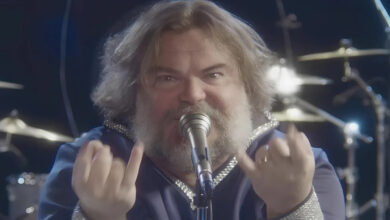
Nic Collins Brings a Familiar Rhythm to His Own Mike + The Mechanics Drum Solo
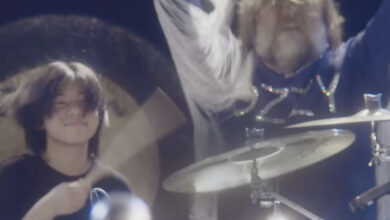
Nic Collins is framed by cymbals at De Montfort Hall, a stick lifted and his eyes on the next part of the kit. The solo was filmed in Leicester on April 22, 2023, during Mike + The Mechanics’ Refueled! tour. By then, people had already watched him take over the drums on his father Phil’s solo tour and on Genesis’s farewell. In Leicester the music made room for him to step out of the role of accompanist. For a few minutes, what the rest of the room heard depended on the decisions he made behind the drums.
There is an instinct that makes the family resemblance easy to hear. Nic can get a full sound out of the kit and still leave a clear shape in the rhythm. An accented hit has weight because there is room around it. When he moves onto another part of the drums, your ear can follow the switch without losing the basic forward movement. Speed supplies some of the excitement, especially when you can see a stick blur in the stage light. The feeling that each change belongs to the one before it is what gives the solo its momentum.
That balance matters in music associated with Phil Collins. Phil wrote and played parts in which the sound of a drum could become a major part of the composition. The texture of a tom or the placement of a single accent could stay in your head alongside a vocal line. Learning music built that way gives a touring player a particular responsibility. The familiar parts have to retain their shape long after the audience has stopped looking at the drummer. Nic had already spent two major tours learning how to hold that kind of attention from the back of a stage.
On Phil’s solo tour, the voice the audience knew was out front and his son was one of the musicians who kept the arrangements moving. The final Genesis tour gave him a different body of work, with long-established parts and changes that had to fit Tony Banks and Mike Rutherford in real time. The drummer’s job in both situations involved a great deal of listening. The bass and the keys give you important information about where to put the next stroke, and the singer has to know exactly when a space will open for a line.
Joining Mike + The Mechanics kept Rutherford in the story and gave Nic another set of songs to learn. The band’s sound makes a good test of how a drummer handles emphasis. A vocal melody often needs a steady floor beneath it, and a more expansive section gives the drummer a chance to change the weight of the room. A solo presents a related question in a more concentrated form. With nobody singing over him, Nic has to supply his own sense of where the next change will come and make it clear enough for an audience to hear.
The Leicester footage is especially useful because you can put a sound together with the movement that produced it. As an accent comes up from one part of the kit, you can see him prepare another with the opposite hand. Your eyes want to follow the arms, and your ears have an equally good reason to stay with the pulse. The two ways of watching come together when a strong hit puts a full stop on one passage and makes room for the next one. That is the part of the performance that makes the name Collins feel like a useful piece of context.
Watch the performance
It also helps to think about what an audience knows going in. People who saw the last Genesis tour could recognize Nic as the person keeping the music moving behind Phil. A Mike + The Mechanics audience might have followed Rutherford into the room for another set of songs. Both groups can see something familiar in the way Nic holds a beat steady before giving it a new shape. The solo is a good chance to notice that ability first and let the family story accompany what you have already heard.
Drummers often talk about playing for a song. The idea becomes a little harder to define when the drum part has to be the song for several minutes. A hit on a different drum changes the color of the sound. A small hesitation can make the next accent seem bigger. Staying with a repeat long enough for the room to understand it gives a faster passage somewhere to come from. Those are musical responsibilities as much as technical ones, and they help explain why a drum solo can make sense to listeners who have never looked closely at a kit.
There is a reason the close image of Nic between those cymbals held people’s attention. You can make out the concentration in his face even while the arms are moving fast. It is the look of somebody with several sounds to place over the next few seconds. The next time you watch, choose one repeated sound and follow it instead of trying to take in the whole kit at once. A single thread of rhythm makes it easier to hear why the performance feels so composed even when the movement becomes its most dramatic.
Two more versions
Better Strangers’ “But I Don’t Know Your Name” puts Nic back inside an arrangement made with his own band. Give the drums the same attention they receive in the Leicester solo and notice how they have to support the shape of somebody else’s line. The weight of an accent now has a purpose inside a vocal and guitar part. It is a useful companion to the moment Mike + The Mechanics handed him the floor.
In Drumeo’s “The Grooves of Genesis,” Nic sits at a kit and takes time to demonstrate how familiar sections of his father’s music fit together. The view of his hands and the chance to hear a figure on its own give you a practical way to return to the solo. The family resemblance begins to sound like something you can describe, with accents, touch and the space he leaves for the next sound.