How Jack Black’s “Mr. Crowley” Sends Another Generation Back to Ozzy
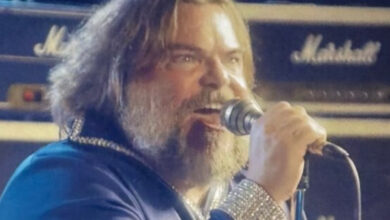
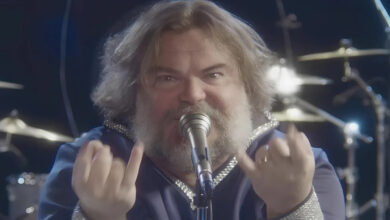
People enter heavy music through all kinds of doors. Jack Black happens to have stood in front of one that a great many people already know. A viewer may have seen a film, heard Tenacious D or recognized his voice before they had a reason to learn the names of the players on an Ozzy Osbourne recording. A scene from this “Mr. Crowley” tribute can move that same viewer a step deeper into the music before they realize what they are doing.
One response under the video put a claim on that feeling in a short sentence. “He pulled a whole generation into heavy music.” The line speaks to a listener’s sense of how a recognizable person can make an unfamiliar song approachable. There is an important word inside the claim even if the commenter did not spell it out. You have to be offered something worth hearing on the other side of the introduction. “Mr. Crowley” gives Black plenty to point toward.
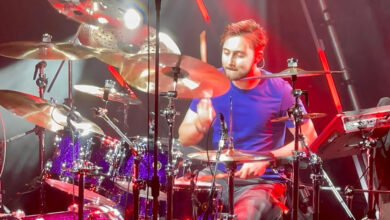
The first welcome comes from the keyboard. Hugo Weiss has time to let the atmosphere take hold. By the time Black enters, the song has already established a sound that belongs to a different world from a film joke or an ordinary celebrity surprise. A new listener can be drawn in by the personality and then find themselves waiting for one of the most distinctive sounds in the performance to return. Curiosity about a song often begins at precisely that scale.
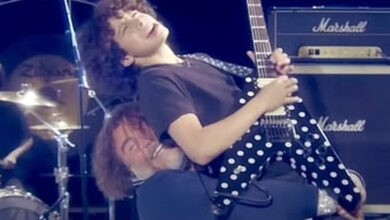
The next step is the guitar. Roman Morello is young enough that the viewer can watch two generations encountering the same material at once. He has the responsibility of the lead instrument in a composition whose guitar parts carry a lot of its memory. The polka-dot Flying V also points to Randy Rhoads in a way a newcomer can understand visually. A viewer can notice the instrument before they know the story and then go looking for the musician to whom the image refers.
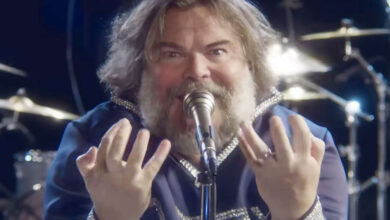
The setting gives that chain additional meaning. The tribute was shown at Back to the Beginning in Birmingham in 2025, when Ozzy and Black Sabbath were being honored by other performers. Black makes it plain that the song is arriving from somewhere. The costume and the shape of a familiar stage pose let the older recording stay present in the new one. An homage can introduce new listeners because it puts the original close enough for them to wonder about it.
If you came to the clip because of Black, notice the first moment when you find yourself following somebody else. You might be watching Morello’s hands instead of the singer’s face. You might be paying attention to Yoyoka or trying to work out how the keys lead into the band. That is what the claim about bringing a generation into heavy music means at a human scale. You recognize one person and come away curious about several others.
Watch the performance
At Mary Morello’s birthday party in 2023, the point is visible in a smaller room. Black is close to the guests and the young players work right next to him. He gives the camera a memorable kick, and the song continues in the hands of everyone else. The party recording gives a viewer something the tribute camera cannot supply in the same way. You can see where the audience stands in relation to the musicians whose parts they are hearing.
Think about how often a musical interest starts with someone in the room enjoying a record enough to put it on. The party clip has something of that character. The players have learned the music well enough to bring it to the event, and the people watching are close enough to leave their own noise and movements in the recording. That makes the performance feel like something one person could pass to another with the simple instruction to look at this.
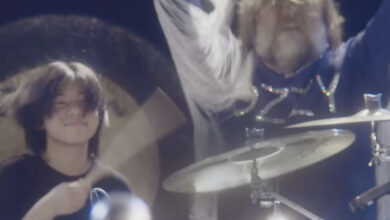
The 2025 film turns that informal invitation into a more deliberate gesture of credit. The instruments, the blue clothing and the relationship between Black and Morello push the viewer toward Ozzy and Randy. The arrangement still makes room for the sound of the band in front of the camera, which means the invitation has a direction on either side. A viewer can go back to the original or keep following the people who played the tribute.
There is no need for everybody to be introduced to heavy music through the same song. What makes “Mr. Crowley” effective in this role is the variety inside it. A person drawn to an expressive voice has something to follow. A listener more curious about a melody that moves across the guitar will find an entirely different reason to stay. The keyboard and the steadiness of the rhythm section provide another two places where an interest can take hold.
That is why Black’s broad appeal matters more here than any claim about how many people he converted. The viewer who loves an old Ozzy record and the viewer who recognizes Black from a film have a shared five minutes in which to appreciate a piece of music. Each can point out something worth hearing. The film association is useful, and the band is good enough to give the association a life after the joke fades.
The journey works in a circle. An older recording teaches a group of younger musicians a set of musical possibilities. They play the piece with a singer whom another audience might already know. Someone in that audience notices a sound or a player and decides to hear more. The next time that person sees the clip, Jack Black might still be the reason they press play. Ozzy and the musicians around him are likely to be the reason they let it run.
There is also a place in that circle for someone who plays music at home. A teenager trying to work out a guitar phrase by ear can see a younger musician take the lead and recognize a practical task. The tribute makes that possibility visible right alongside the spectacle.
Two more versions
If Black’s clip is your way into “Mr. Crowley,” the 1981 recording is a rewarding next stop. It lets you hear Ozzy’s vocal timing and see Randy Rhoads turn the guitar part into a focal point. The tribute’s polka-dot Flying V suddenly becomes a clue that can lead you to a player whose sound is worth following.
Ozzy brought “Mr. Crowley” back to Birmingham for his farewell. The figure on the throne and the people in front of him put decades of listening in the same place. It is a useful second point of entry for anyone hearing the song through players a generation or two removed from its first recording.