The Camera Turned to Queen When Adam Lambert Finished “Who Wants to Live Forever”
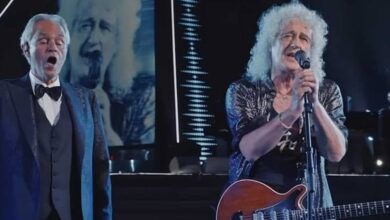
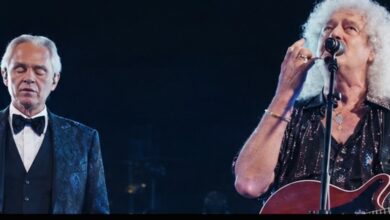
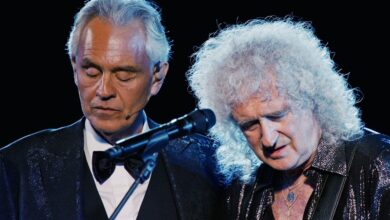
The last phrase of Adam Lambert’s “Who Wants to Live Forever” is worth hearing before you look for Brian May and Roger Taylor. Lambert gives the note room to finish, and for a moment the performance still feels as if it belongs to the singer alone. Then the TV4 recording turns to the audience, where two of Queen’s musicians are among the people applauding. The cut is simple. It gives the audience at home a clear sense of who the song was being sung to.
Queen were honored with the Polar Music Prize in Stockholm in May 2025. May and Taylor accepted the award at the Grand Hôtel, where the ceremony brought together artists paying tribute to the band. Lambert’s appearance belonged to that program. He had already spent years performing with Queen, so he came to their song with the familiarity of a working musician. For this performance, he could look out and find them on the other side of the stage.
That shift in roles is part of what makes the footage worth returning to. At a Queen concert, the camera might turn to the people playing in response to Lambert’s voice. In Stockholm it can turn to those musicians in the audience. You can hear the relationship from another direction. A singer who knows how the song moves gives it a pace of his own, and the people with the longest memory of that music get a chance to hear what he does.
Lambert keeps most of the movement in the vocal at the beginning. There is enough softness around a line to make its shape clear, and he can let a word take a little more time before the next one arrives. The early lines have their own point of view. They also set a scale for the rest of the song. If the performance began at the volume of its climax, the audience would have less distance to travel before getting there.
The line at the top of the arrangement is only one place to notice the control involved. Listen to the space around the ends of phrases on the way there. A singer has to decide whether to sustain the sound or let the next line have a fresh entrance. Those decisions can make a familiar melody feel as if it is still being worked out in real time. The song has a recognizable route, and Lambert’s phrasing gives the listener something to hear along it.
The reaction in the room gets its meaning from the length of that journey. You can jump straight to the camera’s view of the applauding guests and recognize May and Taylor immediately. The shot is more interesting after hearing how Lambert has handled the quiet opening and the larger finish. Then the reaction has a musical context. The people in the room have been hearing the same changes for several minutes, and the recording gives the viewer a chance to hear them too.
Watch the performance
Television can make an audience reaction seem like a verdict on a singer. Here it makes sense to look at it as part of the occasion. The ceremony honored the scope of Queen’s career, and the set of performances gave that long history a sound in the room. May and Taylor are visible as people listening to a piece of that history in the hands of someone they know. Their presence adds information without requiring the viewer to imagine what they were thinking.
The song itself already had a long life away from the circumstances of its creation. May wrote it for Highlander, and Queen’s original recording gives the coming change of scale to two familiar voices. The arrangement begins in a more intimate space before Freddie Mercury opens it up. Lambert has to take a similar journey while keeping the center of the vocal with him. The skill is in making the changes feel like parts of a single statement.
An awards room gives a performance a different sense of proportion from a large outdoor stage. There is time to hear the beginning as something close and personal. The applause afterward seems to belong to a room in which people have been able to follow the voice into the same place. At a festival the song has to take up a great deal of physical space, and its climax provides one of the clearest ways for a large crowd to respond at once.
The filmed reaction is also a reminder that Lambert has played more than one role in the song’s live history. He can sing it with Queen’s musicians contributing to the sound as it grows. In Stockholm his delivery brings some of that shared experience into a tribute he carries from the front. That is the kind of continuity that can be heard in the way he approaches the melody. Small changes in pacing have room to count because the basic shape is so well known.
The last note and the applause make sense as a pair. A viewer can hear the singer leave the end of the song open for a little longer, and then see the audience fill the space he has given it. The close-up brings May and Taylor back into a performance in which they have been present all along. It is an unusually direct way for a recording to show both the sound of a song and the relationship that brought it into the room.
Two more versions
The official Queen video brings the ear back to the way Brian May and Freddie Mercury share the vocal on the original. The change in size between their entrances makes it easier to hear how much of the climb Lambert has to manage with one voice in Stockholm.
Queen and Lambert’s live recording from the Isle of Wight Festival gives the song a larger space and puts the band back beside him. Listen to how the accompaniment shapes the approach to the final phrases. In Stockholm the camera can show May and Taylor receiving the result from the audience, and this version lets you hear them helping to create it.