The Microphone Handoff That Made Aerosmith and Run-DMC’s “Walk This Way” Work Again
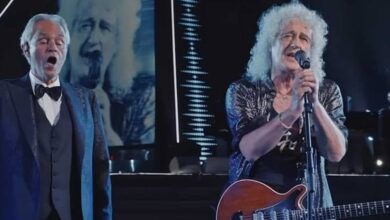
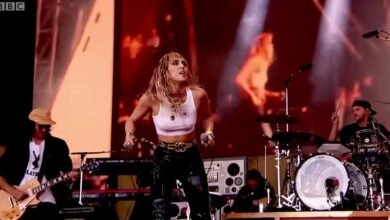
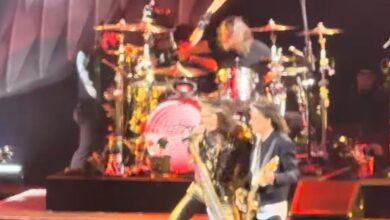
Steven Tyler stopped Aerosmith before the opening of “Walk This Way” could become too familiar. Joe Perry had already played enough for the audience to know which song was coming. The break gave Rev Run and DMC a place to appear, and the familiar opening became the setup to a different kind of performance. At the Rock & Roll Hall of Fame, one short interruption was enough to make the change of singers feel like part of the music.
The meeting happened at the Peacock Theater in Los Angeles on November 14, 2026. Aerosmith and Run-DMC closed the induction ceremony together, four decades after the version that brought their names together on the same record. Chad Smith was at the drums. The setup was simple enough for the audience to follow from the back of the room, with Perry supplying the guitar entrance and the other musicians ready to move around whoever was carrying the next line.
The first thing to notice after the restart is the amount of space available between the voices. Tyler has a delivery that can fill a bar quickly. Rev Run and DMC need enough room to establish their own patterns, which have a different relationship to the beat. The version works because the basic timing stays readable through the handoffs. One voice can come forward, make its point and leave a place for the next one to arrive.
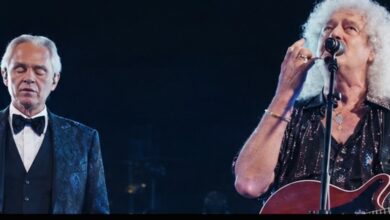
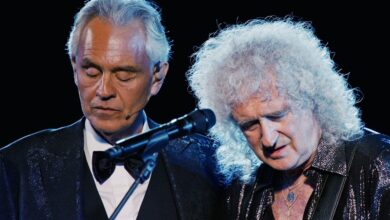
That is easy to see when the singers gather near one another. Their arms and microphones tell you who is about to speak even before the sound changes. When Tyler pulls back for a phrase, the center of the stage does not feel empty. Somebody else is already using that time. Later, his voice can take up more space again because the exchange has made the moves between singers feel natural.
Perry’s guitar part is the constant. It belongs to the seventies recording and has the same recognizable shape after the entrance at Rock Hall. It also has a role in making three vocalists feel connected. A listener can lose track of a word and find the beat again through the guitar. Through a busy live mix, that reference gives the song a way to remain clear.
By the time the title arrives, the job of establishing who belongs on the stage is already done. Watch the way the performers share the physical space as the audience responds. There is a deliberate looseness to the scene. It depends on the confidence that the next phrase will find a home somewhere, and on the basic instrumental idea being strong enough to keep everyone in the same song.
Watch the performance
The easiest way to see the point of the original collaboration is to look at how each performer approaches the words. Tyler has always made the verses of “Walk This Way” feel quick, with phrases packed tightly against the guitar part. Rev Run and DMC make the rhythm of the language an even more visible feature. Together they give the audience several ways to listen to the same stretch of music. If one part takes the ear, the others still have time to register.
Chad Smith has a useful role in that relationship. A drummer reacting too literally to each gesture can make a crowded stage feel more crowded. Maintaining the groove gives the voices a reliable place to step in and out. A fill can announce the next section, and a stable beat can make a small handoff between singers count without drawing attention to the changes happening underneath them.
The camera is also part of how a performance like this becomes legible at home. A wide view lets the viewer see where the singers have come from and who is waiting near the side. A closer shot makes the handoff visible as an exchange between people. The stage performance gives the same event to both cameras. That is one reason the footage has enough going on to reward another play after the surprise is familiar.
The stop near the beginning gets much of the attention. What happens once everybody is onstage explains why that moment is worth remembering. Perry’s riff can survive a pause, the drum part brings the band back to a shared pace and the mics give different voices an equal claim on the next bar. In a performance honoring the life of a song across generations, that sense of a real exchange works better than a speech about its influence.
Transitions in a live song can be harder to see when the audience is in the room. People tend to follow familiar faces even when another musician has taken over the sound. The clip makes this particular handoff easy to follow from the front microphones to the players behind them. As one of the rappers takes a line, another performer can be seen listening for the place to come back in. That gives the number the feeling of people trading ideas in real time. There is a similar handoff when the guitar briefly steps into the foreground. The older recording gave its performers this much room in the first place. The live challenge was to let that exchange breathe through the volume of the ceremony and the audience’s own desire to join the chorus.
Two more versions
The 1986 video makes the exchange physical by putting the performers on either side of a wall. It starts with competition over a shared sound, then moves toward a stage where the groups have room to play together. Rock Hall removes the wall and uses a pause to create the space for an entrance. The guitar and the voices are still doing the work that made the story clear in the first place.
Aerosmith’s original recording gives the guitar and Tyler’s vocal a chance to carry the whole exchange on their own. Follow the density of his delivery in the verse. The 2026 finale lets you hear additional voices find space in a song that already had a very particular rhythmic character.