The Quiet Lines in ‘Don’t Tell Me’ Make the Case for Ann Wilson at Rockville
There is a point in Ann Wilson’s Rockville duet with Disturbed when the sound of the band settles and you can listen to the end of one line. The singer gives the first part of the phrase enough weight to establish it, then lets the last few words hang in the air. That space is easy to miss if you are waiting for her to go high. In a recording full of loud moments, her way of finishing a quiet line is worth coming back for.
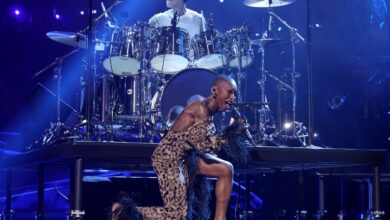
Wilson was 73 when she joined Disturbed at Welcome to Rockville in Daytona Beach, Florida, on May 9, 2024. David Draiman and Wilson had already recorded “Don’t Tell Me” for Disturbed’s Divisive. The festival gave them their first live performance of the duet together, in front of an audience that had come to hear Disturbed.
A listener under the official music video put the reason they came back in plain terms: “Ann has always had one of the best voices in Rock.” The line could sit under a great many Heart performances. In this case it leads somewhere more specific. The strength of Wilson’s voice has as much to do with where she keeps it quiet as where she chooses to let it ring out.
Think about the beginning of “Crazy on You.” The entrance works because there is room for the melody to unfold after Nancy Wilson’s guitar introduction. The texture is different on “Don’t Tell Me,” but Ann still makes the shape of the line easy to hear. A softer entrance establishes how much sound she has available to add later.
Draiman provides the weight on the other side. Listen to the sound with the two singers together and pay attention to whether you can still pick Wilson out. The arrangement gets denser, but her sustained vowels keep their shape as the heavier voice meets them. You can follow both without turning the chorus into a contest between the singers.
Start with the Rockville recording and listen through Wilson’s first full passage. Let the chorus arrive on its own. The change in sound is easier to appreciate once you have heard how much she was holding back.
Where the melody sits in the studio version
The official video makes a useful companion because the studio mix lets you hear the two voices in greater detail. Wilson’s notes have a clear center even as the texture around her thickens. Compare the last words of her quieter lines with the longer notes in the shared section. The force of the latter builds on decisions she makes much earlier.
A singer with a famous high register can make an audience expect a payoff. Wilson has spent decades building that expectation. The studio performance gives her room to lean into the emotional shape of a line while the arrangement does some of the lifting. That balance comes through in the festival footage as well, even with the difference in sound between a studio track and a live outdoor stage.
Another angle on what changes
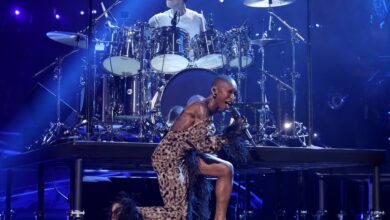
The alternate Rockville footage puts the same duet at a different distance. You can see the scale of the stage and how much space there is around the two singers. Listen for the same transition in both recordings. The crowd and the acoustics sound different depending on where the camera sits, but the way the two voices enter and leave space for each other comes through.
That is the part of the performance that brings the fan’s comment back into focus. Plenty of the people in front of that stage already knew the size of Ann Wilson’s voice. With Disturbed, they got to hear how precisely she used it, one line at a time.