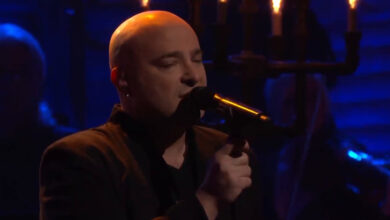
One Fan Thought The Sound of Silence Had Peaked. Then Myles Kennedy Joined Disturbed
A listener under Disturbed’s Houston video described falling for ‘The Sound of Silence’ three separate times. The Simon & Garfunkel recording seemed impossible to improve on until they heard Disturbed. Then the band’s version seemed definitive until Myles Kennedy came out to sing it with David Draiman. It is a familiar kind of fan argument, except both changes of heart come from listening to the same melody.
The first studio recording appeared on Simon & Garfunkel’s 1964 debut, Wednesday Morning, 3 A.M. Acoustic guitar and close harmony give the voices room to set the pace. A later electric treatment of that recording found a much larger audience, but the acoustic original makes it especially easy to hear how the phrasing holds the song together.
Disturbed took the song in another direction on Immortalized in 2015. Draiman begins low, close to the piano. The arrangement gathers weight in stages, so the full sound near the end lands as part of a steady rise. By then the singer has traveled quite a distance from the low, unhurried delivery of the first verse.
Kennedy did not begin by learning a second run through the same melody. As Draiman recalled in a Music Connection interview, Kennedy had been experimenting with a harmony of his own. The two tried it together and ran it again during soundcheck. When he joined the band at the Cynthia Woods Mitchell Pavilion in The Woodlands on August 13, 2016, they could retain the shape of Disturbed’s arrangement while giving the voice at its center a second line to work with.
You can hear the distinction once both are singing. Draiman stays recognizable from the studio version, while Kennedy’s higher part follows the ends of the phrases. The two are close enough to sound like they belong together, and far enough apart that you can follow the rise of either voice. A passage you thought you knew suddenly presents more than one place to listen.
The Houston performance makes the fan’s second change of mind easy to follow. Start with the opening, then listen for the first moment you can trace Kennedy’s part on its own. The arrangement still has somewhere to go after that point, as the two voices carry the melody into the louder passages together.
The acoustic recording puts the intimacy of Simon & Garfunkel’s original in plain view. Pay attention to how much movement the two voices suggest over such a spare accompaniment.
Disturbed’s studio version gives the other half of the comparison. Listening to it after the Houston recording makes the space that Kennedy filled in the live arrangement easier to hear.