Stephen Colbert’s Final Late Show Farewell Left Fans Divided After A Strange And Emotional Finale Spiraled Into Chaos
Stephen Colbert’s final episode of The Late Show was never going to feel like an ordinary television farewell. After nearly eleven years behind the desk and more than 1,800 episodes inside the legendary Ed Sullivan Theater, expectations surrounding the finale had grown enormous long before the cameras even started rolling. Fans expected emotion, comedy, nostalgia, political commentary, and perhaps one final defining monologue from one of late-night television’s most recognizable voices. Instead, what unfolded on May 21, 2026 became something far stranger, more surreal, and ultimately far more divisive than almost anyone anticipated.
From the moment audiences entered the theater, there was already a heavy emotional atmosphere hanging over the night. Fans lined up outside the Ed Sullivan Theater for hours despite poor weather, many carrying signs thanking Colbert for years of commentary, humor, and emotional honesty. The finale had been promoted as an extended sendoff rather than a standard one-hour episode, signaling that CBS understood the cultural weight of ending not just Colbert’s run, but effectively the entire Late Show franchise itself.
The opening monologue initially delivered exactly what longtime viewers expected. Colbert balanced gratitude, satire, and self-awareness while addressing the unusual circumstances surrounding the cancellation. Officially, CBS continued insisting financial pressures and changes in late-night television economics drove the decision. Yet the shadow of politics hovered over the entire evening, particularly because Colbert had spent years openly criticizing Donald Trump and corporate media consolidation. Even without directly turning the finale into a political speech, the tension was impossible to ignore.
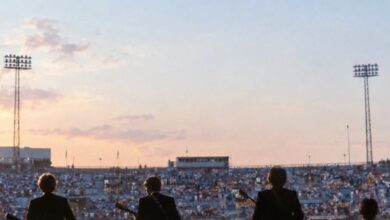
One of the biggest emotional moments arrived when Paul McCartney appeared as Colbert’s final major guest. The choice carried enormous symbolic significance. The Late Show films inside the Ed Sullivan Theater — the exact venue where The Beatles famously transformed American culture during their 1964 television debut. Seeing McCartney return to that same stage decades later to close out Colbert’s era created a sense of historical symmetry that immediately resonated with viewers.
McCartney’s presence also brought warmth and humanity to an otherwise increasingly chaotic finale. During their conversation, the two reflected on memory, legacy, music, and television history while sharing stories connected to the Ed Sullivan Theater itself. One especially touching moment came when McCartney reportedly presented Colbert with a framed Beatles photograph taken inside the very theater they now stood in together. It was exactly the kind of sentimental television moment many viewers had hoped the finale would deliver.
Yet as the episode continued, the tone began shifting into increasingly surreal territory. Celebrity cameos started appearing rapidly, jokes became more self-referential, and the show leaned heavily into absurdist humor. Jon Stewart’s appearance, in particular, became one of the most discussed moments online after participating in a bizarre “wormhole” segment that symbolized the collapse or distortion of modern media. Some viewers praised the sequence as brilliant satire, while others found it confusing and tonally disconnected from what they expected to be an emotional farewell.
This tonal instability quickly became the central conversation surrounding the finale. Rather than focusing entirely on Colbert’s goodbye, social media exploded with debate over whether the strange pacing and surreal comedy enhanced the emotional impact or completely undermined it. Many longtime fans admired the unpredictability of the episode and saw it as a reflection of Colbert’s long-running ability to mix sincerity with absurdity. Others argued the finale never fully settled emotionally, constantly interrupting heartfelt moments with bizarre sketches and intentionally chaotic transitions.
The reactions from critics reflected this divide almost perfectly. Some outlets described the episode as daring, experimental, and emotionally layered, framing the surrealism as a metaphor for corporate influence, political anxiety, and the uncertain future of late-night television. Others criticized the finale as messy and emotionally distant, arguing that it failed to provide the kind of focused farewell associated with legendary television exits.
Still, even critics who disliked the structure of the episode generally acknowledged the historical significance of the night itself. Colbert inherited The Late Show from David Letterman in 2015 during a very different media era. Over the next decade, he transformed the show into one of the defining political and cultural voices of modern late-night television, especially during years of extraordinary political division in the United States. His departure therefore carried emotional meaning far beyond the boundaries of entertainment television.
One fascinating aspect of the finale was how openly it seemed to acknowledge anxiety surrounding the future of media itself. Multiple segments subtly referenced corporate control, shrinking entertainment budgets, political pressure, and the changing economics of television. While CBS publicly denied any political motives behind ending the show, many viewers interpreted the finale’s surreal tone as Colbert indirectly expressing frustration with the broader state of the television industry.
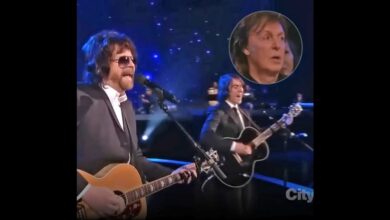
The musical ending ultimately became one of the night’s strongest moments. Paul McCartney led the audience through The Beatles’ “Hello, Goodbye,” joined by Colbert, Elvis Costello, Jon Batiste, and members of the Late Show staff. The performance transformed the stage into a mixture of celebration, nostalgia, and exhaustion. It was joyful, but there was also an unmistakable sadness underneath it — not just because Colbert was leaving, but because an entire era of network late-night television suddenly felt like it was fading alongside him.
What made the finale so unusual was that it never fully committed to one emotional direction. It constantly shifted between heartfelt sincerity, political satire, surreal comedy, industry commentary, and chaotic spectacle. For some viewers, that complexity made the episode fascinating and unforgettable. For others, it prevented the farewell from landing emotionally in the way they had hoped.
The online reaction afterward became almost as dramatic as the episode itself. Clips of awkward moments, surreal sketches, emotional speeches, and McCartney’s performance spread across social media within minutes. Some viewers described the finale as genius television that perfectly reflected the instability of the modern media landscape. Others insisted it felt unfinished, strangely paced, and emotionally unsatisfying despite the enormous talent involved.
What nobody seemed to dispute, however, was the sheer ambition of the broadcast. Rather than delivering a safe and predictable retrospective filled only with sentimental clips, Colbert chose something riskier and stranger. Whether audiences loved or hated the result, the finale succeeded in feeling impossible to ignore — which, in many ways, mirrors the role Colbert himself played in late-night television for more than a decade.
By the time the final applause faded inside the Ed Sullivan Theater, viewers were left with something far more complicated than a simple goodbye. The finale became a reflection of the chaotic media era Colbert spent years navigating: emotional, politically charged, self-aware, occasionally brilliant, occasionally messy, and deeply uncertain about what comes next. And perhaps that uncomfortable uncertainty is exactly why the episode continues generating such intense conversation long after the cameras stopped rolling.