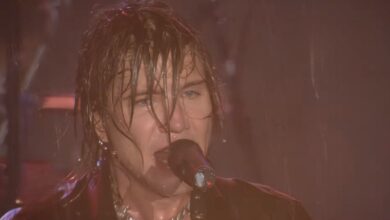
Suzi Quatro Reignites Detroit’s Rebel Spirit with a Fierce “Kick Out the Jams” Reinvention
Suzi Quatro’s take on “Kick Out the Jams” is not just another cover—it feels like a full-circle moment where Detroit’s rebellious spirit is reborn through one of its own fiercest voices. The song itself was originally unleashed by MC5 in 1969 as a raw, explosive live recording that helped lay the groundwork for punk rock, carrying an attitude that was loud, confrontational, and completely unfiltered. When Quatro steps into that legacy decades later, she isn’t borrowing it—she’s reclaiming it, channeling the same fire through a lifetime of experience and authority.
There’s something uniquely powerful about her connection to the material. Quatro grew up in Detroit, the same city that birthed MC5 and the entire movement behind the song. That shared origin matters. It means her version isn’t just inspired by the past—it’s rooted in it. When she delivers the track, it carries the weight of someone who understands exactly where it came from and why it mattered in the first place. That authenticity is what separates her version from countless others.
The original “Kick Out the Jams” thrived on chaos—fast, loud, and almost out of control, like a band barely holding itself together under the pressure of its own energy. Quatro’s version flips that dynamic in a subtle but important way. The energy is still there, but it’s more focused, more deliberate. Instead of sounding like a riot breaking out, it feels like a seasoned force taking command of that same riot and directing it with precision.
Her vocal delivery is one of the biggest shifts. Where MC5 shouted with reckless abandon, Quatro attacks the lyrics with control and confidence. There’s still grit, still aggression, but it’s sharpened. She doesn’t need to scream to prove intensity—her tone carries authority on its own. It’s the sound of someone who has lived through rock and roll’s evolution and knows exactly how to harness its power without losing its edge.
Musically, her version also reflects decades of change in rock production. The original was raw and unpolished by design, recorded live in a way that captured every rough edge. Quatro’s take leans into a heavier, tighter sound. The guitars hit cleaner, the rhythm section locks in harder, and everything feels more structured. But instead of softening the song, that structure actually amplifies its punch, making every hit land with greater impact.
A key layer in her modern version is the collaboration with fellow Detroit icon Alice Cooper, which adds another dimension to the performance. This isn’t just one artist revisiting the past—it’s two veterans of the same musical ecosystem reconnecting with a song that helped define their roots. Their shared history brings an almost conversational energy to the track, like two survivors of the same era telling the same story from different angles.
What makes this version especially compelling is its timing. Decades after the original shook audiences and sparked controversy for its language and attitude, Quatro’s rendition arrives in a completely different world—but it still feels just as relevant. The rebellious core of the song hasn’t aged. If anything, hearing it through the voice of someone who has spent over fifty years in rock music gives it even more weight.
There’s also a symbolic element at play. “Kick Out the Jams” has always been about breaking barriers—whether musical, cultural, or social. Quatro herself built a career doing exactly that, becoming one of the first prominent female bassists and frontwomen in rock. Her version of the song feels like a continuation of that mission, reinforcing the idea that rebellion in music isn’t tied to one generation or identity.
Another fascinating aspect is how the song’s meaning shifts depending on who performs it. For MC5, it was a declaration of youthful defiance, a middle finger to authority and convention. For Quatro, it becomes something slightly different—a statement of endurance. It’s no longer just about breaking in; it’s about proving you never left, that the fire is still there, burning just as fiercely.
Even the pacing and groove of her version reflect that maturity. It doesn’t rush headlong into chaos the way the original did. Instead, it builds with intent, allowing each section to breathe before driving forward again. That sense of control adds a new kind of tension, one that feels less explosive but more sustained, like a slow-burning fuse that never quite goes out.
There’s also a visual and performance element that elevates her interpretation. Quatro has always had a commanding stage presence, and when she performs a song like this, it becomes more than just music—it becomes a statement. The leather-clad image, the bass slung low, the unapologetic stance—it all feeds into the song’s identity, making it feel as much seen as heard.
The legacy of “Kick Out the Jams” itself plays a huge role in why this version matters. The original track helped shape the sound and attitude of future genres, from punk to alternative rock, becoming a blueprint for bands that would come years later. By revisiting it, Quatro isn’t just covering a classic—she’s engaging with a cornerstone of rock history and adding her own chapter to it.
What stands out most is that her version doesn’t try to outdo the original. It doesn’t need to. Instead, it exists alongside it, offering a different perspective on the same idea. One is raw youth, the other is seasoned power. One is chaos, the other is control. Together, they show how a great song can evolve without losing its core identity.
In the end, Suzi Quatro’s “Kick Out the Jams” works because it feels honest. It doesn’t chase nostalgia, and it doesn’t rely on imitation. It takes something iconic and reshapes it through experience, confidence, and a deep connection to its roots. That’s what gives it weight—and what makes it stand out in a long history of covers.
And maybe that’s the most important part. The song was always about freedom—freedom to play louder, harder, and without limits. Decades later, Quatro proves that spirit is still alive, still loud, and still impossible to contain.