Megadeth Pushes “Tipping Point” to the Edge at Canada Life Place in London, Ontario on February 28, 2026
Megadeth walking onstage at Canada Life Place on February 28, 2026 felt like a band making a point before they even played a note. This wasn’t a “let’s ease into it” kind of night. The room had that sharpened, restless energy you get when the crowd isn’t just excited, but invested—people who didn’t come for background entertainment, but for impact. And when the band kicked into “Tipping Point,” it landed less like a random deep cut and more like a statement of intent: modern Megadeth, teeth bared, delivered with the same old-school aggression that made their live shows feel dangerous in the first place.
What makes this performance different starts with placement. “Tipping Point” isn’t treated like a mid-set surprise or a casual nod to newer material—it’s positioned like a doorway into the whole night. That matters, because openers define the mood. Instead of leaning immediately on a legacy anthem, Megadeth chose a track that sounds like forward motion: tight, cold, and confrontational, with riffs that snap rather than swing. In a venue like Canada Life Place, the sound has nowhere to hide, and the band used that to their advantage, letting the guitar attack and drum punctuation do the talking before the crowd even had time to settle.
Dave Mustaine’s presence in a moment like this is its own kind of weather. The voice is unmistakable, the phrasing still sharp, and the delivery still carries that clipped, almost biting cadence that makes Megadeth songs feel like warnings rather than singalongs. “Tipping Point” thrives on that attitude. Live, the lines don’t float—they hit. The performance has a controlled fury to it, like a band that knows exactly where the pressure points are and keeps pressing anyway. Even if you walked in expecting the classics, the opener makes it clear: the band is not there to play politely.
The guitars are where the story really opens up. “Tipping Point” is built to sound surgical—riffs that lock in, cut off, reappear, and tighten again—so the live version has to be precise without losing aggression. That balance is hard. Too perfect and it goes sterile; too loose and it loses its teeth. Here, it’s tight but alive. You can feel the picking hand intensity in the rhythm parts, and when the leads flare up, they don’t feel ornamental—they feel like sparks flying off grinding metal. It’s the kind of playing that rewards attention even if you’re standing in the back.
There’s also a crowd psychology to a newer song in a veteran set, and that’s part of why this performance stands out. When a band like Megadeth plays something fresh, the room splits into two groups: the diehards who know exactly what’s coming, and the casual fans waiting for the big choruses they grew up with. “Tipping Point” pulls both groups into the same place by sheer momentum. Even if you didn’t know every turn, you could feel the groove tighten and the aggression build. The reaction becomes less about familiarity and more about force.
One underrated ingredient in a performance like this is pacing. “Tipping Point” doesn’t need a long introduction or a dramatic pause—it needs forward motion. That’s exactly how it plays here: the band keeps the song moving like a machine, never lingering too long on any section, never letting the tension sag. That sense of urgency is what makes the track feel like it belongs in a live setting. It’s not trying to imitate the past. It’s trying to prove that present-day Megadeth can still open a show with a punch instead of a memory.
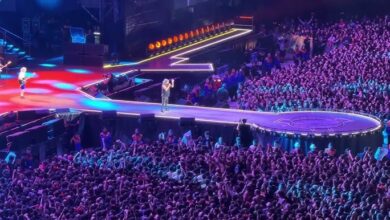
The venue itself adds a layer. Canada Life Place creates that close-quarters arena intensity where the crowd’s sound bounces back fast, almost like the room is feeding itself. You hear the cheers surge at riff changes. You feel the rhythm hit harder because the space keeps reflecting it. A song like “Tipping Point” benefits from that because it’s built on impact more than sweetness. When the band locks into the main riff, the room reacts like it recognizes something primal—maybe not the exact notes, but the attitude behind them.
This performance also works because it sets up the “then what?” question. Starting with a newer track risks leaving some fans behind. But when it’s delivered this confidently, it actually raises anticipation. It tells the crowd the band is playing with purpose, not autopilot. And that purpose makes the rest of the set feel sharper by association. “Tipping Point” becomes the line in the sand: we’re here, we’re loud, and we’re not softening anything. That’s a powerful way to begin a night that’s built on legacy and endurance.
There’s a final detail that makes this version feel special: it sounds like a band still hungry. That’s the part people don’t always expect from a group with decades behind them. But hunger shows up in the small things—how aggressively the rhythm parts are attacked, how tightly the stops land, how little space there is between sections. “Tipping Point” isn’t played like a requirement. It’s played like a challenge to the audience: keep up. And in London on February 28, 2026, the room does exactly that, meeting the band’s intensity with noise, movement, and the kind of attention you can’t fake.
Watching the fan-shot clip, the first thing you notice is how quickly the room wakes up. The opener energy doesn’t feel manufactured—it feels instant, like the crowd was primed for something heavy and got it without delay. The song’s tight, modern churn translates well on a phone recording because the rhythm is so defined, and the band’s timing keeps everything crisp even through the roar.
What really separates this from a standard “new song live” moment is how authoritative it feels: there’s no sense of the band testing the track out. It sounds lived-in, like it already belongs at the front of the set.
Hearing the official version right after the live take makes the differences pop. The studio cut has that controlled, metallic compression—everything stacked and sharpened—while the live performance adds grit, air, and crowd pressure. What stays the same is the song’s core identity: it’s confrontational, lean, and built to hit hard without needing a singalong hook to justify itself. That’s why it works as an opener. It doesn’t ask permission. It declares the mood. The live version in London keeps the studio song’s bite, then adds the electricity of a room reacting in real time.
A second fan-shot angle of the same night is useful because it shows how consistent the performance is from the crowd’s perspective. Different recordings usually expose weak spots—vocals dipping, timing loosening, energy fading—but here the song’s engine still sounds locked in. You also get a better sense of the crowd’s movement and volume, which matters because “Tipping Point” isn’t a nostalgia trigger for everyone in the building. The fact that it still earns that level of response says a lot about how forcefully it’s being delivered.
Comparing “Tipping Point” to another song from the same show helps explain why the opener stands out. Classics like “Tornado of Souls” bring instant recognition, but they also bring expectations—people want a certain solo, a certain peak, a certain emotional rush. “Tipping Point” doesn’t carry that same historical weight, which oddly makes it feel freer and more dangerous. It’s pure present-tense aggression. When you place the two side by side, the opener feels like the band saying, “We can still hit you with something new,” and then the classics arrive as proof that the foundation never cracked.
The broader story of why this performance matters is that it frames modern Megadeth as something more than a victory lap. A lot of veteran bands soften their sets into greatest-hits comfort. This version of “Tipping Point” does the opposite: it tightens the screws. It’s not trying to charm the crowd—it’s trying to ignite them. And that’s why it feels like more than just one song on a setlist. It feels like a message: the band’s identity still lives in the attack, the precision, and the refusal to coast. Even in a room full of fans waiting for the classics, the opener still earns its place by sheer force.