Phil Collins Held Back Tears Through a Standing Ovation at His Solo Rock Hall Induction
Phil Collins was already getting a standing ovation by the time he reached the microphone at the Peacock Theater. At the November 14, 2026 Rock & Roll Hall of Fame ceremony in Los Angeles, he walked out using two canes and visibly fought back tears as the audience welcomed him. Then he found a way to put the room at ease, telling people he was doing better than he might look.
The Hall had welcomed Collins in 2010 with Genesis. Sixteen years later, the invitation was for the records he made under his own name. The second honor covered a different part of his musical life. This time the song that would bring the drums in had come from the first album he released as a solo artist.
Travis Barker was the drummer who introduced him. The blink-182 musician described what hearing the break in “In the Air Tonight” had meant to him. It turned a formal introduction into a story about what a record can do to someone who is already listening for the drums.
Collins’s own account began with a smaller ambition. Growing up, he simply wanted to play the drums. He described what followed with the humor of someone who could still picture that earlier version of himself. Fronting Genesis and singing on a string of solo hits had come after he’d already found the instrument he wanted to play.
There was room in the speech to thank friends, family and the people who helped him make those records. For the audience, the applause at the start was a chance to acknowledge the person behind songs they had heard at other people’s weddings, on late-night radio or in cars with a hand free for the drum break. Collins took a moment to let the welcome settle before he carried on.
The remark that stayed with the room came near the end. “You haven’t heard the last of me,” he said. It was a line delivered in his own voice before the evening turned back to music and another singer took up a song he had first recorded more than four decades earlier.
The drum fill Barker had waited to play
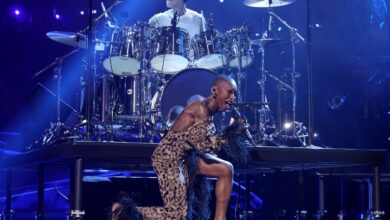
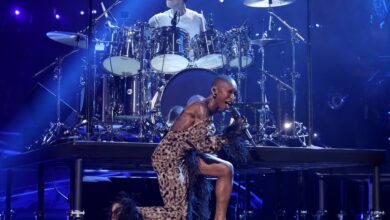
Cynthia Erivo sang “In the Air Tonight” for the tribute, and Barker played the drum fill he had just spoken about. The arrangement gave Erivo time to build the vocal before that full-kit entrance. A familiar performance cue now had a second meaning for anyone who had just heard Barker tell the story from the microphone.
It helps to hear the two parts of the evening in order. During the speech, Collins remembered a childhood ambition. During the tribute, a drummer from another generation sat behind a full kit and played the very part that had caught his ear. The audience had already given Collins his standing ovation before Barker hit those drums.
The original recording shows how much time Collins gave the song before bringing the kit in. In 2026, Erivo and Barker let that waiting do its work again. The performers had changed, the theater already knew what was coming, and the room still had a few seconds to sit with it before the drums arrived.