When “Changes” United Perth: Yungblud’s Heat-Soaked, Emotional Finale in Northbridge
Perth was already simmering before a single chord rang out, the kind of late-January heat that turns a city into a slow-cooker and makes every crowd feel twice as loud. On Tuesday, January 20, 2026, Yungblud brought the IDOLS World Tour to the Ice Cream Factory’s outdoor setup in Northbridge, closing the Australian run with a show that felt less like a standard tour stop and more like a pressure-release valve for a fanbase that had been waiting to scream, sweat, and belong to something together. The suburb’s nightlife energy did the rest. Northbridge is built for nights that spill into the streets, and this one arrived with a sold-out buzz that had people stacking up early, swapping setlist predictions, and acting like they already knew they were about to witness a “tell this story forever” kind of gig.
The scene outside was part concert queue, part street festival, part reunion for strangers who’d only ever shared the same online comment sections. Fans were packed tight around the venue precinct, and by the time it was close to showtime, it looked like the whole neighborhood had been drafted into Yungblud’s orbit. Some people came dressed like a punk Valentine’s Day postcard, others looked ready for a mosh pit marathon, and plenty were clearly first-timers pulled in by the sheer mythology of what this tour has been doing in Australia. You could feel the generational mix too, which is always the giveaway that an artist has crossed into “cultural event” territory. It wasn’t just kids chasing a moment; it was longtime rock people curious to see what the fuss was about, especially after the recent spotlight on his Black Sabbath connection.
Inside, the Ice Cream Factory outdoor space did what intimate venues do best: it compressed the distance between performer and crowd until the show feels like it’s happening inside a shared heartbeat. Even with the scale of a tour branded as his biggest Australian run to date, this didn’t play like a remote arena spectacle. It played like a communal eruption. The heat made everything more intense, too. Sweat wasn’t a byproduct; it was part of the atmosphere, the proof that the night was physically real. Fans later talked about the conditions and the sheer press of bodies, and the vibe in the air suggested everyone was pacing themselves while still refusing to miss a second. That tension between survival and surrender became one of the night’s defining flavors.
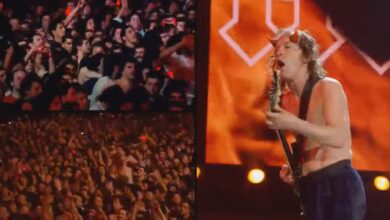
Then Yungblud hit the stage and instantly acted like the room belonged to all of you, not just him. That’s the trick he keeps pulling off: he shows up with the swagger of a headline act but speaks to the crowd like a friend who has been waiting all week for this exact hangout. The opening stretch leaned into forward momentum, grabbing the audience by the collar and dragging them into the set with zero warm-up. It didn’t feel like, “Hello Perth, how are you?” It felt like, “Here we are, together, right now, and we’re not wasting it.” The sound, the lights, the collective jumping—it all moved as one. Even if you didn’t know every lyric, you could read the room: this was not a passive audience. This was a choir with bruised knees and a thousand inside jokes.
A big part of what made the night tick was how he choreographed connection without making it corny. He’d push the crowd into frenzy, then yank the energy into something more focused, as if he was conducting a room full of fireworks. Between songs, the talk wasn’t filler. It was the glue. The tone was classic Yungblud: love as a battle cry, inclusivity as a mosh pit rule, and rock ’n’ roll as a vehicle for the kind of emotional honesty most people only admit to in private. He didn’t present it like a lecture. He presented it like a dare: be open, be loud, be kind, and do it all at full volume. In a venue already sweating through a heatwave, that message landed less like a slogan and more like a survival tool.
The set itself moved with intention, and the order mattered. It built toward the moment everyone had been circling all day: “Changes.” This isn’t just another cover in his show right now; it’s a lightning rod. Some fans discovered him through that performance lineage and the way it’s been talked about online, while others came already attached to his originals and viewed the cover as the emotional centerpiece that ties his current era to rock’s deeper history. Either way, you could feel the room tighten the closer it got. People were checking their phones less and watching more, like they didn’t want to risk missing the first note. When a crowd starts acting like that, the artist can sense it. And he did.
What happened next was the kind of pre-song moment that turns into legend. An extended, mournful piano intro set the mood, and Yungblud leaned into the gravity instead of rushing it. He spoke about rock ’n’ roll and love, the kind of earnest speech that sounds ridiculous on paper but feels completely natural when you’re standing in a packed outdoor venue in Northbridge, feeling everyone around you hang on the same words. Then the crowd chant hit: “Ozzy.” Not as a gimmick, but as a wave of respect, gratitude, and a little bit of disbelief that this Sabbath classic had become a central emotional event in a Yungblud set. He looked visibly moved, and that reaction made it land harder, because it felt unfiltered—like the room had surprised him too.
He pushed the crowd into a ritual. Look left, look right, greet a stranger, tell them you love them—simple instructions that somehow didn’t feel cheesy in the moment because the energy had already been steered into something tender. You could see people actually doing it: quick hugs, hands on shoulders, laughing at the awkwardness, then committing anyway. That’s the part a lot of artists can’t manufacture. It has to be earned by the performer’s credibility and the crowd’s willingness to meet them halfway. In Perth, the audience leaned in. And right as the emotional temperature peaked, the band let “Changes” finally open up, turning the intro’s quiet tension into a full-bodied roar that felt huge even in an outdoor space.
When “Changes” truly kicked in, it didn’t just sound big; it sounded like a release. The chorus is built to be carried by a crowd, and Perth carried it like it was their own confession. There’s something uniquely cinematic about thousands of voices singing “I’m going through changes” in unison, especially when the artist has positioned it as both tribute and communal therapy session. It also brought out a noticeable split in the crowd in the best possible way: the younger fans who treat it as a current-era anthem, and the older rock fans who arrived curious and found themselves unexpectedly moved. That cross-generational reaction is rare, and it gave the performance a specific electricity—like two different musical histories briefly shook hands in the middle of a heatwave.
The night wasn’t only built on that one song, though. The setlist kept moving, and the pacing after “Changes” mattered because it showed the show wasn’t just about one viral moment—it was about endurance and storytelling. Tracks like “Fire,” “War,” and “ice cream man” kept the pulse up, keeping the crowd engaged even after the emotional high point. That’s harder than it sounds. Plenty of concerts peak and then coast. This one kept working. You could feel the band and Yungblud recalibrating the mood, going from catharsis back into swagger, turning the venue into a living thing that kept boiling over. Even when the energy briefly loosened, it didn’t drop. It just shifted shape.
And through it all, the physical conditions were impossible to ignore. Perth was in the middle of a scorching heatwave, and the intensity of the crowd raised the stakes. People online later described seeing multiple medical episodes in the audience, which tracks with what you could sense in the atmosphere: the occasional sudden opening in the crowd, the way security and nearby fans would pivot fast, the shared awareness that everyone needed to look out for each other. Importantly, emergency services later confirmed that no attendees required transport to hospitals, but that doesn’t mean it was a breezy night. It means the crowd and staff managed a difficult environment while still keeping the show on the rails. That kind of collective care becomes part of what makes a concert feel like a community, not just a party.
As the show headed into its final stretch, the energy turned into the loud, triumphant kind of chaos fans chase for years. The closing run—“Loner,” “Ghosts,” and “Zombie”—hit like a three-song knockout, the kind of finish that makes you forget your legs are tired and your shirt is basically a towel. “Ghosts” carried that uplifted, arms-around-each-other feeling, while “Zombie” delivered the emotional gut-punch that Yungblud does better than most modern rock frontmen: turning personal pain into a stadium-sized singalong without sanding down the rough edges. People weren’t just singing along; they were screaming along like it was necessary. You could see grown adults wiping their faces and then laughing at themselves for it, which is basically the highest compliment a live show can earn.
The wild part is that the concert didn’t end when the last note faded. Perth got a post-show epilogue that felt straight out of a movie: around 11:30 p.m., Yungblud took to the streets of Northbridge shirtless, holding a bottle of champagne, and suddenly the night became a moving, chaotic meet-and-greet. Fans who had already spent hours in the heat now had the surreal experience of seeing him in the wild, walking down Lake Street like the city itself was his backstage corridor. Some lucky kids got scooped up, hugs were handed out like souvenirs, and at one point he even gave the crowd a cheeky champagne shower. It wasn’t “celebrity does a quick wave from a tinted car window.” It was full-contact appreciation.
That street moment matters because it explains why these shows hit the way they do. A lot of artists talk about connection; fewer actually show it when the cameras aren’t perfectly framed and the security plan gets messy. In Perth, he leaned into the chaos. He stood on the roof of a black SUV, posed for the kind of black-and-white snapshot that will live in fan galleries forever, and later posted a simple message that basically captured the vibe of the entire night: Perth, I love you. That’s the kind of aftershock that turns a concert into a story. People weren’t just leaving a venue; they were spilling into the neighborhood carrying a shared memory that kept expanding as it happened.
By the next morning, the fan-shot videos were doing what they always do after a night like this: turning individual perspectives into collective proof. One clip of “Changes” from Perth popped up quickly, labeled and timestamped like a postcard from the front lines, and it’s easy to understand why people shared it. The performance has that combination of factors that translates well online: an iconic chorus, a crowd loud enough to sound like a single organism, and an artist who looks like he means every word. But the internet version is still only a slice. The real magic was the way the entire night unfolded—from the heat-soaked build-up to the chant of “Ozzy,” to the chorus swelling into the open air, to the streets of Northbridge becoming the final stage.
Perth’s January 20 show also carried extra weight because it marked the final performance of the Australian leg of the IDOLS tour. There’s always a specific feeling when a run ends: the band is sharper, the artist is sentimental, the crowd is determined to give the city a “best of the tour” reputation. Add in the fact that this tour featured Dune Rats as special guests across the Australian dates, and you get a night that felt like a celebration of modern Australian rock culture colliding with a UK artist who has built his brand on making every crowd feel seen. That collision was loud, sweaty, emotional, occasionally chaotic, and unmistakably alive.
If you want one sentence to sum up why “Changes” in Perth felt special, it’s this: it wasn’t treated like a cover, it was treated like a ceremony. The piano intro was the invitation, the “Ozzy” chant was the collective salute, and the chorus was the release. In a city dealing with extreme heat, a packed outdoor venue still managed to go quiet when it mattered and explode when it counted. That’s the sign of a truly locked-in crowd. And when the night ended with a street-level celebration that blurred the line between performer and fans, it sealed the memory in a way no stage effect ever could. Perth didn’t just get a gig. It got an event.