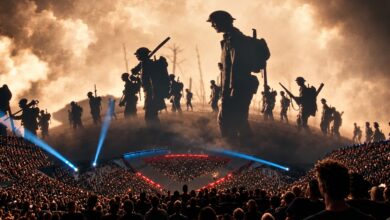
Geddy Lee’s Silent Tribute to Neil Peart Becomes the Most Emotional Moment of Rush’s Fourth Kia Forum Show
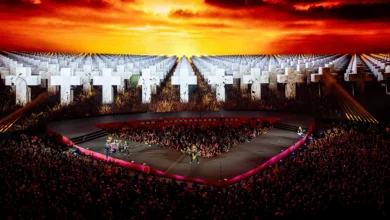
Rush closed their four-night stand at the Kia Forum in Inglewood, California, on June 13, 2026, with a concert that felt like both a celebration and a deeply personal farewell. Across 28 songs, the band honored every major chapter of its history while continuing to carry the memory of Neil Peart through the heart of the performance.
The fourth night arrived with enormous expectations. Rush had already delivered three different concerts during the residency, including a career-spanning opening show, a complete performance of “2112,” and a third night built around the full Moving Pictures album. For the finale, Geddy Lee, Alex Lifeson, Anika Nilles and Loren Gold once again reshaped the setlist.
The concert opened with “Xanadu,” immediately setting a dramatic tone. The song gave Lee and Lifeson space to reconnect with the progressive sound that helped define Rush, while Nilles handled the shifting rhythms with precision, control and growing confidence.
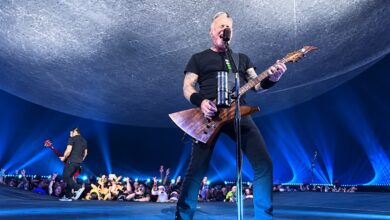
“Limelight” and “Subdivisions” followed, bringing the audience into two of the band’s most familiar worlds. Lee’s bass remained sharp and commanding, while Lifeson filled the arena with the layered guitar textures that have made these songs permanent parts of Rush’s identity.
One of the first major surprises came with “The Pass,” performed for the first time since 2013. Its reflective lyrics and restrained arrangement created one of the evening’s most intimate moments, offering a striking contrast to the technical power surrounding it.
“Freewill” then pushed the concert back into heavier territory before “Bravado” brought the emotional weight of Neil Peart’s absence directly into focus. Throughout the residency, the song had served as part of the band’s remembrance of their longtime drummer and lyricist.
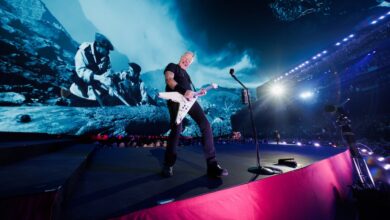
During the second memorial to Neil that night, Geddy Lee quietly turned toward the large screen behind the stage. For a few moments, he stood facing the images of his friend and rhythm partner of 41 years, allowing the tribute to unfold in front of him.
There was no need for a speech. Lee’s body language expressed the loss, gratitude and shared history of a partnership that had shaped most of his life. The simple gesture became as moving as the memorial footage itself, and many fans inside the arena were visibly overcome.
The moment also revealed what made the entire four-show residency so emotional. Rush were not attempting to erase the past or pretend that the band had remained unchanged. Every performance acknowledged that Neil could never be replaced, even as the music continued with a new energy.
Anika Nilles carried that responsibility throughout the concert with remarkable composure. By her fourth full show with Rush, she appeared increasingly comfortable inside the material, honoring Peart’s essential drum parts while allowing flashes of her own musical personality to emerge.
“The Camera Eye” and “The Trees” gave Nilles some of the evening’s most demanding passages. Her detailed playing supported Lee and Lifeson without overpowering the songs, showing why she had quickly earned respect from longtime Rush listeners.
Another tour debut arrived with “The Anarchist,” returning to the stage for the first time since 2015. Its dense rhythm and darker atmosphere added a modern edge to a set that moved freely between the band’s earliest years and its final studio period.
“The Spirit of Radio” closed the first major section with the entire arena responding to every familiar turn. The song’s combination of complexity and immediacy captured the balance Rush had maintained throughout the night: technically ambitious, yet still capable of producing a huge communal reaction.
The band then performed the complete seven-part “2112” suite. From “Overture” and “The Temples of Syrinx” through “Discovery,” “Presentation,” “Oracle,” “Soliloquy” and “Grand Finale,” the performance became one of the evening’s central achievements.
Rather than treating “2112” as a museum piece, Rush played it with urgency. Lifeson moved between heavy riffs and delicate passages, Lee guided the suite with bass, keyboards and vocals, and Nilles navigated its constant rhythmic changes with authority.
The second half continued with “Far Cry,” “Distant Early Warning,” “New World Man” and “Vital Signs.” Together, the songs showed how naturally Rush could move between progressive rock, hard rock and the more streamlined electronic textures of the 1980s.
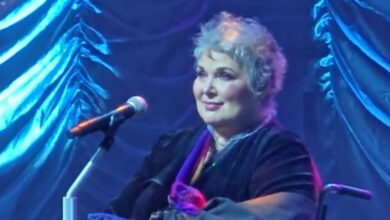
Aimee Mann returned to join the band for “Time Stand Still,” adding another layer of nostalgia to the night. Her appearance connected the new tour with one of Rush’s most reflective songs, whose lyrics now carried even greater meaning after decades of change and loss.
“YYZ” gave the musicians another opportunity to display their instrumental chemistry before the greatest setlist surprise arrived. Rush performed “A Farewell to Kings” for the first time since 1979, bringing the 1977 title track back after nearly five decades.
The rare performance felt perfectly suited to the final night. Its acoustic opening, shifting arrangement and grand atmosphere reflected the spirit of a band revisiting its past without simply repeating what it had already done.
“The Garden” then delivered another deeply emotional moment. As one of the final songs Rush recorded with Neil Peart, it carried the feeling of a reflection on time, friendship and the things people leave behind.
“Tom Sawyer” followed with the force expected from one of Rush’s defining songs. Nilles attacked the famous drum passages with confidence, while the crowd responded with one of the loudest reactions of the entire four-night run.
The encore returned to the band’s earliest period with “Finding My Way” and “Working Man.” After an evening filled with complex suites, rare songs and emotional memorials, Rush ended with the direct hard-rock power that had launched their career.
When the final notes faded, the fourth Kia Forum show felt like more than the closing concert of a residency. It represented Rush learning how to stand onstage again while carrying the memory of the man who had once stood between Lee and Lifeson.
The image of Geddy Lee turning toward Neil Peart’s memorial screen may remain the night’s most enduring moment. It was quiet, unplanned and deeply human—a musician pausing in the middle of a triumphant return to honor the friend whose presence could still be felt in every rhythm, every lyric and every song.