Journey’s “Don’t Stop Believin’” Turns Hershey, Pennsylvania into a Timeless Finale on February 28, 2026
Journey’s “Don’t Stop Believin’” didn’t just close a concert at the Giant Center in Hershey, Pennsylvania on February 28, 2026 — it sealed the opening night of a farewell-sized moment. This was the kickoff of the band’s Final Frontier tour, and the room carried that extra voltage that only comes when fans know they’re watching a first chapter being written in real time. People came in ready for hits, but also ready for meaning: the kind that hangs over an arena when a legacy act steps out and quietly reminds everyone that these songs aren’t museum pieces. They’re still living, still loud, still shared.
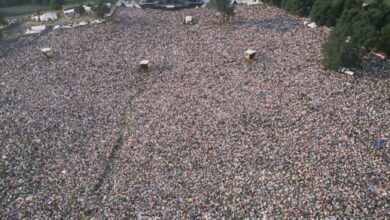
The Giant Center has hosted plenty of big nights, but this one had the particular feel of a launchpad. Long before the band hit the stage, the crowd energy moved like a current — older fans in vintage shirts, younger fans who inherited the music, couples turning it into a date-night anthem, and groups treating it like a reunion. Journey’s catalog has that rare trick of making strangers sing together without hesitation, and on this night, that sense of collective participation started early. Even the gaps between songs felt charged, as if the arena was saving its biggest breath for the finale it knew was coming.
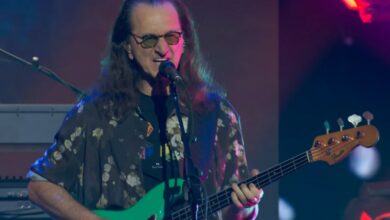
Part of what made this performance stand out was how clearly it played as a statement, not just a setlist staple. Tour openers can be tight but cautious; this one felt purposeful, like the band wanted the first night to sound like a promise they intended to keep. The lineup’s chemistry was front and center, with Neal Schon’s guitar tone doing what it has always done — slicing through the arena mix with clarity and bite — while the rhythm section kept everything moving with that arena-rock steadiness that lets a crowd lean in instead of drifting.
There’s also something different about “Don’t Stop Believin’” when it’s performed on a night that already carries its own storyline. The song has been everywhere for decades — sports arenas, weddings, karaoke bars, late-night singalongs — but that familiarity can actually raise the stakes live. When everyone knows every turn, any performance that still feels fresh has to earn it through feel, pacing, and the room itself. In Hershey, the song didn’t land like a routine closer; it landed like a communal release, as if the entire audience had been holding onto the chorus all night and finally got permission to let it out.
By the time the set had rolled through fan favorites, the arena had been trained into a kind of call-and-response mode. That matters for a song like this, because the magic isn’t only the band’s delivery — it’s how the crowd becomes part of the arrangement. The “small-town girl” and “city boy” lines are practically arena rituals now, but the Hershey crowd leaned into them with the confidence of people who’d been waiting months to do exactly this. The singing didn’t feel scattered; it felt unified, loud enough to become its own instrument in the mix.
Neal Schon’s role in a moment like this can’t be overstated. When Journey is at its best live, the guitar isn’t simply decorative — it’s the engine that keeps the song from drifting into nostalgia-only territory. In Hershey, the phrasing stayed sharp, the leads stayed melodic, and the transitions felt like they were being driven rather than recited. That helped “Don’t Stop Believin’” hit with motion and momentum instead of just recognition. It’s the difference between a crowd singing along because they know the words, and a crowd singing along because the performance is pulling them forward.
Vocally, the song demands both control and lift, and in an arena setting the real test is whether the chorus opens up the room or collapses under its own weight. In Hershey, the chorus expanded — you can feel the audience hitting that moment where the melody becomes bigger than any one voice. The band’s backing vocals and the crowd’s volume braided together in a way that made the hook feel inevitable, like the entire building was designed to echo that line back. It’s a song that can turn corny if it’s delivered without conviction; this version avoided that by leaning into sincerity.
The final minutes carried the particular electricity that happens when an arena realizes it’s witnessing a defining clip — the kind fans rewatch later because it captures more than sound. It captured atmosphere: the timing, the roar, the way people were physically moving with the beat, and the sense that this wasn’t just another stop on a calendar. Being the first night of a major farewell tour gave everything extra weight, and “Don’t Stop Believin’” absorbed that weight naturally. It’s always been a song about holding on; on this night, it felt like the whole arena was holding on together.
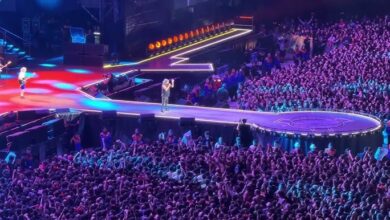
In the fan-shot performance from Hershey, what really comes through is scale — not just the size of the venue, but the size of the crowd reaction compared to the band’s dynamics. The intro doesn’t feel rushed; it feels measured, like the band understands exactly how much anticipation is packed into those opening moments. As the song builds, the room audibly rises with it, and the chorus arrives like a wave breaking. That’s where this version becomes distinct: it isn’t simply “good for 2026” or “good for a tour opener.” It feels like an arena collectively deciding, in real time, to turn a familiar anthem into the night’s signature memory.
Hearing the official recording right after a live tour-opener performance underlines why Journey’s songwriting has lasted so long. The structure is deceptively patient — it doesn’t sprint to the hook; it earns the hook. That patience is exactly what makes the live version so powerful when the band and crowd commit to the build. The studio track has the clean, locked-in pulse and the polished vocal layering that made it a radio classic, but it also has a kind of emotional restraint that sets the stage for the arena explosion later. In other words, the studio version plants the seed; the live versions, like Hershey, show how huge that seed can grow.
The 1981 Houston performance is a useful comparison because it shows the song closer to its original era, before it became a universal singalong shorthand. The band’s energy is more raw-edged, the tempos feel slightly more urgent, and the performance carries that early-’80s sense of a group proving something night after night. What’s fascinating is how the core emotional arc stays the same: quiet beginnings, a steady climb, then a chorus that feels like a door swinging open. When you place that next to Hershey 2026, the difference isn’t that the newer version is “less authentic.” The difference is that the newer version has decades of audience memory inside it — the crowd supplies a new layer the early performances didn’t yet have.
A more recent big-stage rendition like Rock in Rio highlights another side of why “Don’t Stop Believin’” remains so durable: it scales up to festival dimensions without losing its emotional center. In settings like that, the song becomes almost cinematic — thousands of voices, wide open air, and a chorus that feels designed to be shouted into the night. Comparing that to Hershey 2026 is interesting because Hershey is an arena environment where the sound wraps around you, almost like it’s pressing in from every direction. The festival version feels vast; the arena version feels intimate in its own way, because you can sense the crowd reacting as a single unit inside one contained space.
The modern live clips from the mid-2020s also show how the song has evolved into something audiences treat like a shared ritual rather than just a hit. In many recent performances, the loudest “instrument” is the crowd, and the band’s job becomes guiding the room through the moments everyone is waiting to shout. That’s exactly what made Hershey special: being the tour’s opening night gave the crowd an extra reason to sing like it mattered, and the band leaned into that instead of fighting it. The song’s final stretch becomes less about technical perfection and more about timing, feel, and letting the audience take ownership of the chorus without the momentum ever dropping.
Even within the same tour, first-night performances tend to carry an identity that later shows don’t replicate exactly. There’s an edge of discovery — the band feeling out the room, the room feeling out the band, and both sides meeting in the middle when the biggest anthem arrives. In Hershey, that meeting point felt unusually complete. The performance had the steadiness of a veteran act, but it also had the emotional “spark” that comes from turning page one of a major run. That’s why “Don’t Stop Believin’” hit harder than it might on a random night: it wasn’t only the song. It was the context.
There’s also something quietly symbolic about launching a farewell tour with a crowd singing a song built around persistence. Journey has always balanced polish with heart, and the Hershey version leaned into heart without losing shape. The dynamic rise of the arrangement gave the audience room to participate, and the band never let the tempo sag into sentimentality. That balance is harder than it sounds, especially with a song this famous. Plenty of artists get swallowed by their biggest hit; on this night, Journey looked like they were using it as a banner — not as a burden.
What makes the Hershey performance different, in the end, is how it sounded like a beginning and an ending at the same time. The band’s story stretches back decades, but the Final Frontier framing gave the night a sense of punctuation — and “Don’t Stop Believin’” served as the punctuation mark everyone in the building recognized. The chorus didn’t just echo; it stayed, even after the last notes, because the audience treated it like something to carry out with them. That’s the signature of a great live moment: it doesn’t stop when the song stops.
The lasting image of a performance like this is rarely technical. It’s emotional geometry: thousands of people aligned for a few minutes, singing the same words for entirely different reasons, and somehow meaning them at the same time. In Hershey on February 28, 2026, “Don’t Stop Believin’” wasn’t simply performed; it was collectively claimed. And because it was the first night of a farewell tour, it felt like the crowd was making a pact — with the band, with each other, and with the memory they came to create — to keep that feeling alive long after the lights came up.