Brad Arnold of 3 Doors Down Dies at 47: The Voice Behind a Generation of Rock Anthems
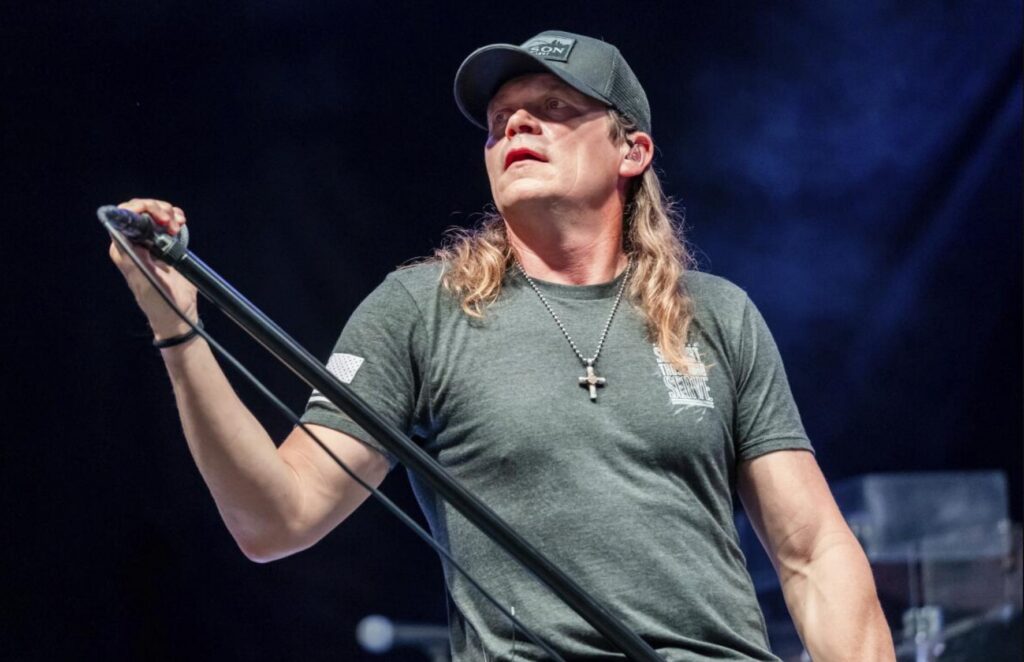
Brad Arnold, the lead singer and founding member of 3 Doors Down, has died at the age of 47, according to multiple reports citing a statement from the band. His death follows a public battle with advanced kidney cancer, a diagnosis Arnold revealed last year that led to the cancellation of planned tour dates and prompted an outpouring of support from fans across rock radio’s long-running community.
The band confirmed the news in a message shared publicly, describing Arnold’s passing as peaceful and surrounded by loved ones. In the kind of simple wording that still lands like a shockwave, the statement said he “passed away peacefully” with his wife and family by his side, after what it called a “courageous battle with cancer.” It was a rare moment where the polished language of an official announcement still couldn’t soften the reality: a voice that helped define a generation of mainstream rock is suddenly gone.
For many listeners, Brad Arnold’s name is instantly tied to a specific era: the early-2000s wave of radio-dominant rock that balanced big choruses with emotional directness. 3 Doors Down didn’t need to be the loudest band in the room to be the most present. Their songs lived everywhere—on car stereos, in sports arenas, on late-night playlists, and in that familiar space where rock music meets everyday life. Arnold’s voice, steady and unmistakable, carried a kind of plainspoken intensity that made those songs feel personal.
The timing of his passing is especially painful because Arnold had only recently shared the seriousness of his condition with the public. He revealed that he had been diagnosed with stage 4 kidney cancer, and that it had spread, a development that quickly forced practical decisions around touring and rest. Fans watched that news unfold in real time, many hoping that a public diagnosis might also mean a path to treatment and more time. Instead, the story has now ended far sooner than anyone wanted.
To understand why this hits so hard, you have to remember what 3 Doors Down represented at their peak. They were one of the rare bands that could bridge formats: rock stations embraced them, pop audiences knew the hooks, and their ballads travelled just as effectively as their heavier singles. That crossover doesn’t happen by accident. It’s the result of writing that understands melody, feeling, and the difficult art of sounding sincere without sounding calculated—something Arnold did for years, often in a tone that felt conversational rather than theatrical.
“Kryptonite” remains the cornerstone, not just because it was a hit, but because it became a reference point. It’s the kind of song people can recognize from a few seconds, the kind of chorus that still triggers muscle memory. Arnold famously wrote it young, and the story has always added to the myth: a teenage idea that grew into a world-sized anthem. But the deeper legacy is how the band followed it up—proving they weren’t a single lightning strike, but a durable presence.
Songs like “When I’m Gone” and “Here Without You” expanded their emotional range and cemented their place in a certain kind of American rock storytelling. Those tracks weren’t built around irony or distance; they were built around direct statements and singable lines that fans could carry into their own lives. Arnold’s vocal style made that possible. He didn’t sound like he was performing feelings—he sounded like he was admitting them, which is why so many people attached their own memories to those records.
Behind the hits was a long touring life: arenas, amphitheaters, festivals, and the endless rhythm of being a working band that never fully disappeared. For a lot of rock acts, longevity comes from becoming a “legacy” act and leaning purely on nostalgia. 3 Doors Down never felt entirely like that. Their songs stayed in rotation, and they remained visible enough that new listeners kept discovering them through streaming, radio, and the constant recirculation of early-2000s rock culture.
Arnold’s role wasn’t just frontman; he was the emotional anchor of the band’s identity. Even as lineups evolve and time changes how a band sounds onstage, the lead voice is what many fans hold onto. When people say “I saw 3 Doors Down,” what they often mean is “I heard that voice live.” And now, the most difficult question arrives: what does a band become when the voice that carried its biggest moments is no longer there?
In the broader music world, Arnold’s death is another reminder of how quickly “our era” becomes history. The early-2000s rock boom is often discussed as a soundtrack to youth for an entire generation, but the artists who made it are not frozen in that time. They age, they struggle, they deal with the same fragile realities everyone else does—just under a brighter light. There’s something uniquely disorienting about losing a musician whose songs still sound current in people’s daily rotation.
The reaction from fans has been immediate because this music was never just background. For many, these songs were companion pieces—played during long drives, breakups, deployments, recoveries, and the quiet parts of life where you need a chorus to hold onto. That kind of relationship doesn’t fade when trends move on. It strengthens, because the songs become markers. When the artist dies, it can feel like a part of your own timeline has been cut.
Arnold was also open at different points about personal struggles and resilience, which made him relatable beyond the stage persona. That openness matters in rock communities, where audiences often connect as much to survival stories as they do to setlists. When a musician acknowledges hard chapters and keeps going, fans don’t just root for the band—they root for the person. News like this doesn’t only end a career narrative; it ends a human narrative people were quietly following.
For 3 Doors Down, the immediate future will likely involve a period of pause and reflection rather than quick answers. Grief doesn’t fit neatly into touring schedules or business plans, and the band’s public statement already suggests the priority is honoring Arnold as a person, not managing perceptions. In these moments, the music industry often moves too fast; fans tend to appreciate when artists take the time to step back and let the loss register.
Historically, bands faced with a loss like this confront an impossible decision: stop entirely, continue in some form, or find a way to honor the legacy through tributes and one-off performances. There is no universally “right” path, because what feels respectful to one listener can feel wrong to another. But there is one certainty: any future chapter, if it exists, will be defined by absence as much as presence, because Arnold’s voice is inseparable from the band’s identity.
What remains, even in the shock, is the catalog—the part that doesn’t age the same way people do. The songs are still there, and they will keep showing up in the places they’ve always lived: car speakers, bar jukeboxes, workout playlists, late-night headphones, radio countdowns that still love a familiar chorus. That’s the strange bargain music makes with time. A person can be gone, and the voice can still feel right beside you.
In the days ahead, fans will look for more details, more context, and more ways to honor what Arnold meant to them—not just as a chart presence, but as a soundtrack. And the question that lingers now isn’t only about memorials or tributes. It’s about how a band, and a fanbase, carries a living legacy forward when the figure at the center is no longer here to sing it.