Three Days Grace’s “Time of Dying” In Columbus Felt Like A Classic One-X Eruption Reborn For A New Era
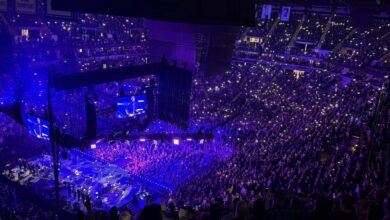
Three Days Grace did not play Columbus like it was just another date in the middle of a long North American run. On March 8, 2026, Nationwide Arena felt like the kind of room where a band’s past and present collided in real time, and “Time of Dying” was one of the clearest examples of that collision. The Alienation Tour already carried extra weight because it placed the band in a rare and unusually charged moment of its history, with Adam Gontier back in the fold while Matt Walst remained a major part of the group’s identity. That combination changed the emotional shape of the night. What fans got in Columbus was not merely a nostalgia trip through one of the band’s most beloved eras. It was a reminder that old songs can hit even harder when they return inside a lineup that has actually lived through the years between the original recording and the current performance.
That matters especially for a song like “Time of Dying,” because it has always existed in an interesting part of the Three Days Grace catalog. It is not one of the obvious first songs casual listeners name, yet longtime fans know how viciously effective it is in a live set. Released on One-X in 2006, the track carries the same dark, urgent, tightly wound energy that made that album one of the defining hard rock statements of its era. But it also feels slightly more restless and unstable than some of the bigger radio singles around it. That unstable quality is exactly why it works so well in concert. In a huge room, “Time of Dying” does not need sentimental framing or grand introduction. It arrives like a switch being flipped, suddenly pulling the crowd into one of the band’s most aggressive emotional lanes.
The Alienation Tour made the song even more interesting because the entire run has revolved around a rare dual-vocal dynamic. Rather than presenting Adam Gontier’s return as a simple restoration of an old lineup, Three Days Grace has leaned into the idea that the current band can embody multiple eras at once. That approach gives their live shows a more layered feeling than the usual reunion narrative. Songs from the Adam years carry one kind of history, songs from the Matt years carry another, and the new material tries to bridge both. In that environment, “Time of Dying” becomes more than a mid-set hammer. It becomes a reminder of why the One-X period still casts such a long shadow over the band’s identity. In Columbus, that shadow did not feel heavy in a negative sense. It felt electric, as if the song had waited years for exactly this kind of stage context.
Setlist placement was a big part of the effect. The band did not throw “Time of Dying” out at the beginning as a quick nostalgia jolt. It came after “Apologies,” which meant the audience had already been taken through a sequence that balanced old staples, newer tracks, and rising tension before “Time of Dying” entered as the eleventh song of the night. That sequencing is smart because it gives the song room to feel like a gear shift rather than just another entry in a parade of hits. By that point in the concert, fans had already settled into the larger emotional and sonic rhythm of the show. The band had established command. The crowd had warmed into full participation. So when “Time of Dying” hit, it landed not as a warm-up, but as a sharpened release of everything the performance had been building toward.
Nationwide Arena was a perfect setting for that kind of impact. Big hard-rock songs behave differently in a room that can hold up to around twenty thousand people for concerts, because the scale changes the emotional function of the track. In headphones, “Time of Dying” feels personal, anxious, and inwardly pressurized. In an arena, it becomes collective. The opening surge does not stay on stage. It moves outward through the floor, the lower bowl, and the upper sections, and the crowd gives it back with volume, movement, and anticipation. That transformation is one of the great pleasures of songs from the One-X era. They were built from pain and alienation, but they often become communal in a live setting. Columbus seems to have delivered exactly that contradiction: a song about collapse and pressure turning into one of the most physically unifying moments of the night.
The deeper emotional backdrop of the current Three Days Grace era also changes how a track like this feels in 2026. Adam Gontier returning to the band after years away already gives every One-X song an extra pulse of history. Fans are not just hearing the songs. They are hearing them through the lens of absence, change, recovery, time, and return. That does not mean every performance becomes sentimental, but it does mean even the most aggressive tracks carry a little more emotional weight than they once did. “Time of Dying” benefits from that weight. In younger hands, the song can feel like pure rage and friction. In Columbus, it likely carried a harder-earned intensity, one sharpened by the knowledge that the band members themselves have lived through more than enough upheaval to understand what that pressure actually sounds like.
Another major factor is how mature Three Days Grace has become as a live machine. Earlier in their career, the band’s power came partly from rawness, from the sense that the songs were erupting almost faster than they could contain them. Today, they still hit hard, but they shape their shows with far more control. That control does not make them less dangerous. It makes the danger more effective. “Time of Dying” now benefits from a band that understands exactly when to tighten the room, when to release it, and how to make a song’s most familiar elements feel newly physical. In a long arena set, that kind of pacing matters enormously. A great hard rock show is never just a pile of loud songs. It is the management of escalation. In Columbus, “Time of Dying” felt like one of the points where that escalation was handled with particular intelligence.
The audience’s relationship with the song is part of the story too. One reason “Time of Dying” continues to resonate is that it belongs to an album generation of rock fans who did not merely stream songs in isolation. They lived inside records like One-X, learning the deeper cuts until those tracks carried almost as much emotional meaning as the singles. That is why songs like this can still trigger such visceral reactions. They are not just recognized. They are remembered bodily. The Columbus performance seems to have drawn on that kind of memory. In a show full of major songs, “Time of Dying” stood as one of those moments where a longtime fan base got to reconnect not just with a familiar chorus or riff, but with an entire era of feeling that has stayed lodged in the music for two decades.
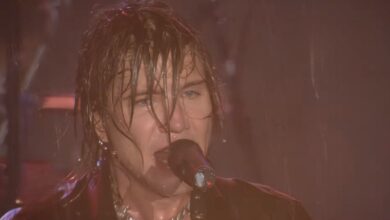
The fan-shot video captures the exact kind of rough immediacy that polished official footage often smooths away. The audio is not pristine, the camera does not behave like a television broadcast, and that is precisely why the clip matters. It places the viewer inside the crowd’s experience rather than above it. Every shake of the frame and every burst of audience noise makes the song feel more physical. In a professionally mixed live release, “Time of Dying” would still sound strong, but the floor-level perspective shows how the track actually behaved in Columbus. It was not simply performed. It moved through the room. That difference is crucial. Fan-shot footage often becomes the real historical record of nights like this because it preserves the adrenaline, the imperfections, and the audience reaction that made the performance memorable in the first place.
Going back to the studio version after hearing the Columbus performance is a useful reminder of just how tightly constructed the original song always was. The recorded track is lean, tense, and highly efficient, with no wasted motion anywhere in its structure. That economy is one reason it has aged so well. It does not depend on production tricks that belong only to one moment in rock history. Instead, it drives forward on rhythm, mood, and attitude. But hearing it after a 2026 live version reveals another truth: the song has grown into its own mythology. What was once a ferocious album cut now feels like an emotional checkpoint for a band and audience who have carried it for twenty years. The studio recording supplies the blueprint. The live version shows what happens when that blueprint accumulates memory.
A comparison with “Animal I Have Become” is revealing because that song has long functioned as one of the band’s most obvious crowd detonators. It is one of the great hard rock singles of the 2000s, and its impact is almost immediate wherever it appears. “Time of Dying” works a little differently. It does not always announce itself with the same instant broad recognition, but for many fans it cuts just as deep because it feels darker, twitchier, and slightly less polished in its emotional architecture. That makes the Columbus performance especially interesting. It shows Three Days Grace drawing just as much force from a song that lives one layer beneath the obvious canon. In other words, it was not only the biggest songs doing the heavy lifting on the Alienation Tour. The band’s deeper One-X material still had the muscle to stop a room cold.
“Never Too Late” offers a different but equally useful comparison because it reveals the emotional range that has always made One-X more than a simple aggression record. If “Time of Dying” represents strain, velocity, and inner combustion, “Never Too Late” represents endurance, vulnerability, and the possibility of surviving the same darkness. Hearing those two songs in relation to each other helps explain why the Columbus show worked so well. Three Days Grace has always been strongest when they balance blunt force with emotional openness. The setlist on this tour appears to understand that clearly. “Time of Dying” hits harder because it exists in a concert universe that also includes songs willing to stop, ache, and reflect. That contrast keeps the heavy moments from becoming monotonous and makes each burst of aggression feel more meaningful.
Modern live versions of “Never Too Late” also highlight how much more textured the current lineup can be in emotional songs, which in turn helps explain why the harder songs feel so potent. When a band can move convincingly between bruised introspection and straight-up hard rock release, the audience experiences the heavy songs as earned climaxes rather than constant noise. That is one reason “Time of Dying” appears to have landed so strongly in Columbus. It was surrounded by a larger concert narrative that gave its aggression context. Three Days Grace in 2026 does not seem interested in being one-dimensional. The shows aim to present multiple faces of the band’s history and emotional vocabulary, and that broader framing makes an old One-X track sound not like a relic, but like an essential piece of a still-living language.
The comparison with “Riot” is especially revealing because both songs turn crowd energy into something close to organized chaos, yet they do it with slightly different emotional colors. “Riot” is blunt, immediate, and openly confrontational. “Time of Dying” feels a little more unstable, almost like anxiety mutating into aggression. That distinction is exactly why it can stand out so vividly in a live setting. Columbus appears to have benefited from both kinds of intensity on the same night, giving fans two different versions of release. One is the straight-ahead explosion everybody can recognize instantly. The other is a darker, more jagged rush that longtime listeners often treasure just as much. That makes “Time of Dying” a perfect tour moment for a band currently trying to show the full breadth of what its older material can still do.
In the end, what made “Time of Dying” in Columbus feel important was not just that the band played it well or that the crowd responded loudly. It was that the performance seemed to capture the exact reason Three Days Grace still matters as a live act after all these years. The songs are heavy, yes, but they are also emotionally specific. They tap into frustration, confusion, isolation, and defiance in ways that remain instantly legible to a modern audience. On March 8, 2026, at Nationwide Arena, that old chemistry between tension and release came roaring back through one of the sharpest songs in the band’s catalog. The result was a performance that felt both familiar and newly dangerous, which is about the highest compliment a legacy hard rock band can receive.