How Budweiser Won the Super Bowl Without Shock, Scandal, or Celebrities — The Quiet Ad That Left Millions in Tears
Many brands stepped into this year’s Super Bowl armed with celebrity cameos, frantic humor, and moments clearly designed to explode online. Budweiser, however, made a move that felt almost rebellious in today’s advertising climate: it slowed everything down. In a broadcast built on speed, noise, and instant payoff, the brand chose patience—and that single decision reshaped how its commercial landed.
All night long, viewers were hit with high-octane ads chasing attention through surprise appearances, rapid jokes, and surreal visuals. The formula was familiar: hook the audience immediately, generate memes, dominate feeds for a day, then disappear. Budweiser didn’t try to outshout that formula. Instead, it quietly stepped aside from it.
Rather than chasing shock, the American Icons campaign leaned into something far rarer—recognition. From its opening frames, the ad signaled that it wasn’t in a rush. It asked viewers to slow down with it, to feel rather than react. That calm confidence immediately set it apart.
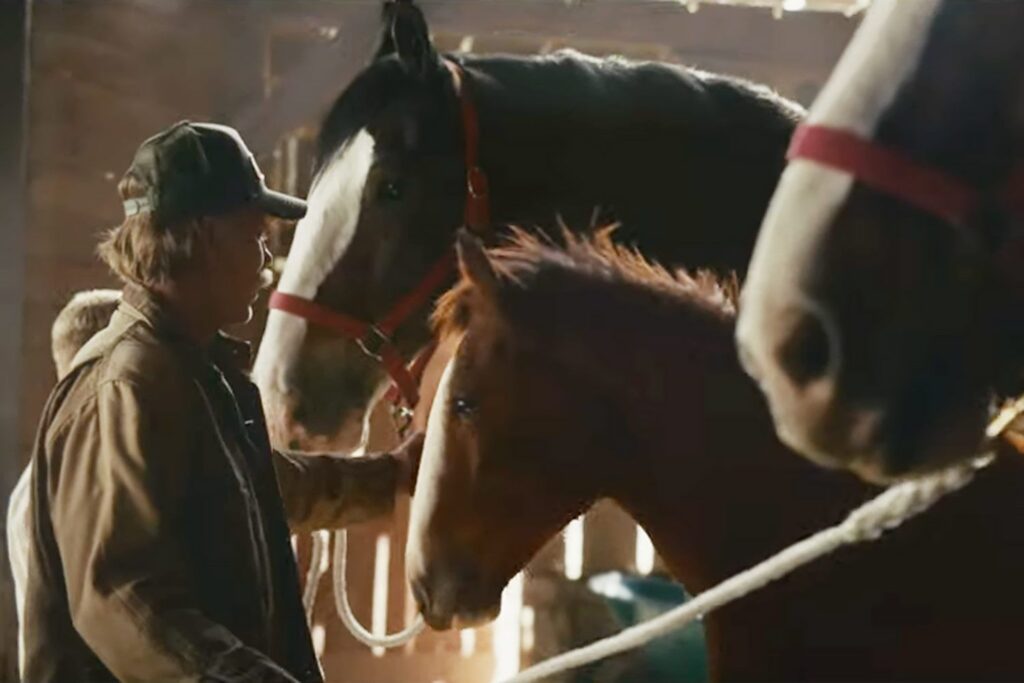
The emotional payoff arrived gradually, building toward a closing sequence that caught many off guard. The heavy rhythm of the Clydesdales, the slow rise of “Free Bird,” and the image of a rescued eagle lifting skyward formed a finale that felt earned, not engineered. There was no punchline waiting at the end—only a moment allowed to breathe.
What made that ending land was restraint. In a venue designed for excess, Budweiser resisted explanation. The symbolism was present but never spelled out. Freedom, continuity, resilience, care—none were announced, yet all were felt. The audience was trusted to understand without being told.
Industry observers quickly pointed out that Budweiser wasn’t really selling beer. It was reinforcing identity. While many brands chase relevance by constantly reinventing themselves, Budweiser reminded viewers that relevance can also come from consistency. Staying recognizable became the message.
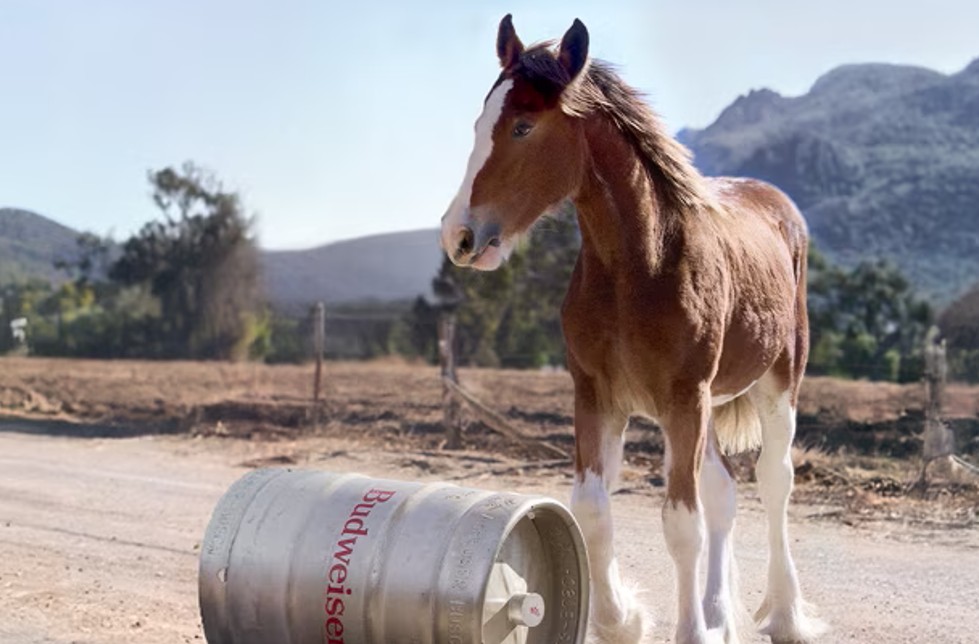
The return of the Clydesdales was central to that feeling. For generations, they’ve been part of Super Bowl tradition, appearing year after year during moments shared by families on couches and living-room floors. Seeing them again didn’t just recall past commercials—it recalled past Super Bowls, past gatherings, past rituals.
Behind the scenes, the creative approach matched that philosophy. The production emphasized real animals and practical filming over digital spectacle. Scenes weren’t rushed. Emotion was allowed to build naturally rather than being forced through visual tricks or heavy-handed messaging.
The music choice played a crucial role. “Free Bird” didn’t overpower the images—it guided them. Its slow build mirrored the ad’s pacing, lifting viewers emotionally without announcing itself. The song’s cultural weight quietly amplified the sense of freedom and openness already present on screen.
Placed alongside other Super Bowl ads, the contrast was stark. Celebrity-packed spots delivered quick laughs and short-lived buzz, then faded as soon as the final whistle blew. Budweiser’s ad followed a different path, sparking conversation rather than punchlines.
People didn’t share it because it was outrageous. They shared it because it moved them. Many admitted they didn’t expect to feel anything during a beer commercial, which made the emotional hit even stronger. That surprise became part of its power.
Marketing experts have suggested this response reflects a larger cultural shift. After years of nonstop digital noise and constant upheaval, audiences are increasingly drawn to content that feels steady and grounding. Symbols like the Clydesdales and the eagle resonate because they suggest endurance rather than novelty.
There was also a strategic undercurrent. As Budweiser faces pressure from craft brews, seltzers, and changing tastes, leaning into heritage becomes a form of differentiation. Instead of chasing trends, the brand chose to remind people why it mattered long before trends existed.
Some of the most telling reactions came from ordinary viewers. Parents watched with children and felt echoes of past Super Bowls. Older fans recognized a familiar emotional language. Younger viewers saw, perhaps for the first time, why these ads have lasted for decades.
In the end, Budweiser didn’t win by being louder or more shocking. It won by being patient, familiar, and emotionally grounded. On a night dominated by attention-grabbing stunts, the brand proved that quiet confidence can still cut through.
And as conversations continued days after the game, it became clear that this understated approach had legs. While many viral moments faded as quickly as they arrived, Budweiser’s story lingered—less like an advertisement, and more like a shared emotional memory.