Lee Harding’s Explosive “Killing in the Name” Blind Audition on The Voice Australia
When Lee Harding walked onto The Voice Australia stage for the 2019 Blind Auditions, it didn’t feel like a brand-new contestant entering a talent show. It felt like a familiar face stepping back into a spotlight he once owned, but with a different kind of weight behind his eyes. Many viewers remembered him from Australian Idol in 2005, where he finished third and became a lightning-rod presence in the pop-punk lane Australian TV rarely allowed at the time. This return wasn’t framed as nostalgia only—it read like unfinished business.
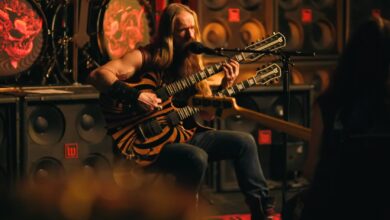
The song choice did the real talking. “Killing in the Name” isn’t built for safe television. It’s confrontational, rhythmic, and famously explosive, a track that dares you to commit or collapse. Most contestants reach for something that flatters the voice first; Harding reached for something that tests conviction first. Before a chair even turned, the room already felt like it had shifted into a different genre of audition—less “please like me,” more “this is who I am, take it or leave it.”
That’s what made the opening seconds so tense. In Blind Auditions, the coaches don’t see your face, your outfit, or your history. You’re reduced to tone, pitch, timing, and presence. Harding leaned into that purity by delivering the song with a rock-forward attack that didn’t apologize for the rough edges. The performance wasn’t trying to sound polite. It was trying to sound real. And in a format that often rewards polish, the rawness became the hook.
Part of the thrill is how quickly the coaches had to decide what they were hearing. The 2019 coaching panel—Boy George, Delta Goodrem, Kelly Rowland, and Guy Sebastian—covered huge stylistic territory, and “Killing in the Name” sits outside most “easy win” lanes. Harding’s vocal pushed through with a kind of controlled abrasion: enough clarity to prove it’s technique, enough grit to keep the danger intact. You could sense the coaches realizing this wasn’t just a rock song—it was a statement audition.
Then came the moment every rock-leaning viewer waits for: chairs turning, one after another, until it becomes a full-panel surrender. Harding earned a four-chair turn, the rare signal that the room isn’t merely impressed—it’s unified. In that instant, the audition stops being about whether he can sing and starts being about what kind of artist he is now, and what kind of coach would know how to steer that. A four-chair turn is power, but it’s also pressure, because now the choice has consequences.
What made it land harder is the contrast with his earlier TV narrative. Back on Australian Idol, Harding became known for a louder identity—pop-punk styling, big personality, and the kind of youthful chaos that television loves to package. After Idol, he scored major chart success in Australia, including a number-one single and a debut album that performed strongly, but like many reality-show breakouts, the mainstream spotlight didn’t stay permanently. Seeing him return years later reframed the whole arc: not a former contestant chasing relevance, but an artist re-entering the arena with a thicker skin.
In interviews and coverage around the audition, the vibe was clear: people missed him, and they didn’t realize they did until he hit that first surge of the chorus. The reactions weren’t only about the song; they were about recognition. Viewers who remembered the 2005 era saw a grown-up version of the same core energy, and newer viewers saw a rock vocalist who didn’t feel manufactured for the format. That mix—nostalgia plus surprise—is exactly how a moment becomes shareable.
There’s also something cinematic about using Rage Against the Machine in that setting. The track’s identity is tied to rebellion and refusal, and yet here it was inside a prime-time machine designed to soften edges into storylines. Harding didn’t defang it. He used the structure of the show—quiet intro, rising tension, the big payoff of the chorus—as a ramp. The performance became a controlled detonation, the kind that makes you lean closer because you’re not sure if it’s about to go off the rails (and that’s why it works).
After the chairs turned, the audition entered the persuasion phase: coaches pitching themselves as the person who “gets” the artist. This is where rock singers can get boxed in—praised for energy but treated like a novelty. Harding didn’t read like a novelty. The coaches’ responses leaned toward genuine excitement, and Boy George in particular was publicly enthusiastic about what Harding brought to the show. When a coach frames someone as a standout rocker, it signals they’re not just filling a slot; they’re adding a weapon to the team.
Harding ultimately chose Team Boy George, a decision that made sense in a way that wasn’t obvious until you think about it. Boy George’s musical identity has always been about boldness, image, and emotional directness, even when the genre changes. A rock vocalist who wants to keep his edges needs a coach who won’t sand them down into polite radio. The pick felt less like “who can teach me to sing” and more like “who will protect what makes me different.”
The season itself was branded as an “All Stars” run, which changed the atmosphere around performers like Harding. This wasn’t purely unknown hopefuls; it was also familiar voices from past TV chapters getting another shot, with the expectation that they’d arrive more formed. That context matters because it shifts how viewers judge risk. If a returning artist plays it safe, it looks strategic. If they come out swinging with Rage Against the Machine, it looks like confidence—or desperation. Harding’s performance read as confidence.
From there, his journey continued beyond that viral audition moment. He advanced through the competition on Team Boy George, stacking performances that leaned into rock intensity and big-stage presence. The “Killing in the Name” audition became the headline, but the real story was endurance: proving the first moment wasn’t a one-off. In a show where many contestants peak early, continuing to deliver after the initial shock is what separates a clip from a career chapter.
The wider internet response followed the predictable but satisfying pattern: “How did I forget this guy?” mixed with “Why doesn’t TV have more rock auditions like this?” Articles and reposts framed the audition as a comeback and a reminder that certain voices don’t belong only to one era. The performance spread because it had a clean hook—unexpected song, familiar face, four chairs—but it also spread because it felt earned. It didn’t look like a gimmick. It looked like someone reclaiming a lane.
And if you zoom out, that’s the emotional core of the moment. “Killing in the Name” is about resistance, but on that stage it became about persistence. Harding wasn’t pretending time hadn’t passed—he was using the years in his tone. The grit sounded lived-in, not costume-gritty. The best Blind Auditions don’t just show vocal skill; they show identity. This one did that in the first minute, and the chairs turning simply confirmed what the audience could already feel.
That’s why the clip still circulates. Even people who don’t follow The Voice formats understand the drama of a rock song punching through a polished TV environment and forcing unanimous approval. It’s a reminder that when a singer commits fully—when they stop auditioning for permission and start performing like the stage is already theirs—the room changes. Lee Harding’s Blind Audition didn’t ask to be remembered. It acted like it already was.