Chris Cornell’s Final Night in Detroit: The Last Soundgarden Performance That Became Rock History
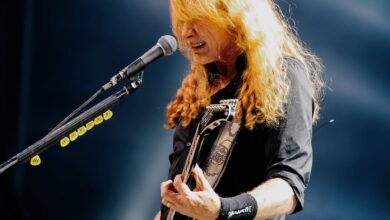
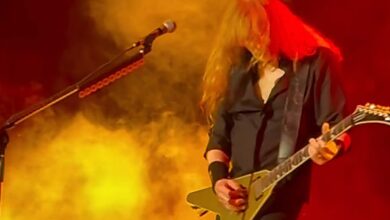
Chris Cornell’s final night onstage has become one of the most heartbreaking closing chapters in modern rock history because, at the time, it did not look like an ending at all. Soundgarden played Detroit’s Fox Theatre on May 17, 2017, as part of a spring tour, and by every outward sign it was another hard-hitting stop from a band that had reclaimed its force in the reunion years. Cornell was still the magnetic center of the room, still carrying that unmistakable voice that could move from a haunted whisper to a full-body roar, still singing songs that had shaped multiple generations of rock listeners. Only later did that concert take on its devastating weight, after authorities confirmed that Cornell died that night in Detroit at age 52, just hours after the show.
That is what makes the available footage from the Fox Theatre so emotionally overwhelming. Fans do not watch it only as a concert document now. They watch it as the last public chapter of a singular performer whose career had stretched from Seattle grunge to arena rock, from Soundgarden to Temple of the Dog to Audioslave to an increasingly intimate and vulnerable solo catalog. In the footage, there is no cinematic farewell speech, no obvious sign that history is closing in, no final curtain staged for posterity. Instead, there is the far more painful truth that so many legendary music stories share: the people in the room thought they were attending a great show, not witnessing a final bow. That tension between normalcy and finality is what gives the Detroit performance its haunting power.
Setlist records from that night show a performance built like a classic Soundgarden storm, moving through early material and bigger anthems with the kind of serrated intensity fans expected from the band. The documented set included songs such as “Ugly Truth,” “Hands All Over,” “Outshined,” “Rusty Cage,” “Spoonman,” “Black Hole Sun,” and “Fell on Black Days,” before the night closed with “Slaves & Bulldozers” and a snippet of Led Zeppelin’s “In My Time of Dying.” That final combination has become central to how the concert is remembered, partly because it now feels eerie in retrospect and partly because it captured the band doing what it had always done best: pushing blues, metal, punk, and psychedelic menace into one towering live statement. It was not packaged as nostalgia. It was still a living, dangerous performance.
Cornell’s greatness had always lived in contradiction. He was a grunge icon with the range of a classic hard-rock god, a writer who could make anguish sound mythic, and a frontman who looked fully commanding even when his lyrics suggested collapse, longing, or spiritual exhaustion. That contradiction is one reason his live performances have aged so well. Onstage he could make “Black Hole Sun” feel apocalyptic, “Fell on Black Days” feel intimate, “Rusty Cage” feel feral, and “Like a Stone” feel almost sacred. He was never only about volume or power. He understood atmosphere, suspense, and the strange emotional force of restraint. Even in fan-shot videos, where the sound is imperfect and the angles are rough, that presence still cuts through. He did not merely sing songs. He inhabited them until they seemed to rearrange the air around him.
The Detroit footage matters for another reason too: it reminds people that Cornell was still fully active as an artist in 2017. This was not a retired legend trotted out for sentimental applause. Soundgarden had reunited years earlier, released King Animal in 2012, and returned to stages with a seriousness that made the reunion feel earned rather than ceremonial. Cornell had also been touring as a solo artist and remained one of the rare singers whose catalog across multiple bands was strong enough to build an evening around several identities at once. By the time he reached Detroit, he represented not one era of rock but several. He belonged to the heavy alternative explosion of the early 1990s, the supergroup grandeur of Audioslave, the reflective maturity of his solo work, and the enduring mythology of one of rock’s truly irreplaceable voices.
Watching clips from that final show now, the emotional center often shifts depending on which song is playing. “Black Hole Sun” lands with tragic inevitability because it became Soundgarden’s most recognizable anthem and one of the defining songs of its decade. “Fell on Black Days” carries an even heavier retrospective charge because its title and mood seem to invite mournful reinterpretation, even though reducing Cornell’s art to prophecy does not do justice to the complexity of his songwriting. Then there is “Slaves & Bulldozers / In My Time of Dying,” the documented closing moment, which many listeners return to because last songs always develop an aura in rock history. They become larger than they were in real time. They start to feel like accidental epilogues, even when they were never intended that way.
Still, the most honest way to approach the Detroit concert is not as a coded farewell, but as evidence of Cornell’s lasting live power. Even after decades of punishing material, he could still deliver drama, shape, and menace in a way few singers could touch. His voice had changed over the years, as every human voice does, but the emotional command remained extraordinary. He knew how to ride the tension inside a phrase, how to make a melody crack open just enough to expose pain without losing control, how to let a scream arrive as a climax rather than a habit. That gift is part of why his legacy has remained so large. Cornell was technically impressive, but technique alone does not explain why people still freeze when they hear him sing. He made intensity feel personal.
Any serious look back at Cornell’s career also has to admit how unusually broad his great-performance archive is. Some rock singers have one era that towers over everything else. Cornell had several. There is the primal early Soundgarden force, the sharpened songwriting and mainstream breakthrough years, the unexpectedly rich solo period, the emotionally enormous Temple of the Dog material, and the post-grunge cathedral sound of Audioslave. That variety is why a great Cornell playlist can feel like a guided tour through several versions of masculinity in rock music: raw and aggressive, wounded and reflective, politically charged, spiritually restless, and occasionally almost tender enough to disarm you. The Detroit show is tragic because it is the end, but it also sends viewers back through all those earlier peaks looking for the full measure of what was lost.
The full fan-shot Detroit concert is the essential starting point because it captures the final performance in its broadest available form. After that, the individual song clips hit differently, especially if you want to focus on the emotional weight of specific moments from the last night. Then, stepping back into earlier years becomes almost necessary. It restores proportion. It reminds the listener that Cornell’s story is not only one of loss, but also one of astonishing range, durability, and artistic reinvention. The older clips do not lessen the sadness of Detroit. They deepen it by showing just how much life, beauty, and force he had poured into rock music across decades. That is why the best way to honor the final footage is not to stop there, but to place it inside the much bigger arc of his career.
Final full performance in Detroit, May 17, 2017. This fan-shot upload is the most useful single document of the last Soundgarden show at Fox Theatre.
“Black Hole Sun” from the final Detroit show is one of the most widely circulated individual clips from that last night, and it carries an especially heavy emotional charge because of the song’s place in Cornell’s legacy.
The documented closing performance, “Slaves & Bulldozers / In My Time of Dying,” is the clip many fans revisit when they want to see the final moments of the concert itself.
To understand why Cornell’s loss hit so hard, it helps to jump back to a full solo-era concert where his range across Soundgarden, Audioslave, Temple of the Dog, and solo material is on display in one place. The Argentina 2007 show is one of the strongest long-form documents of that versatility.
A second strong full-concert stop is Bogotá 2016, which is especially moving because it shows how commanding Cornell still was late in his career, not long before the final year of his life.
One of Cornell’s most beloved later-period performances is “Nothing Compares 2 U” from SiriusXM. It became one of those rare cover performances that no longer feels secondary to the original because he brought so much grief, control, and naked humanity into it.
For Audioslave-era power, “Like a Stone” remains indispensable. The official video is studio-based, but it still captures the songwriting and emotional architecture that made that era so massive, while live versions from the same period show how naturally Cornell could carry its grandeur onstage.
“Hunger Strike” belongs in any Cornell retrospective because it connects him to one of the most emotionally important branches of the Seattle story. The later live performances of the song show how age added gravity rather than weakness to his delivery.
A great Cornell article cannot end only in grief, because his best performances resist being reduced to a final headline. What comes through in the Detroit footage and in the older concert documents alike is not just sadness, but scale. He was one of those singers who made rock feel larger than the room it was being played in. He could sound ancient and immediate at the same time, like someone channeling pain that belonged both to him and to everybody listening. That is why people still return to the Fox Theatre clips even when they know they will hurt. They are not only watching the end of a life. They are watching proof of a gift that stayed electrifying until the very last night it was seen in public.