The Heartbeat Returns: How Budweiser’s Clydesdales and “American Icons” Reclaimed the Super Bowl Spotlight
Budweiser has spent decades turning the Super Bowl into something bigger than a game-day advertising showcase—almost a national mood board—and the Clydesdales have been the brand’s most reliable shorthand for that ambition. When those horses appear, the message is never just “buy beer.” It’s tradition, craft, and a certain idea of American familiarity, delivered in a visual language that’s instantly recognizable. In the Super Bowl LX cycle, that language returns with fresh intent, because the context around big patriotic symbolism has changed. The moment is louder, more divided, more online, and more suspicious of corporate sincerity. Budweiser’s gamble is that a clean, emotional story—built around living icons instead of celebrity cameos—can still cut through the noise and feel earned rather than manufactured.
The heart of the 2026 campaign is a simple thesis: strip the pitch down to symbols that people already know, then let craftsmanship do the heavy lifting. The brand framed the year as a milestone—its 150th anniversary—so the creative choice was to lean into heritage rather than novelty, but not in the usual scrapbook way. Instead of recycling greatest-hits imagery, the spots emphasize atmosphere: winter light, wide fields, quiet barns, and the kind of patient pacing that feels almost stubborn in a media environment optimized for fast cuts. That’s where the Clydesdales function like a cinematic instrument. Their size forces stillness; their presence slows the edit; their realism anchors the whole thing in the physical world. You can’t “fake” a 2,000-pound animal being calm on camera.
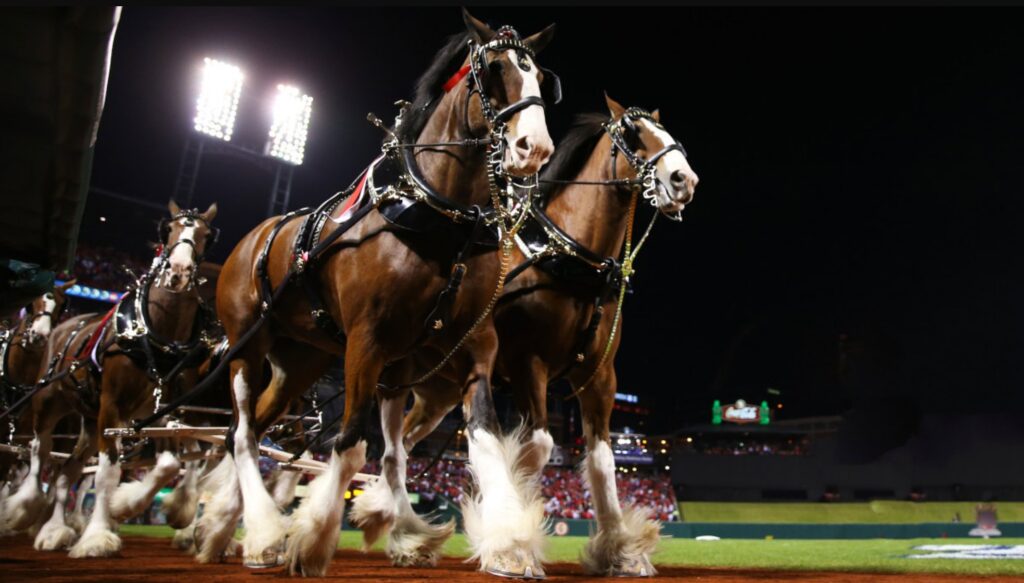
If you trace Budweiser’s Super Bowl story back to its roots, the horses weren’t always the emotional centerpiece—they were an emblem of delivery, labor, and brand pageantry. The Clydesdales’ first Super Bowl appearance dates to 1975, and over the years they evolved from a symbol of classic distribution muscle into something closer to a recurring film franchise. In the best of those ads, the beer is almost secondary to the story: a handler’s bond with a horse, a tribute moment that taps collective memory, a quiet gesture that feels bigger than commerce. That evolution matters because it explains why Budweiser keeps returning to animals when so many brands chase famous faces. The Clydesdales do not age out, scandal out, or trend out—they just keep showing up.
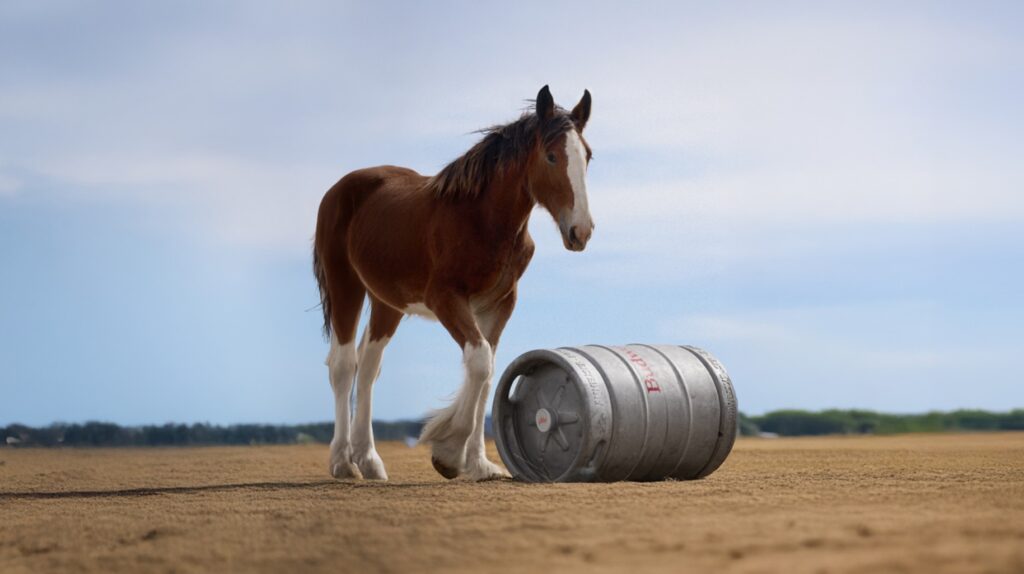
Super Bowl LX pushes that long-running strategy into a new chapter by adding another symbol that carries instant national weight: the bald eagle. The full spot, titled “American Icons,” pairs a young Clydesdale with a baby eagle in a story that plays like a fable about protection, growth, and shared destiny. The idea is almost aggressively uncomplicated, which is exactly the point. It’s designed to be understood with the sound off and still land emotionally once the audio hits. That’s where the music choice becomes the secret weapon. By bringing in Lynyrd Skynyrd’s “Free Bird,” Budweiser taps a track that already arrives with myth, memory, and an unmistakable rise-and-release emotional architecture. The song doesn’t just score the ad; it steers the audience’s breathing.
Before “American Icons” fully steps into view, Budweiser set the stage with teasers that behave less like traditional previews and more like micro-mysteries. One teaser, “Stable,” is almost minimalist to the point of daring: five Clydesdales standing together, then turning their heads in unison toward a rattling metal bucket with something hidden beneath it. No reveal, no punchline, no explanatory voiceover—just tension and the tagline “Heads Will Turn.” That restraint is intentional. Modern Super Bowl advertising often over-explains itself because brands fear being misunderstood. Budweiser does the opposite here: it assumes the audience enjoys being teased, enjoys guessing, and enjoys the idea that the brand can still create a watercooler question without resorting to shock or celebrity gimmicks.
The numbers and milestones woven into this campaign aren’t just trivia; they’re part of the story Budweiser is telling about continuity. “Stable” and the larger Super Bowl LX effort mark the Clydesdales’ 48th national Super Bowl commercial appearance, and that statistic is a flex disguised as a fact. Very few brand properties can claim that kind of consistent prime-time presence across multiple generations of viewers. It suggests a kind of brand patience that feels almost old-fashioned: keep investing in one symbol until it becomes culturally owned. In a business where marketers frequently chase whatever is newest, Budweiser is arguing that the oldest assets—when filmed with enough care—can still feel fresh. The ad doesn’t pretend the Clydesdales are “back.” It treats them like they never left.
What makes this version of the Budweiser formula different is that it’s not merely sentimental—it’s also strategic about tone. After years when major brands were whipsawed by politics, backlash cycles, and social media pile-ons, “American Icons” reads like an intentional return to “safe” symbolism: animals, farmland, weather, and a rock classic that’s been emotionally coded for decades. Some critics interpret that as retreat. Others see it as a brand picking a lane and executing it with confidence. Either way, the campaign is tuned to the reality that the Super Bowl isn’t just a television moment anymore. It’s a multi-week content rollout, with teasers dropping early, reaction videos popping up instantly, and commentary spreading faster than the official uploads. Budweiser is building a story ecosystem, not just a one-off spot.
There’s also something quietly radical about the ad’s pacing in 2026. The Super Bowl has become a showcase for maximalism—more jokes, more cameos, more visual density, more “did you catch that?” references. Budweiser goes the other way. It trusts faces and bodies—animal bodies, specifically—to carry emotion without dialogue. That’s a harder assignment than it looks, because it depends on real moments: how a horse’s head moves, how an eagle’s wings catch light, how silence can feel heavier than sound. The craftsmanship is the persuasion. When the emotional peak arrives, it doesn’t feel like a brand pulling a lever so much as a story landing where it was always headed. That’s the difference between a commercial that wants applause and a commercial that wants people to feel something and not fully know why.
The choice of “Free Bird” is doing enormous narrative work, and it helps to remember why that song is so durable in American culture. It’s not just a classic-rock staple; it’s a slow-burn construction that teaches the audience patience, then rewards that patience with a soaring release. That structure mirrors what Budweiser is trying to do visually: start with quiet, build trust, then deliver lift. A live performance—especially one captured in an era when bands weren’t optimized for short clips—shows how the song earns its catharsis in real time. That’s why it pairs so naturally with cinematic imagery: both rely on buildup, not instant payoff. When a brand borrows a song this iconic, it’s borrowing all of the emotional memories people have already attached to it. The smart move is not to fight those memories, but to align the visuals with them so the audience feels the “click” of familiarity and significance at the same moment.
The studio version, by contrast, is where the myth becomes architecture—cleaner edges, tighter control, and that signature balance between tenderness and inevitability. It’s also the version most listeners have lived with for years, which means it carries a kind of personal ownership. That matters for advertising because familiar music can feel intrusive if the visuals don’t respect it. Budweiser’s approach is to treat the song like sacred material, using it as a slow emotional current rather than as a cheap nostalgia trigger. That’s why the ad’s imagery leans into wide-open spaces and natural textures instead of hyperactive montage. The brand is basically saying: this isn’t a joke; it’s a mood. And in a Super Bowl environment where so many ads wink at the audience, a straight-faced emotional swing can feel surprisingly bold, especially when it’s executed with enough restraint that it doesn’t tip into parody.
To understand why “American Icons” stands out among modern Super Bowl spots, it helps to compare it to another kind of American emotional performance: the stadium moment that tries to unify a crowd without needing an explainer. Live recordings—whether a concert at a storied venue or a field-level performance that becomes part of a national broadcast—have a similar job to Budweiser’s ad. They must feel both intimate and enormous at the same time. That’s not easy. The camera has to find humanity inside scale, and the performer has to sound like they mean it, not like they’re merely delivering a polished product. When you watch a strong live rendition from an official stage, you can see how the best moments often come from controlled simplicity: fewer tricks, more commitment. Budweiser is borrowing that logic—using icons and sincerity instead of cleverness.
National anthems and patriotic standards are a risky comparison point because they can slip into melodrama or feel politically loaded depending on the moment. But the best performances—especially the famous ones that endure in the culture—share a key trait with Budweiser’s 2026 ad: they commit to a clear emotional lane and refuse to undercut it with irony. That’s the connective tissue between a legendary anthem rendition and a well-made Clydesdale spot. Both rely on the audience recognizing something familiar, then feeling it renewed through craft. Budweiser isn’t asking viewers to learn a new symbol; it’s asking them to look again at symbols they already know. The success or failure hinges on whether the emotion feels earned. In the strongest moments, you don’t feel “sold to.” You feel briefly aligned with a shared cultural memory—whether that’s a melody, a landscape, or the sheer physical presence of animals that look like they belong in a national myth.
If there’s a through-line across all of this—the teasers, the full ad, the music, the history—it’s Budweiser’s bet that sincerity can still win attention in an era addicted to snark. The Clydesdales aren’t a novelty; they’re a promise that the brand will show up with something steady when everything else feels hyperactive. The bald eagle addition isn’t random either; it’s a way of amplifying the “America” signal without needing a single spoken word. And by tying the campaign to a 150-year milestone and a long Super Bowl track record, Budweiser frames the whole thing as continuity rather than reinvention. Whether people read that as heartfelt tradition or calculated safety, the craftsmanship is undeniable: the pace, the imagery, the sound design, and the music all align toward one goal—turning a one-minute commercial into a moment that feels like it belongs to the country’s shared TV mythology.