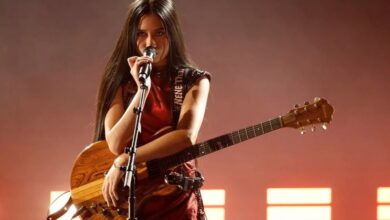
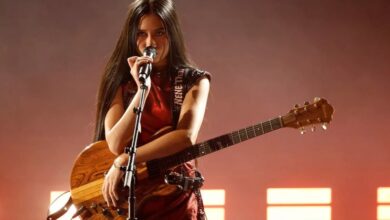
Ann Wilson’s Breathtaking “Dream On” Performance at Hampton Beach — A Masterclass in Power, Control, and Emotion
When Ann Wilson stepped onto the stage at the Hampton Beach Casino Ballroom on August 18, 2021, she transformed the historic venue into a reflection of her lifelong musical story. That night’s audience experienced a set that blended Heart’s legendary catalog with bold reinterpretations of classic rock, each one infused with new emotional life. The venue’s intimate acoustics captured every breath and every surge, allowing Wilson’s unmistakable voice to fill the room with warmth, clarity, and commanding presence.
One of the night’s most unforgettable moments came when Wilson began Aerosmith’s “Dream On.” The song demands a delicate balance between vulnerability and strength, a challenge that exposes even seasoned singers. Wilson, however, turned that challenge into something breathtaking. She carried the song from fragile beginnings into towering emotional peaks, shaping each phrase with care and conviction, and giving the anthem a deeply personal resonance that rippled through the crowd.
The performance unfolded with graceful patience. The band held back in the opening moments, leaving space for Wilson’s voice to float freely. Her delivery felt intimate, almost conversational, as if she were sharing a private story with the audience. Then, as the song slowly built, her trademark power emerged, filling the room with rich, soaring tones that never felt forced, only fully realized.
The arrangement relied on a careful balance of tension and release. Guitars laid down broad harmonic textures, while piano and ambient sounds added emotional depth beneath the surface. As the drums grew more open and cymbals shimmered, the music expanded into a wave of sound that mirrored the song’s theme of perseverance. Every instrument seemed to rise alongside Wilson’s voice, carrying the emotion higher with each passing moment.
Wilson’s backing band, the Amazing Dawgs, played a vital role in shaping that experience. Tom Bukovac, Tony Lucido, Paul Moak, and Sean Lane moved together with the kind of unity only years of shared performances can create. Their ability to subtly shift dynamics gave Wilson the freedom to explore every emotional corner of the song. It was less like accompaniment and more like a conversation between musicians who trusted one another completely.
The setlist that evening flowed like a story, weaving Heart’s signature hits with thoughtful tributes to rock legends. Songs like “Crazy on You,” “Magic Man,” “Straight On,” and “Barracuda” stood alongside nods to Led Zeppelin, Queen, John Lennon, and Steve Earle. Within this musical journey, “Dream On” felt like the emotional heart of the show, acting as a bridge between generations of rock storytelling.
Later in the year, professionally filmed footage of the Hampton Beach concert began circulating online, offering fans a richer look at the performance. Multiple camera angles revealed subtle interactions between the band members, Wilson’s expressive movements, and the carefully timed lighting that framed each musical peak. For those who had only seen shaky fan recordings, this footage brought the show’s full emotional depth into clear focus.
Other songs from the night, especially “Black Dog” and “Going to California,” also gained attention, forming a powerful cluster of classic-rock reimaginings. Together with “Dream On,” they showcased Wilson’s gift for honoring iconic material while making it feel new. Rather than copying the originals, she infused each song with her own emotional fingerprints, turning familiar melodies into something freshly alive.
The Casino Ballroom’s acoustics quietly shaped the magic of the moment. Known for its natural clarity, the room rewarded restraint and detail. “Dream On” began with a soft, almost whispered quality, as if the space itself were leaning in to listen. As the song grew, the sound blossomed into a full, resonant wave that wrapped around the audience, culminating in a finale that felt both powerful and deeply intimate.
Wilson’s phrasing revealed her deep connection to the song’s emotional structure. While she stayed true to its original form, she gently stretched syllables and bent notes to create suspense and warmth. Subtle touches of blues and soul slipped into the melody, giving it new colors without losing its core. Those small details turned the performance into something uniquely hers.
By that point in the tour, “Dream On” had become a recurring highlight, evolving night by night as Wilson refined its pacing and dynamics. The Hampton Beach rendition captured the song in a moment of artistic growth, shaped by repetition and intuition. Each breath, pause, and swell felt purposeful, guided by a singer rediscovering the joy of transformation within a beloved classic.
Audience reactions reflected that careful balance between tribute and originality. Fans marveled at Wilson’s effortless control of her upper register and her ability to create tension without strain. The band’s sensitive support allowed her voice to soar freely, turning the performance into an emotional exchange between stage and crowd rather than a simple technical display.
Because both fan-shot clips and professional recordings circulated online, the performance reached far beyond those who were in the room. Viewers noticed the same pattern across every version: gentle beginnings, a gradual rise, a dramatic peak, and a clean, resonant finish. That structure mirrored the song’s emotional arc, revealing how thoughtfully Wilson and her band shaped every moment.
Placed within the setlist, “Dream On” served as a symbolic bridge between eras. Surrounded by Heart’s own classics and tributes to other legends, it connected Wilson’s personal legacy to the broader story of rock music. For longtime fans, it felt like a continuation of her journey. For newcomers, it was proof that the spirit of rock can remain powerful while still evolving.
The sound engineering that night reinforced that connection. Instead of crowding the mix, each instrument was given space to breathe. The piano added warmth, the drums guided emotion with subtlety, and the bass anchored everything in a steady foundation. Together, they created a sonic landscape that supported Wilson’s voice without ever overshadowing it.
In the end, the Hampton Beach performance stood as a testament to Ann Wilson’s ability to breathe new life into a timeless song. “Dream On” became not just a cover, but a living conversation between past and present. Her voice carried decades of history while still sounding urgent and alive, turning that August night into a lasting reminder of what true artistry sounds like.
Long after the final notes faded, the performance continued to travel through the internet, drawing new listeners into Wilson’s world. The growing buzz around Hampton Beach only strengthened its place in her touring legacy. By revisiting “Dream On,” she didn’t simply honor a classic—she proved once again why the greatest rock songs endure, inspiring us to feel, to reach, and to keep dreaming forward.