When “Fire” Took Over Adelaide: YUNGBLUD’s Explosive Arena Moment on January 15, 2026
On January 15, 2026, Adelaide felt like it had been charged for days, not hours. Outside the Adelaide Entertainment Centre Arena in Hindmarsh, fans treated the wait like a ritual—camp chairs, blankets, nervous laughter, and that shared look strangers give each other when they’re about to experience something they’ll talk about for years. It wasn’t just another tour stop. It was YUNGBLUD arriving in full arena scale, with a crowd that wanted to be seen, heard, and held by the noise.
By the time the doors opened, the building already sounded alive. Even people sitting in the upper sections carried that restless energy you usually only feel at the barricade. The Australian leg of the IDOLS World Tour had been building momentum through Sydney and Melbourne, and Adelaide came in with something to prove: louder, closer, hungrier. You could feel it in the chants, in the way every crew member crossing the stage got cheered, like the room was impatient for ignition.
Dune Rats did their job the way good openers are supposed to—no polite warm-up, no gentle easing-in. They pushed the room into motion, and by the time their set wrapped, the arena had become a single pulse, already sweating, already shouting, already ready to be taken over. It mattered, because it meant YUNGBLUD wouldn’t have to “win” the crowd. He could simply step into the storm that had been waiting for him.
When the main set hit, it landed like a door getting kicked in. Lights, smoke, and that immediate shift where you realize the night has officially begun. The first stretch of the show was designed to grab you by the chest—big hooks, big visuals, big crowd responses. And YUNGBLUD leaned into it with the kind of physical commitment that makes the stage feel too small for him, like he’s trying to climb into the audience’s bloodstream rather than just perform at them.
Adelaide responded the way only a fully bought-in crowd can: not just singing, but screaming every line like it was a confession. It didn’t feel like people were trying to impress anyone around them. It felt like release. The chants hit the ceiling and came back down heavier, and every pause between songs filled instantly with noise. That’s how you know a show is moving beyond “good” and into something communal—when silence becomes impossible.
There’s a special kind of electricity in a night where the artist keeps pulling people into the story, not just the setlist. At one point, a local fan was brought up on stage with a guitar, and it turned into one of those moments that shifts the entire mood from spectacle to connection. Suddenly it wasn’t “them and us.” It was “all of us.” The arena loved it because it confirmed what fans already believe about him: this world is shared.
Then came the emotional pivot that made the rest of the night hit harder. The tribute performance of “Changes” wasn’t treated like a quick cover—it was framed like a thank-you letter to the roots of the genre, and to Ozzy Osbourne’s shadow that still stretches across modern rock. The crowd’s energy changed on a dime. Phones lifted like lighters, faces softened, and for a few minutes the entire arena felt like it was breathing together, holding something fragile.
And that’s why “Fire” mattered so much in Adelaide: it arrived right after a moment that had everyone open. You could feel the room needing a jolt back into motion, but not a cheap one—something that matched the emotion and then set it ablaze. Instead of rushing, the transition gave the audience just enough time to collect themselves, like the show was saying, “Okay. You felt it. Now let’s turn that feeling into fuel.”
When “Fire” kicked in, it didn’t land as just another high-energy track. It felt like a command. The arena snapped back into movement—hands up, bodies leaning forward, voices getting rougher and louder. It had that “arena rock” lift, where the chorus becomes bigger than the band because the crowd takes ownership of it. You could hear sections of the venue competing with each other, trying to be the loudest, like volume alone could push the song into the sky.
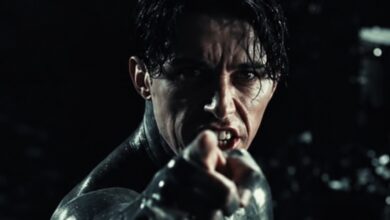
What made the Adelaide “Fire” moment stand out was the way it played with control. In the middle of all that chaos, he pulled the room into a hush—finger to his lips, a brief silence like a held match before the strike. It’s a risky move in a massive venue, but it worked because the crowd trusted him. Thousands of people actually obeyed, even if only for a second, and that second made the next explosion feel twice as massive.
Then the chorus hit again and the room erupted. That’s the trick: silence makes the noise feel earned. “Fire” became a surge, not just sound—sweat, adrenaline, and that giddy feeling of losing yourself in something bigger than your own head. People who had been teary minutes earlier were now jumping, screaming, laughing, letting the song burn away whatever they carried in with them. It’s rare when a live performance feels like therapy and riot at the same time.
Visually, the night leaned into a gritty, dramatic aesthetic—smoke, sharp lighting, and those sudden flashes that make a stage feel like a moving photograph. During “Fire,” that look fit perfectly, because the song thrives on intensity more than polish. Everything felt built for impact: the beat, the pacing, the way the crowd hit cues like they’d rehearsed. Even if you weren’t on the floor, you could feel the push of bodies moving in unison, like the building itself had rhythm.
And “Fire” also worked as a statement about the era YUNGBLUD is chasing. It wasn’t nostalgia cosplay—it was the modern version of the same promise: rock can still be dangerous, romantic, and alive. In Adelaide, you could see it in the faces around the arena: people who came for catharsis getting exactly that, and people who came skeptical getting converted by sheer conviction. The song didn’t just sound big. It felt necessary.
By the time the set moved on, “Fire” had done its job: it reset the room at a higher level. Everything after felt louder because the crowd had crossed a threshold. And that’s what the best performances do—they change the temperature so completely that the rest of the night carries their fingerprints. Adelaide didn’t just watch “Fire.” Adelaide became it for a few minutes—bright, messy, fearless, and impossible to ignore.
If you’re telling the story later, the details blur—exact lighting cues, exact gestures, which section screamed the loudest. But the feeling stays sharp: the whiplash from tender tribute to full ignition, the moment of enforced silence, the roar that followed, and the sense that you were inside a living thing instead of a seated venue. That’s why “Fire” in Adelaide on January 15, 2026 keeps getting talked about like a highlight—because it wasn’t just performed. It was unleashed.