Three Days Grace Ignite Hershey With A Thunderous “Painkiller” At GIANT Center On March 1, 2026
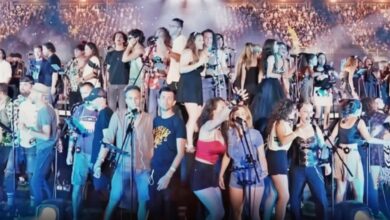
On March 1, 2026, Three Days Grace rolled into Hershey, Pennsylvania, and turned the GIANT Center into the kind of room that feels like it’s running on pure voltage. Hershey is famous for sweetness, but that night the energy was all bite: a hard-rock crowd packed in tight, ready for riffs that hit like alarms and choruses built to be shouted, not sung politely. The venue’s concert setup is built for scale without losing that “close enough to feel it” intensity, and the audience responded like they understood the assignment. It wasn’t just a stop on a tour route—it had that specific tour-night swagger where the band looks relaxed, the fans look hungry, and everything feels a little louder than it should.
“Painkiller” is one of those songs that thrives in this exact environment: heavy enough to feel physical, clean enough to lock into immediately, and structured like it wants a crowd to become part of the percussion. In the studio, it’s tight and urgent; live, it becomes a shared ritual—tension, release, and that moment where the beat drops and you can practically see the room move in sync. What makes the Hershey performance stand out isn’t some gimmick or surprise cameo. It’s the way the song’s pulse translates to a real room, where the low end can thump through the floor and the crowd noise becomes its own instrument. When a band has a catalog of big anthems, the songs that endure are the ones that still feel dangerous live.
The GIANT Center itself is a big reason why this night worked the way it did. It’s large enough to hold a serious crowd—concert capacity is often listed around 12,500—yet it’s still an arena where the lower bowl can feel immediate, especially when the audience is loud and the front sections are pressed toward the barricade. Hershey isn’t a “casual” rock town stop where everyone politely nods; it’s the kind of crowd that shows up ready to sing, shout, and treat the show like a release valve. When you add that to a band that knows how to pace dynamics—pulling tension back and then slamming it forward—you get a performance that feels bigger than the room, even when the room is already huge.
A big part of why this specific “Painkiller” moment has been circulating is the way it was captured. Fan-shot footage can be messy, but when it’s filmed close—front row, steady enough, and in crisp resolution—it preserves details that polished broadcasts sometimes flatten. You see the timing between players, the exact second the crowd reacts, the little pauses and breath moments that remind you it’s happening in real time. The Hershey clip frames the band like you’re standing there with the people who arrived early, held their spot, and decided this song was the one they weren’t going to watch through someone else’s screen. It feels immediate, like the performance is aimed straight outward rather than “performed for the room.”
The song’s appeal also comes from how it balances modern hard-rock sheen with an older, more physical kind of groove. “Painkiller” doesn’t rely on complexity to feel powerful—it relies on certainty. The riff is built to be recognized instantly, the rhythm is built to drive forward, and the hook is built to invite a mass response. In Hershey, that formula clicks because the audience treats the chorus like a cue, not a surprise. You get that classic arena-rock effect: thousands of people turning into one voice, not because they were told to, but because they can’t help it. That’s the kind of live chemistry that doesn’t show up on a setlist—it shows up in the air.
There’s also a wider context around this performance that makes it feel like a “snapshot” of the band’s current live identity. By 2026, Three Days Grace are veterans at turning arenas into singalongs, but they’ve never coasted on nostalgia alone. A song like “Painkiller” sits in that sweet spot where it’s modern enough to punch hard and familiar enough to feel like part of the band’s backbone. That matters on nights like Hershey, where the crowd often contains multiple generations of fans—some who grew up on earlier hits, some who arrived later, and many who just want the loudest possible version of the band. A great live show is where all of them feel equally catered to.
Even the numbers people cite around this stop reinforce how packed the night felt. Crowd-size estimates vary depending on who’s counting and how, but setlist-based tracking for the GIANT Center date points to a figure around 11,902 “attendances,” which lines up with the sense of an arena that’s close to full and fully engaged. The more important part than any single number is what it implies: enough people to make the choruses thunder, enough bodies to make the room feel hot and loud, and enough collective energy that the band can lean into the wave instead of dragging it forward.
What really separates a strong “Painkiller” performance from a forgettable one is commitment. The song asks for precision—if the rhythm loosens, it loses its punch—and it asks for attitude—if it’s played politely, it becomes just another track in the set. In Hershey, the performance lands because it’s unapologetic. It has that “no dead space” momentum where transitions feel tight and the band doesn’t let the room deflate between sections. And because it’s an arena, the crowd response becomes part of the arrangement: the cheers rise at the right moments, the singalong peaks where it should, and the whole thing feels like it’s accelerating even when the tempo stays locked.
Watching the Hershey clip, you can feel why fans latch onto this specific version. The closeness of the recording gives the song extra weight—the guitars feel bigger, the drums feel sharper, and the crowd noise hits like a second wall of sound behind the band. It captures the arena paradox perfectly: you’re in a massive room, yet the performance feels personal because the camera is near enough to catch tiny details and the audience is loud enough to sound like a single organism. This is also where “Painkiller” does its best work: it turns a modern rock single into a live-pressure anthem, the kind that feels less like a song choice and more like a statement in the middle of a set.
To understand why the live version hits differently, it helps to revisit the studio cut. In the recorded version, everything is measured—clean edges, controlled aggression, the hook engineered to stick. Live, those edges become rougher in a good way, because the room adds friction. The crowd fills the gaps, the band pushes the dynamics harder, and the song becomes less about perfection and more about impact. That’s why fans who already know the track still chase live recordings: you’re not just hearing the song again, you’re hearing what the song becomes when it’s shared by thousands of people at once.
The “Painkiller” studio version also shows why the track is so adaptable to arena scale. It’s built on a straightforward surge—no wasted movements, no extra ornamentation, just a driving core that can be amplified by volume and crowd response. In a place like Hershey, that structure is an advantage. The riff doesn’t get lost in the room, the chorus doesn’t need explanation, and the rhythm section can lock the entire arena into one forward motion. When a song is this “direct,” it gives the live show a spine—something the band can slam down in the middle of the set to reset the temperature and remind everyone why they came.
If you want the broader context of how that night flowed, full-show uploads from the same date add another layer. A single-song clip captures the peak, but a full set shows pacing: how the band builds, where they place heavy moments, when they let the crowd breathe, and how certain songs land differently depending on what comes before them. It also highlights a key truth about strong arena bands: they’re not just playing songs, they’re managing energy like it’s a physical resource. By the time “Painkiller” lands, the room is already tuned to their frequency, which is why the performance feels so inevitable—like the crowd has been subconsciously waiting for that exact impact point.
One of the most interesting comparisons from Hershey is how different songs trigger different kinds of crowd participation. “Painkiller” brings out the stomp-and-shout side of the arena, but other staples often bring out something more melodic, more emotional, or more purely nostalgic. That contrast makes “Painkiller” feel even heavier in the set, because it’s not just loud—it’s a tonal shift into something sharper and more immediate. In other words, it doesn’t just keep the show moving; it changes the room’s posture. People stop swaying and start bracing. Hands go up differently. The energy tightens. That’s when you know a live song is doing more than “sounding good.”
When a band is truly on, you can hear it in the way the crowd reacts before the chorus even arrives. There’s a specific pre-chorus anticipation in great live performances—the audience recognizes what’s coming and starts to rise toward it, like everyone is inhaling at the same time. In Hershey, that feeling is palpable across the front-row recordings from the show. It’s not just that the band plays well; it’s that the room participates predictably, like a practiced ritual. That kind of collective timing is rare, and it’s exactly why certain tour stops become “talked about” nights. People leave not just remembering a song, but remembering the feeling of being part of a synchronized wave.
A song like “Painkiller” also benefits from the arena’s acoustics in a way club shows can’t always replicate. In a smaller room, everything is immediate, but it can be chaotic. In an arena, the sound has space to bloom—kick drum thumps travel, guitar chords hang, and crowd noise becomes a roar rather than a scattered shout. That scale can make heavy songs feel cinematic. Hershey’s GIANT Center is designed for big events, and when the production is dialed in, you get a sense of size that matches the music’s intent. It’s the difference between hearing a hard-rock song and feeling like you’re inside it.
Placing “Painkiller” alongside other big live moments—whether from the same night or other arenas—highlights what makes this Hershey version memorable: it feels clean without feeling sterile. Some live clips go viral because something goes wrong; this one goes viral because everything goes right in a very human way. You hear the crowd’s imperfections and the room’s noise, but the performance stays locked. That balance is hard to fake. And because the video is close and clear, it captures the little realities that make live music addictive: the split-second reactions, the shouted singalongs, the way the band’s confidence grows as they feel the audience pushing back.
In the end, the Hershey “Painkiller” moment works as a document of what Three Days Grace do best in 2026: translate recorded power into live force. It’s an arena band’s job to make a big room feel like one shared heartbeat, and on March 1 at the GIANT Center, the band and crowd meet each other at full volume. The performance stands out not because it’s radically different from every other night, but because it captures the ideal version of a tour stop—tight playing, a roaring audience, and a song that thrives on confrontation and release. That’s why this specific clip sticks: it doesn’t just show the band playing a song, it shows a room becoming part of it.