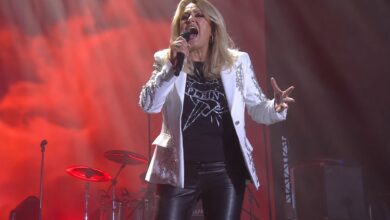
Three Days Grace Ignite Hershey With A Blistering “Kill Me Fast” At GIANT Center On March 1, 2026
“Kill Me Fast” has the kind of title that sounds like shock value until you hear what the song is actually doing. In Three Days Grace’s hands, it plays less like provocation and more like a brutally honest request for closure—the emotional equivalent of ripping off a bandage you’ve been staring at for too long. That’s why the Hershey, Pennsylvania performance on March 1, 2026 hits so hard: it lands in a room full of people who already understand the feeling, even if they’ve never lived the exact story behind the lyric. The GIANT Center setting adds scale to that intimacy. Big arenas can sometimes blur emotion into noise, but this song thrives on noise. It turns a private thought into something you can shout with strangers.
What makes this particular night feel important is how neatly it captures the band’s 2026 identity: veteran-level confidence, a catalog built for crowd therapy, and newer material that doesn’t feel like filler between the classics. “Kill Me Fast” is positioned in the set like a statement, not a gamble. The crowd reaction tells you it’s already crossed that line from “new track” to “shared chant,” which is the fastest route to permanence for any modern rock single. In Hershey, you can sense the audience leaning in as soon as it begins, like they’re recognizing the song’s emotional shape in real time. It’s not just excitement—it’s recognition. That’s the difference between polite applause and a room that feels personally implicated.
The live arrangement also gives the song a different kind of weight than the studio version. On record, everything is controlled: the edges are clean, the dynamics are designed, the tension is measured. Live, the tension becomes physical. The guitar tone feels bigger, the rhythm hits harder, and the pauses—those tiny spaces between lines—feel like the whole arena holding its breath for half a second. That’s where Three Days Grace excel: they know how to make the silence part of the punch. A song built around emotional urgency benefits from a live environment because urgency is contagious. One person in headphones can feel it, but thousands of people in a room can amplify it into something that feels almost undeniable.
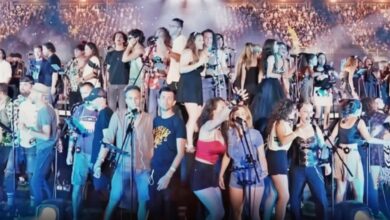
Hershey is also the kind of stop that can surprise people who only think of it as a “theme park town.” When a rock show sells the place out or near it, the crowd has a specific vibe—less industry, more pure fan energy. It’s people who drove in, planned around work, argued about where to park, and still showed up early enough to scream from the front. That energy shows up in fan-shot footage more than any official clip ever can. The best audience videos don’t just document the song; they capture the temperature of the room. You hear the chatter turn into a roar, the scream that breaks out when the hook lands, and the way the chorus pulls voices out of people who didn’t expect to sing.
“Kill Me Fast” also stands out because it’s a modern Three Days Grace song that still carries the band’s classic emotional architecture. The band built their legacy on songs that sound like they’re written in the moment someone finally says what they’ve been swallowing for months. This track fits that tradition, but it adds a sharper, more current edge—less pleading, more boundary-setting. The chorus doesn’t feel like romantic melodrama; it feels like self-preservation. That’s why it connects with a crowd that spans different eras of the band. Some fans came up on the earlier heartbreak anthems, others arrived later, but the emotional language is consistent: direct, vivid, and made to be yelled when you can’t find cleaner words.
There’s also something about the song’s momentum that makes it perfect for a mid-set surge. You can feel how it resets the room. Even people who were conserving energy suddenly start moving again—hands up, heads nodding, phones raised, voices loud. The band’s pacing matters here. A great arena set isn’t just “hit, hit, hit.” It’s a narrative of tension and release, and “Kill Me Fast” functions like a turning point: it pushes the show back into high gear while still delivering a lyric that stings. That combination—speed plus emotional bite—is why the track feels like it belongs onstage, not just on a playlist.
The Hershey performance also benefits from how clearly the band communicates with a big room. Some acts shrink in arenas because their intensity gets swallowed by distance. Three Days Grace do the opposite: they play like they’re trying to reach the last row and the barricade at the same time. That’s not only volume; it’s clarity of intent. Every chorus is delivered like it needs to land on everyone equally. When you watch the crowd response in this show, you can tell it isn’t passive consumption. The audience is participating, pushing back, turning the hook into something communal. “Kill Me Fast” becomes less of a song and more of a moment the room agrees to share.
What makes this version different, ultimately, is the combination of proximity and scale. A front-row fan-shot clip gives you the immediacy—the sense that you’re right there while the song detonates—while the arena setting gives you the roar, the mass singalong, the feeling that the lyric has become bigger than the person who wrote it. Hershey on March 1, 2026 is a perfect snapshot of that transformation: a newer track proving itself in real time, not by streaming numbers, but by how many people are willing to scream it back at full volume. That’s how songs become staples—one night at a time, one crowd at a time.
After seeing the Hershey clip, it’s easier to understand why fans latch onto this performance specifically. The camera angle and closeness pull you into the mechanics of the moment: the way the band locks into the groove, the way the vocal delivery hits harder live, and the way the crowd noise swells at exactly the points you’d expect—then exceeds them. The emotional center of “Kill Me Fast” is urgency, and urgency is one of the hardest feelings to fake onstage. In Hershey, it doesn’t feel performed so much as released. The chorus lands like a collective exhale, and the room reacts with that unmistakable sound of people recognizing themselves in the line.
Going back to the official video after the fan-shot performance feels like stepping into the song’s original blueprint. The production is tighter, the dynamics are more controlled, and the atmosphere is shaped with intention rather than chance. That contrast is exactly what makes the Hershey version stand out. In the studio, the song is precise and cinematic; live, it’s raw and immediate. The lyric feels more confrontational when it’s shouted into an arena, because it becomes a line you’re willing to say out loud in public. That’s the hidden magic of live rock performances: a private thought turns into a public anthem, and suddenly the emotion isn’t just yours—it belongs to the whole room.
Official live footage offers a different kind of comparison, because it sits between the two extremes: it’s performed in a real setting, but captured and mixed with professional intent. Watching an official live video of “Kill Me Fast” alongside the Hershey fan-shot clip highlights what the audience camera adds. The official version is polished and powerful, but the fan clip captures the messy electricity—tiny imperfections, spontaneous crowd screams, and that unpredictable surge you only get when a moment is genuinely landing. It’s not that one is “better.” It’s that they show two sides of the same phenomenon: a song built to be felt, translated through different lenses.
To understand why “Kill Me Fast” works so well in a 2026 arena set, it helps to compare it to a different kind of Three Days Grace crowd moment—one where the hook is already a proven arena weapon. A performance like “Painkiller” from the same Hershey night shows how the band engineers mass participation: the room reacts instantly, the chorus becomes a chant, and the energy spikes like someone turned a dial. Placing “Kill Me Fast” next to that kind of established crowd favorite reveals something impressive: the newer song isn’t getting lost. It’s holding its ground in the same ecosystem—loud riffs, huge choruses, and an audience primed to sing.
Another useful comparison from the same concert atmosphere is a song with a more emotional, reflective core—something that hits differently than pure adrenaline. When the band shifts into a track like “Get Out Alive” in a live setting, you can hear how Three Days Grace manage tone across a set: they don’t just keep everything at maximum intensity; they change the kind of intensity. That matters for “Kill Me Fast,” because the song’s power isn’t only volume—it’s the emotional directness underneath the riff. Seeing the band move between aggression and vulnerability in the same night explains why Hershey feels like a standout stop. The show isn’t one-note; it’s a full arc.
By the end of the Hershey evidence trail—fan-shot, official video, official live, and same-night comparisons—you’re left with a clear takeaway: “Kill Me Fast” is already behaving like a staple. It’s getting the kind of crowd response bands dream about for newer material, and the live delivery gives it extra bite without losing its hook. That’s what makes the March 1, 2026 performance feel important. It isn’t just a good run-through of a song; it’s a snapshot of a song crossing over, becoming something audiences claim as their own. In arena rock, that’s the real milestone—when the chorus stops being performed at the crowd and starts being performed by the crowd.