Three Days Grace Deliver A Powerful “Never Too Late” Performance In Columbus, Ohio On March 8, 2026
Three Days Grace reached Columbus on March 8, 2026 with the kind of momentum that only a long-running rock band can build after years of setbacks, reinvention, and stubborn survival. By the time they stepped into Nationwide Arena, the Alienation Tour already carried the feeling of a major chapter in the band’s modern story, especially because fans were still energized by the return of Adam Gontier and the unusual chemistry of hearing him alongside Matt Walst in the same lineup. That alone gave every older song a different emotional charge, but “Never Too Late” was always going to hit harder than most. It is not simply one of the band’s most famous songs. It is one of those rare hard-rock anthems that has outgrown its era and become something personal for thousands of listeners who have carried it through their own worst moments.
The Columbus show was built for contrast. This was not a band sprinting from one hit to the next in a lazy nostalgia package. The set moved through heavy openers, bruising midtempo songs, newer material, older staples, and an acoustic section that softened the room just enough to make the next emotional surge feel even stronger. That kind of pacing matters when a song like “Never Too Late” appears near the end of the night. It means the crowd has already been taken somewhere. They have shouted, jumped, reflected, and settled into the rhythm of the concert, and then a song arrives that does not need to scream to dominate the room. It only needs the first few notes and the audience instantly understands what is coming. In Columbus, that recognition gave the performance its weight before the vocals even began.
There is something fascinating about how “Never Too Late” functions in a live setting in 2026. On record, it is polished, emotionally direct, and tightly controlled, carrying pain without turning melodramatic. Live, especially in an arena, it becomes wider and more communal. The same lyrics that once felt intimate through headphones now bounce off thousands of people who know them by heart. That transformation is part of the song’s staying power. It still sounds wounded, but it also sounds defiant. In Columbus, the performance felt less like a replay of a familiar radio favorite and more like a moment of collective recognition. Everyone in the room seemed to understand that this was one of those songs that belongs equally to the band and to the crowd, and when that happens, the line between performer and audience starts to disappear.
That is why this Columbus performance stands out from a simple setlist note or fan upload. The song was placed as the twenty-fourth number of the night, immediately before “Riot,” which gave it a crucial dramatic role in the structure of the show. It arrived late enough to feel important, but not so late that it had to serve as a closing afterthought. Instead, it became the emotional hinge between reflection and release. Three Days Grace had already spent much of the evening proving that their catalog still carries real force, but “Never Too Late” gave them a chance to prove something different. It reminded the arena that the band’s legacy is not built only on aggression. Some of their most powerful material has always come from the ability to write pain in language so clear and melodic that it becomes impossible not to feel it.
One of the reasons the song continues to resonate is that its emotional premise never went out of date. There are many hard-rock songs from the mid-2000s that now sound trapped in their own production style or era-specific attitude. “Never Too Late” escaped that fate because its message is broader and more humane than most of its peers. It is a song about struggle, but it never wallows. It acknowledges darkness while insisting there is still movement possible on the other side of it. That is a big reason why audiences still respond so intensely when it appears in a modern arena set. In Columbus, that message felt especially potent because the band itself has lived through enough turbulence that the performance carried an added layer of credibility. They were not just revisiting an old lyric. They sounded like they still believed it.
The current lineup adds another dimension that makes songs like this more interesting than they were even a few years ago. Adam Gontier’s voice has always been central to the emotional identity of classic Three Days Grace, and “Never Too Late” is one of the tracks most strongly associated with that period. But in the present configuration, the band is not pretending time froze in 2006. Matt Walst remains part of the machine, and that creates a broader emotional palette. Even when one singer carries the central weight of a familiar song, the overall atmosphere of the band is different because the whole show exists inside this shared-vocal era. In Columbus, that gave the performance a feeling of continuity rather than restoration. The song was not being dusted off and preserved. It was being played by a band that has accepted every stage of its own history and learned how to turn that complexity into strength.
Nationwide Arena also mattered more than it might seem on paper. Big songs need room, and “Never Too Late” is one of those tracks that somehow grows larger when placed inside an arena-sized emotional field. It does not need the kind of brutal physical impact that powers a song like “Riot.” Instead, it thrives on scale of feeling. The chorus opens up, the words travel farther, and the crowd reaction becomes part of the arrangement. A smaller venue can make the song feel intimate, but a packed arena makes it feel universal. In Columbus, the setting allowed the band to stretch the emotional scope of the song without changing its core identity. It still felt vulnerable, but it felt vulnerable in front of thousands, which gave it a grandeur that fit the band’s current touring level and the seriousness of the moment.
The emotional shape of the set around it made all the difference. The concert began with force and stayed muscular for most of its running time, but it also allowed for changes in texture through songs like “Lost in You,” the fireside acoustic segment, and other moments that softened the mood without draining the energy. That variety prevented the show from becoming emotionally one-note. By the time “Never Too Late” arrived, the audience had already been taken through a full range of tones, and the song could land as something deeper than a recognizable hit. It became a pause inside the intensity without feeling like a lull. That is one of the hardest balancing acts in arena rock: how to let a room breathe without losing it. Three Days Grace managed it in Columbus by trusting the song’s emotional reputation and letting that familiarity do the heavy lifting.
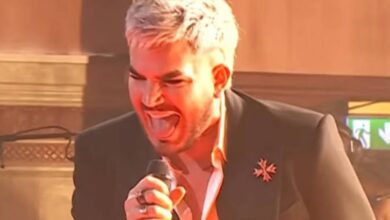
The fan-shot Columbus video captures exactly why this performance mattered. There is a certain truth in audience footage that polished live releases often smooth away. You hear the room as it really was, with the voices from the crowd spilling over the song and the arena atmosphere bleeding into every moment. That roughness is not a flaw here. It is the evidence. “Never Too Late” sounds especially strong in that environment because it is built for emotional recognition more than technical perfection. The Columbus clip reveals how quickly the room locked into the song, how naturally the audience became part of it, and how the late placement in the set gave it a sense of gravity. It does not come across like filler between bigger moments. It feels like one of the emotional centerpieces of the entire night.
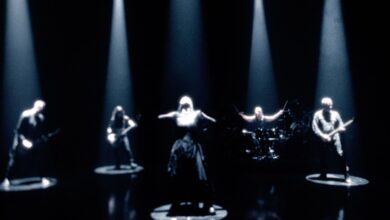
Going back to the official video after hearing the Columbus performance is a reminder of how elegantly the original version was made. The studio track never overreaches. It leans into melody, phrasing, and emotional clarity rather than trying to overwhelm the listener with volume or excess. That is part of what made it such a defining song in the first place. It gave Three Days Grace one of their clearest expressions of vulnerability without sacrificing the hard-rock identity that made them popular. The Columbus version benefits from that blueprint, but it also reveals how much the song has expanded through years of touring. In the studio, it is personal and focused. In an arena, it becomes something shared. The architecture stays the same, but the scale changes dramatically, and that shift is what makes the live performance so compelling.
There is also a deeper reason this performance resonated in 2026. “Never Too Late” has long carried a reputation as one of the band’s most emotionally important songs, and that history does not disappear just because the band is playing newer material from the Alienation era. In fact, the opposite happens. The newer songs and the revitalized lineup throw the older classics into sharper relief. Hearing “Never Too Late” in Columbus was like hearing one of the emotional pillars of the band’s legacy presented inside a new framework. It reminded fans that Three Days Grace did not build its career only by writing big riffs and aggressive hooks. They also built it by writing songs that people held onto in private, songs that survived because they offered comfort without sounding sentimental. That is a much harder trick to pull off than many rock bands ever manage.
The iHeartRadio live version from 2025 offers a useful comparison because it shows the song in a more controlled modern setting while still carrying the renewed chemistry of the current era. That performance feels polished, intimate, and confident, but Columbus has something extra that comes from the arena environment and the late-show context. In Toronto, the song sounds beautifully delivered. In Columbus, it sounds necessary. That may be the simplest way to explain why the March 8 version stands out. It is not just well played. It arrives at the right moment, in the right room, with the right amount of emotional buildup behind it. The result is a performance that feels less like a showcase and more like a communal release, which is often the point where a very good live rendition crosses into something memorable.
An older live version such as the 2008 Palace performance shows the song from a very different phase of the band’s life. There is more youthful tension in that era, more of the raw momentum that comes from a band still living close to the original blast radius of a hit album. Those performances have their own power, and many longtime fans still connect most strongly with that period. But the Columbus version carries something the earlier footage cannot provide: perspective. The song now lives inside a much larger story that includes lineup changes, years of separation, a return that once seemed unlikely, and a fan base that has matured alongside the band. That history does not weigh the song down. It enriches it. In Columbus, “Never Too Late” sounded like a survivor, not just a hit.
The setlist placement is worth lingering on because it reveals how intelligently Three Days Grace shaped the emotional logic of the night. Putting “Never Too Late” directly before “Riot” is not an accident. It allows the band to move from one of its most emotionally open songs into one of its most explosive. In narrative terms, that is a perfect transition. The audience is given a chance to feel the vulnerability and weight of “Never Too Late,” and then almost immediately afterward, that emotional charge is converted into a more physical kind of release. In Columbus, that sequencing made the song feel even more significant. It was not buried in the middle of the set where it could pass by as one more classic. It was entrusted with the role of shifting the entire room from reflection into ignition.
The acoustic Adam Gontier and Saint Asonia version offers one more angle that helps explain why the Columbus rendition worked so well. Stripped of full-band force, the song’s writing becomes even more obvious. The melody carries. The lyric carries. The emotional meaning survives. That is always the mark of a durable song. It can withstand rearrangement without losing its identity. But that acoustic clarity also highlights what the Columbus performance adds back into the equation. The arena version restores scale, shared emotion, and the physical vibration of a rock crowd without sacrificing the song’s core vulnerability. That balance is difficult to achieve. Plenty of bands can make a soft song loud. Far fewer can make it bigger while keeping its emotional center intact. Three Days Grace managed that balance in Columbus with unusual precision.
Another factor that gives the March 8 performance extra significance is the broader context of the tour itself. The band was in the middle of a demanding run, moving from Minneapolis to Columbus to Rosemont and then onward to Cincinnati and the East Coast. These are not isolated appearances where a group can pour every ounce of preparation into one symbolic night. They are part of a working schedule that tests consistency, stamina, and real chemistry. When a song still lands at this level in the middle of a stretch like that, it says something meaningful about the band’s condition. Three Days Grace did not sound like a band riding on sentimental goodwill. They sounded locked in, focused, and fully aware that songs like “Never Too Late” still carry enormous expectations for the people who bought tickets to hear them.
In the end, the Columbus performance mattered because it captured the exact reason certain rock songs outlive the scenes that created them. “Never Too Late” was born in the mid-2000s, but its emotional purpose is timeless enough that it still sounds relevant in a 2026 arena. On March 8 in Columbus, Three Days Grace proved that relevance is not something handed down by nostalgia. It has to be re-earned every night in front of a crowd. This version did that. It honored the original emotional pull of the song while giving it fresh dimension through the current lineup, the late-show placement, and the scale of the room. It did not feel like a memory preserved in amber. It felt alive, heavy, and human, which is the highest compliment any veteran band can still earn.