Yungblud’s “Fleabag” Live in Toronto, Canada May 2, 2026
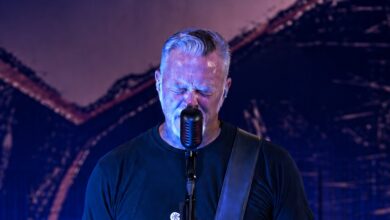
During Yungblud’s emotionally raw performance of “Fleabag” in Toronto on May 2, 2026, his vulnerable vocals and unpredictable stage energy transformed the Coca-Cola Coliseum into something far deeper than a concert—it became a shared emotional release. As the opening notes rang out, the atmosphere shifted instantly, with thousands of fans recognizing what was coming and leaning into the moment together. The venue, which holds around 9,000 people, suddenly felt intimate, as if the walls had closed in to focus entirely on the connection between artist and audience.
The night itself was part of the Idols World Tour, a run that had already built a reputation for chaotic energy and emotional honesty across multiple countries. Toronto’s stop, scheduled for May 2 at Coca-Cola Coliseum, sat right in the middle of a packed North American leg, following shows across the UK and U.S. That momentum was evident from the start, with the crowd arriving already primed, knowing they were witnessing an artist at a peak moment in his career.
As “Fleabag” began, there was a noticeable shift in Yungblud’s demeanor. Known for explosive stage movement, he instead leaned into stillness at first, letting the lyrics breathe. The song itself—originally released in 2021—has always carried themes of self-doubt, identity, and internal chaos, and in this live setting, those themes felt magnified. The audience didn’t just listen; they absorbed every line, reacting not with noise at first, but with a kind of collective focus that is rare in arenas of this size.
Then came the first major surge of energy. As the chorus hit, the crowd erupted—not chaotically, but in perfect unison, shouting every word back at him. It wasn’t just a singalong; it was a release. Thousands of voices merged into one, creating a wave of sound that pushed back toward the stage, almost overpowering the band itself. Moments like this are what define Yungblud’s live identity, where the audience becomes an extension of the performance rather than just observers.
The production design around the performance played a subtle but important role. Rather than overwhelming visuals, the lighting leaned into contrast—deep shadows and sudden bursts of brightness that mirrored the emotional swings of the song. It allowed the focus to remain on the human element, on the tension in Yungblud’s voice and the visible reactions in the crowd. Every flicker of light felt intentional, amplifying the emotional rhythm rather than distracting from it.
What made this particular performance stand out within the show’s setlist was its placement. “Fleabag” came among a lineup that included tracks like “Zombie,” “Lowlife,” and “Ghosts,” all part of a high-energy, genre-blending sequence that mixed punk aggression with emotional balladry. Dropping into something as introspective as “Fleabag” created a stark contrast, pulling the audience from chaos into vulnerability within seconds.
The crowd response during the quieter sections was just as powerful as the louder moments. You could feel the silence—thousands of people holding back, listening closely, almost afraid to break the spell. In an era where concerts are often dominated by constant noise and phone screens, this kind of collective stillness felt rare and significant. It suggested a deeper connection, one built not just on fandom but on shared emotional experience.
Midway through the performance, Yungblud began interacting more directly with the audience, pointing, making eye contact, and visibly reacting to individual fans. These moments, though brief, reinforced the intimacy of the show. Even in a nearly 10,000-capacity venue, he managed to create the illusion that the performance was personal, that each person in the room was part of something uniquely theirs.
Vocally, the performance leaned heavily into imperfection—and that was precisely what made it powerful. Rather than aiming for studio-level precision, Yungblud allowed cracks, strain, and rawness to come through. Those imperfections carried emotion, turning each line into something lived rather than performed. It’s a style that has defined his rise and one that continues to resonate strongly in live settings.
As the song built toward its climax, the instrumentation grew heavier, and the lighting intensified to match. The final chorus hit with full force, the crowd once again taking over, shouting every lyric with a kind of urgency that felt almost desperate. It wasn’t just about the song anymore—it was about everything the song represented, everything the audience had brought into the room with them.
The aftermath of the performance was just as telling. Instead of immediately jumping into the next high-energy track, there was a brief pause—a moment to let the energy settle. You could sense that both the artist and the audience needed it. These transitional moments often go unnoticed, but here, they played a crucial role in shaping the overall emotional arc of the show.
Toronto itself added another layer to the experience. Known for its diverse and passionate music audiences, the city has a reputation for embracing artists who bring authenticity to the stage. That energy was fully present in the room, with fans responding not just to the performance, but to the honesty behind it. It felt less like a stop on a tour and more like a key moment within it.
Outside the venue, the anticipation had been building for days, with pop-up events and fan gatherings setting the tone ahead of the concert. By the time the doors opened, the energy was already high, creating a sense that the night was going to be something special even before the first note was played.
In the context of the Idols World Tour as a whole, this performance of “Fleabag” stands out as one of those defining moments fans will point back to. Tours often have standout shows or standout songs, and this felt like both—a perfect alignment of timing, audience, and emotional delivery that elevated it beyond a standard performance.
By the end of the night, as the set moved on and eventually closed, the impact of “Fleabag” lingered. It wasn’t the loudest moment of the show, nor the most explosive, but it was arguably the most meaningful. These are the performances that stay with people, that get talked about, shared, and remembered long after the lights go out.
And as clips from the night continue to circulate online, it’s already being framed by fans as one of the most unforgettable highlights of a concert many are calling one of the greatest they’ve ever attended. Not because it was perfect—but because it was real.