Why One Viewer Said Layla Clark Actually Improved the Internet
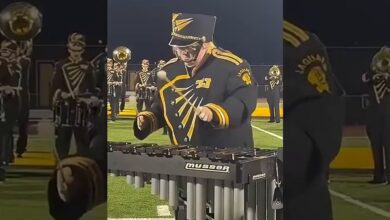
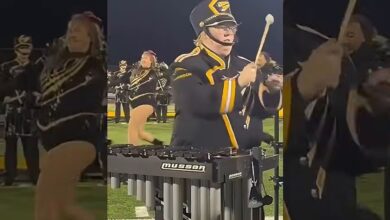
The comment under the clip is almost as short as the moment it describes. A few seconds of a school halftime show were enough for a viewer to declare the internet a little better. The video gives the line its punch: a familiar riff, an unexpected instrument and a crowd close enough to hear.
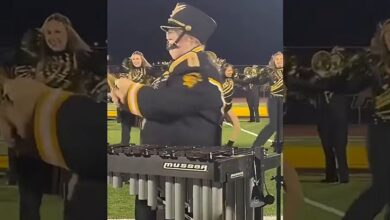
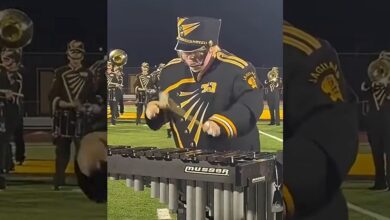
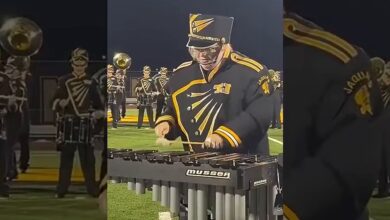
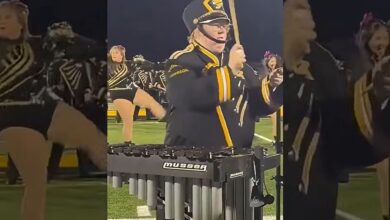
Clark’s mother filmed the performance during the 2025 season. A repost later carried it far beyond the school community. Neither the original camera angle nor the field needed to change. Someone watching on a phone could get the same reveal as the person standing close to the marimba.
Clark told CBS Pittsburgh that people had told her the video made them happy. She was also quick to draw attention to the other students playing with her. That response feels of a piece with the clip, where an individual part opens the song and the band gets to take it the rest of the way.
Put the phone down for a second and just listen. The joy comes through in the playing and in the sound of the people near the camera. That combination is why the video works even after the novelty of the instrument has worn off.
A video that rewards the time it takes to watch
The opening gives a new viewer a fair chance to catch up. There is no need to know the school, the date or why anyone is filming. The music announces itself, the camera shows the source of the sound, and the people behind the player give the scene a setting. By the time you have worked out what you’re looking at, the riff is still going. That small courtesy makes a difference on a feed where many videos start with a demand for your attention before they give you something to listen to.
There is also a difference between an event staged for an audience online and an ordinary performance that people find later. In the clip, the band members have somewhere to be and something to play whether or not the camera stays on them. Their timing matters because they are part of a halftime show. That gives the video a reason to exist outside the feed. You get the sense of arriving in the middle of a place where people already care about what is happening. The joy of watching comes partly from being allowed into that room, even though the room happens to be outdoors.
The performance and its public attention happened at different times. Clark’s mother filmed it during the 2025 season. When the recording travelled widely again the following year, people saw it in new posts and edits that could make it feel current. The year between the game and the renewed attention says something about what a recording can do. An evening that was once local becomes available to people who were nowhere near the field and may never have seen a high school band in person.
A repost can change which details a new audience notices. Some people hear a famous riff in an unfamiliar place. Others remember carrying instruments at their own schools, or hear the crowd react and think about what a school game sounded like when they were younger. The clip has enough particular detail to hold those readings at the same time. Nobody has to agree on why it matters to get the pleasure of listening to it.
What the reaction gives back to the people on the field
Clark described hearing that the clip made people happy when CBS Pittsburgh interviewed her. The answer fits the way the sound carries through the recording. Listen behind the marimba and you can hear that the viewer isn’t the only person enjoying it. There are other students, movement elsewhere on the field, and a crowd close enough to the phone to become part of the recording. Those sounds are a reminder that the original audience had already responded to the same moment before it reached anyone else.
There’s a temptation, when one person becomes the recognizable face of a shared clip, to make the whole story about that person’s sudden attention. Clark kept bringing the conversation back to the other students who played the figure. Five mallet percussionists were involved in the opening, and the band gives it a much bigger place to go. A wider angle doesn’t take anything away from what the close-up catches. It shows the part of the evening that the usual online crop leaves behind.
The same quality makes the comment about improving the internet work as a piece of humor. The viewer is making a huge claim about an ordinary pleasure, which is exactly the scale of the joke. A school band did its job well, a parent kept the camera running, and strangers got a minute of music they hadn’t expected to hear. The distance between the modest event and the grand claim is funny, and the fact that it feels at least partly deserved is the reason the line stuck.
A share also lets people tell each other something about their taste. Sending a friend this clip could mean that you love AC/DC, that you miss playing in a school band or simply that you think they could use a small lift. There is room for all three because the video is specific about what happened and leaves the response to the people watching. The comment is one viewer’s way of paying that experience forward.
You can give the video a second watch without looking at the numbers beneath it. Pay attention to how confidently the recurring note comes back and how the sound changes when more of the band enters. Then notice whether you want to replay the surprise, the coordination or the crowd’s response. Those are different reasons to enjoy a short performance. All of them were already there when the recording belonged to the people on the sideline.