A Halftime Clip for Every Band Nerd Who Waited for Their Moment
A comment beneath the clip imagines band kids everywhere sitting a little straighter as the mallets start. Anyone who spent halftime counting measures or waiting for a cue can recognize the feeling. This time the video starts with the person at the front of the ensemble, and everyone watching is waiting for her next note.
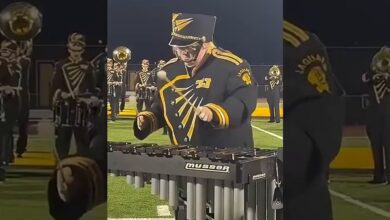
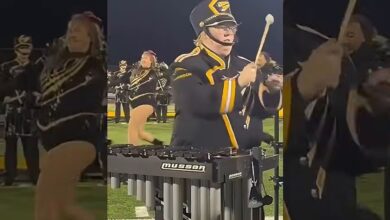
The Thomas Jefferson musicians were playing to a football crowd in 2025. What travelled online was a tighter view, one that brings the viewer close enough to see the instrument and hear each part of the figure. It makes the work familiar to former band students unusually visible.
Clark has said five mallet percussionists shared the opening. The comment about band nerds works especially well with that in mind. The solo-looking clip is a tiny window onto students learning how to hold a pattern together until the next section comes in.
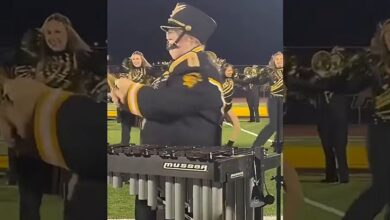
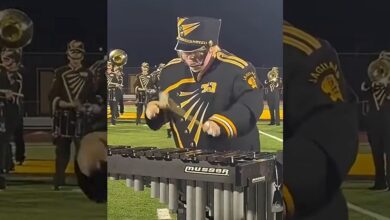
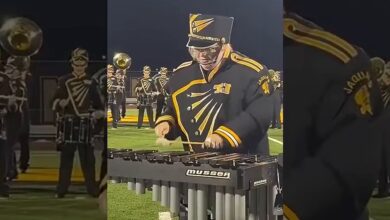
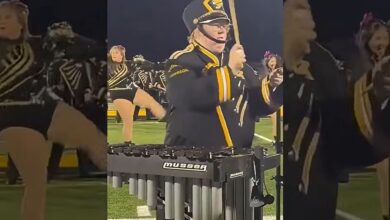
The instrument is part of the joke too. A viewer might expect a guitar hero when they hear the opening. The image that goes with it is a marimba, two mallets and the students behind them waiting for their entrance.
The jobs you remember after playing in a school band
Former band students tend to notice the small things first. They know how much of a performance is spent waiting with an instrument ready. They notice people checking their place on the field and keeping track of the players who have the next entrance. To everybody else, a group in matching uniforms can look like one unit. To someone who used to be in it, each person is making a decision about when to move, when to play and which sound they can use as a reference. The close-up gives those viewers something familiar to recognize.
Calling it the band nerds’ moment turns that recognition into a joke. The opening riff has the musical status of a guitar hero’s part, but the people playing it have mallets and school jackets. The thing that gets the laugh is the change in who gets to deliver the obvious thrill of the song. A student who would normally be one player among many becomes the person a phone camera follows. And the whole section gets the chance to give the crowd the sound it was waiting for.
In a field show, the front ensemble can be easy to overlook. A listener’s eyes may follow the moving rows or the people carrying the biggest instruments. The instruments at the front give some of the arrangement its shape and can also keep everyone oriented while the visual show is happening somewhere else. Here the audience can see precisely where the opening comes from. The mallets have a physical position, and that position suddenly becomes the place the rest of the field is waiting on.
Clark’s account of the arrangement also tells you why the opening belongs to more than the person in frame. Five mallet players were involved. When several people play a figure together, each one has to make the pace predictable for the others. It’s easy to see the movement of Clark’s hands and hear it as an individual feat. Try following the repeat of the riff instead. It becomes a kind of shared clock for the students around her. The groove can only feel steady if the group agrees about when each note belongs.
A joke with a real musical payoff
The band eventually gives the opening a very different scale. The rows and players behind Clark start to matter more because the sound they make is easier to hear. That entrance is a satisfying moment for anyone who has ever had to wait to play. Counting the rests is a job of its own, and the players who have been listening know when the piece is ready for them. A listener who has never performed can hear a swell. Someone who has been in a band may hear several jobs getting done at once.
The wider video offers a useful companion to the one that made the comment popular. It puts people back in the frame who were reduced to small shapes behind the marimba. You see what they are doing with their bodies as well as what they are doing with their instruments. Even when Clark is out of the center of a particular shot, you still hear the part she helped set up. That is how the larger version gives you more of the same story.
The term band nerd also has an affectionate sense of ownership. The viewer can claim the detail that other people suddenly noticed because they remember how much work goes into it. That can be as simple as knowing how to handle an instrument in a uniform, or as involved as learning to keep an entry steady while the people beside you play a different part. The joke makes room for those small memories without requiring anybody to have played the exact same tune.
Even a viewer who never wore a school uniform can take something from the timing of the reveal. The music announces a riff often associated with a big rock stage. The picture shows a person behind wooden bars on a school football field. Then the rest of the band comes into the sound. Each step changes the way you understand the one before it, and the whole effect takes much less time than it takes to explain why the joke lands.
On the next replay, try following one person who isn’t Layla. See what they’re doing before the group entrance, then look back at the marimba when the riff comes round again. That change of perspective gives the joke an extra layer. The student in the foreground is having a moment, and the people who once stood in a school band can see the rest of the work that made it possible.