The Halftime Show That Made Viewers Wish Their School Band Played AC/DC
Some viewers heard the “Thunderstruck” clip and started thinking about their own school band. The comment is a small piece of nostalgia: what would halftime have sounded like if the band had played AC/DC? The Thomas Jefferson Jaguars give a pretty good answer.
The riff works at a football game because people can identify it before the rest of the song is in place. James Mirabella’s 2025 program included “Back in Black” and Metallica’s “Enter Sandman” as well. The rock songs gave the students melodies the crowd already knew and room to decide which instruments would carry them.
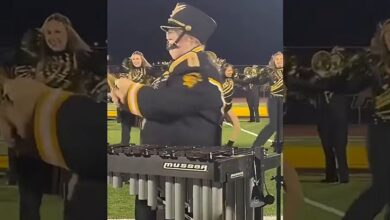
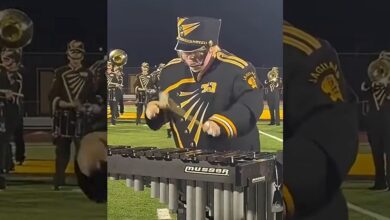
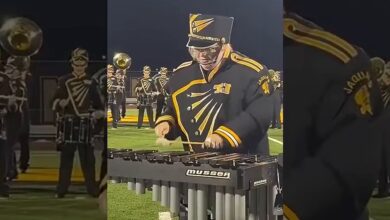
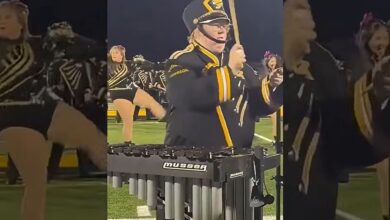
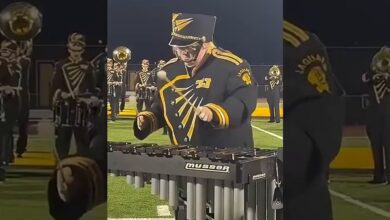
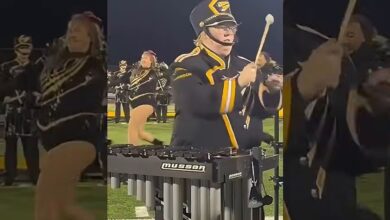
Clark’s marimba part is the clearest example of that second step. You can hear the guitar figure without a guitarist standing in front of the band. Keeping its shape while changing the sound is what makes the arrangement feel like a school performance with its own point of view.
The close-up has travelled farther than the whole halftime set. The wider video shows the bigger idea: the Jaguars use music associated with concert stages to give the people in the stands a moment they can recognize and share.
Why the song choice matters to people who played in school
The viewer’s wish is specific. It isn’t simply that their band should have sounded better. They wish the music their school played had resembled something they would have chosen to put on themselves. A tune that already means something to the listener changes what the interval at a game feels like. For the players, a famous opening also comes with an audience that knows where the pattern ought to go. There is pleasure in getting that recognition, and a little pressure in knowing people can tell when the opening gets away from you.
“Thunderstruck” gives the arrangement a kind of head start. AC/DC opened The Razors Edge with it in 1990. The guitar part establishes itself in the clear before the rest of the track takes up more space. On the football field the sound of the opening changes, but the order of events remains familiar. The mallets tell the crowd which song it is. The other instruments come in after that recognition has had time to settle. It’s a useful structure for a setting where listeners may still be taking their seats or talking.
A good piece of school-band programming also has to give the students something worth rehearsing. A part that sounds big in a recording may depend on the sound of one specific instrument. To make it work outdoors, an arranger has to decide who can play the melody, which instruments can support it and when to let the percussion stand on its own. The Jaguars’ choice gives the players at the front a chance to establish the tune instead of filling the spaces behind a larger sound. The familiar song is an invitation to try out that change of roles.
The attraction of hearing classic rock from a school band is that two different memories can meet at the same time. A listener may remember the record from a car stereo or a concert. A former band student may remember the uniform, the lights, and the concentration it took to play outdoors while a football crowd settled down. The school arrangement can touch both memories without requiring the listeners to share an age or a musical background. In this clip, the original guitar part is the thing they can hear in common.
Hear the rest of the halftime program in the same way
The Post-Gazette reported that “Thunderstruck” was one of several rock choices for the Jaguars’ 2025 program. “Back in Black” and Metallica’s “Enter Sandman” were also part of the show. Those songs bring different problems for a marching band to solve. A recognizable rhythm or guitar figure can get a song started, but the field arrangement still has to hold attention after the audience has placed it. The wider footage is worth watching because you can see which parts get handed around and hear how the band manages the move from one texture to another.
The recognizable parts can also change who pays attention. A person at the game for football might know the AC/DC riff and turn around before they realize the band is playing it. Someone who came for the band can listen to the same passage with an ear for the entrance that follows. Those two listeners have different reasons to watch and neither needs to be told what to take from the show. When the song is well chosen, the arrangement gives both of them a way in.
A close-up makes the school-band comment especially effective because it makes the choice feel concrete. Instead of a wide view where the whole tune seems to arrive at once, we see the actual student asked to carry the guitar figure. Clark has said five mallet players were involved. The fact that one player fills the frame doesn’t change how much agreement the section needs about timing. It does make the challenge easier to see. Anyone who has played in school can imagine being one of the students waiting for that figure to settle.
There is another contrast worth noticing when the camera pulls back. The music sounds bigger, but the thing that makes it feel like “Thunderstruck” was already there at the front. The other players can add weight and movement because the song’s identity is clear. That is the difference between simply playing a tune people know and giving the whole band a reason to play it. Each group of musicians has a part in building toward the payoff.
The wish in the comment is easy to extend. Imagine hearing a favorite riff at a game and then trying to work out where it is coming from. If the arrangement is doing its job, the answer will make you want to watch the rest of the show. The Jaguars got that effect from a song plenty of people already knew and a sound almost none of them expected to hear first.