Ann Wilson’s 2025 Comeback Story — Beating Cancer, Facing Injury, and Still Owning the Stage
Ann Wilson’s 2025 story isn’t the simple headline people keep trying to paste on it. Yes, health was part of the year — a major part — but the real narrative is how she refused to let fear write the ending. In 2024, she publicly shared that she’d been diagnosed with cancer, had surgery to remove a cancerous growth, and then followed her doctors’ guidance into preventive chemotherapy, postponing Heart’s remaining 2024 shows to fully recover. That “pause” turned into something bigger than a scheduling change: it became a public lesson in what it looks like to take your life seriously, listen to your body, and still keep your identity intact as an artist.
When Heart rescheduled the tour for 2025, it wasn’t framed like a comeback gimmick — it was framed like a return to living. The “Royal Flush Tour” dates were rolled out as a continuation, not a reboot, with the clear message that the work wasn’t finished. Ann’s own words in the updates emphasized that she planned to be back onstage in 2025, and that tone mattered to fans. People weren’t just buying tickets; they were buying into the idea that the person they’ve listened to for decades was choosing forward motion. In a world where celebrity health news often turns into spectacle, she kept it grounded and direct.
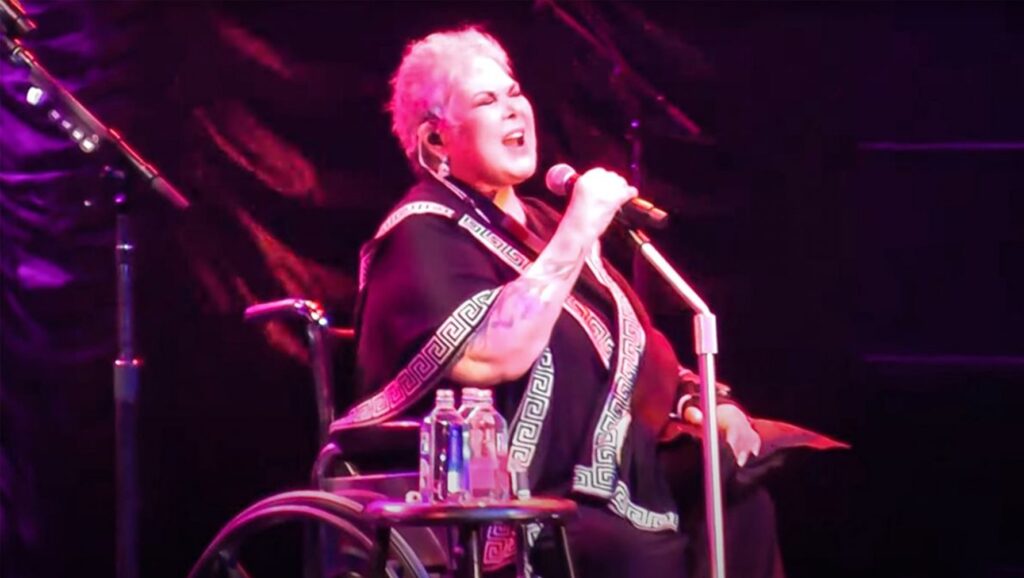
By early 2025, the tour actually began — and the first big emotional swing of the year came from a detail that many people misread at first. Fans noticed Ann performing seated in a wheelchair and assumed it was related to the cancer. She later explained publicly that it wasn’t: she said she was cancer-free after treatment, and the wheelchair was due to a separate injury — a fall that seriously damaged her elbow and required surgical repair. She described real pain and the practical reality of balance and safety onstage, choosing to sit so she could focus on singing without risking further injury. That one clarification reshaped the conversation from rumor to respect.
That distinction is important because it highlights something people often forget: recovery isn’t a straight line, and setbacks don’t always come from the same source. Ann’s year became a case study in “multiple battles at once,” and yet she still showed up. This is where 2025 becomes motivational in a real way, not the fake “grindset” kind. It’s motivational because it’s messy. It’s motivational because it includes doctors’ orders, postponed dates, healing time, and then an unexpected physical injury right as the stage lights return — and still, the performances happen. That’s not fantasy. That’s discipline meeting reality and refusing to quit.
The shows themselves carried extra weight because Heart isn’t a band people casually attend. For many fans, seeing Heart is personal history. The songs are tied to first loves, long drives, heartbreak years, rebuilding years — the whole emotional timeline. So when Ann returned, it wasn’t just “the band is touring again.” It felt like someone restored the power to a part of people’s lives that had gone dim for a minute. That’s why crowd reactions in 2025 often sounded like gratitude rather than hype. People weren’t just cheering a chorus. They were cheering the fact that the voice was there at all.
The “Royal Flush Tour” setup also reinforced the idea that this wasn’t a small, cautious re-entry. Ann and Nancy Wilson weren’t quietly testing the waters in tiny rooms. The run included major North American venues and a structured schedule, with the kickoff in late February and dates stretching through spring. The message was clear: we’re back, we’re doing this properly, and we’re not treating resilience like a footnote. That commitment is part of what made the year feel powerful — it wasn’t symbolic. It was physical, logistical, real-world effort.
The wheelchair, ironically, became a visual symbol that sharpened the emotional impact of the concerts. Not because it looked dramatic, but because it made the audience confront the truth: rock isn’t just youth, leather, and volume — rock is endurance. A singer sitting down can still carry a room if the voice and the conviction are there, and Ann’s situation forced people to listen harder, not just watch. The body was dealing with recovery, pain management, and limitation — but the delivery, the phrasing, the spirit of the performance still landed with that unmistakable Heart force.
Nancy Wilson’s comments during the tour cycle added another layer, because you could hear the protective hope in them. She spoke about wanting Ann to be out of the wheelchair later in the tour, which is the kind of realistic optimism that feels human: supportive, forward-looking, not pretending everything is perfect. And fans responded to that honesty because it matched what they were seeing. Nobody was asking for “superhuman.” They were watching someone do the hard thing responsibly, with the people around her adapting to make the work possible.
Then there are the moments that tested the tour’s spirit beyond health — like the theft of instruments before a show, which underlined how fragile touring life can be even when everything else is going right. Those kinds of disruptions can emotionally derail a run, especially after a year where the emotional stakes are already high. But the tour continued, and the response from the band emphasized how personal those instruments were — “extensions” of musical identity — which only deepened the sense that this wasn’t just entertainment, it was a life’s work being carried forward under pressure.
If you look at 2025 through a fan’s eyes, the concerts weren’t just about setlists — they were about witnessing someone reclaim their space. Reviews and audience reactions frequently focused on how the show still felt powerful, still felt “necessary,” and how the Wilson sisters’ chemistry remained the engine. The message of the year wasn’t “look what she can do at her age,” even though people say that. The deeper message was: artists don’t stop being themselves when life gets hard. They adapt the shape of the performance, but the truth of the performance remains.
Ann’s cancer update thread, in particular, shaped the emotional foundation for how people interpreted everything that came after. The way she spoke about recovery — surgery, treatment, the plan to return — kept the focus on process rather than panic. That matters because it gives fans permission to be supportive without turning her into a headline. It also gives other people in similar situations a model: you can say what’s happening, you can take the time you need, and you can still keep your future intact in your mind while you do the hard, boring recovery steps.
The most motivational part of this story isn’t that she performed while dealing with limitations. It’s that she did it without erasing the reality of those limitations. She didn’t pretend she was fine just to look strong. She was specific about pain, about safety, about the actual reason she needed the chair, and she was equally clear about the cancer being behind her at that point. That kind of precision is what makes inspiration real. It’s not “mind over matter.” It’s “mind working with matter,” making practical choices so the purpose can continue.
And there’s a quiet lesson in how the audience responded. People can be brutal online, but in arenas, something different happens when the lights go down and a real human being appears. In 2025, that human element was unavoidable. You could feel that many fans weren’t there to judge whether the performance matched a 1977 version. They were there to be part of a living moment: a legendary singer returning after a serious health chapter, supported by her band, her sister, and a crowd that understood what it costs to show up at all.
If you’re trying to extract a “takeaway” from Ann Wilson’s 2025, it’s this: resilience isn’t loud. Sometimes it’s sitting down so you don’t fall. Sometimes it’s postponing a tour so you can heal. Sometimes it’s admitting you’re in pain and still choosing to sing anyway because that’s what makes you feel alive. The inspirational arc isn’t in pretending hardship doesn’t exist — it’s in building a life that continues in spite of it, one practical decision at a time.