You Could Feel the Difference: How Chock and Bates Turned Restraint Into an Olympic Statement
“You could feel the difference” wasn’t just a fan slogan in Milan — it was the easiest way to describe what happened when Madison Chock and Evan Bates finally opened their individual Olympic ice dance campaign at the Milano Ice Skating Arena. The building had already seen plenty of fast, loud, high-wire skating, but the temperature changed when Team USA’s most polished duo arrived with that particular kind of calm that reads as confidence, not caution. They weren’t trying to overwhelm the moment; they were trying to own it. And in an Olympic week where every tenth of a point can start a rumor, their goal looked simple: skate clean, skate honest, and make the judges’ job feel inevitable.
The context mattered, because Chock and Bates didn’t step onto Olympic ice as an interesting storyline — they arrived as the standard everyone had been chasing. They were coming in as reigning U.S. champions and three-time reigning world champions, with the kind of résumé that changes how a crowd watches even the warm-up. Add the fact that they had just helped deliver another gold in the figure skating team event, and you could feel why their rhythm dance had that extra layer of expectation. The Olympics can make even brilliant teams look tense and guarded. Their challenge was to look like themselves anyway, as if the Games were simply the biggest stage for the same craft they’ve refined for years.
Then came the twist that made the night feel like a proper Olympic chapter: the leaderboard didn’t match the pregame assumptions. France’s new partnership of Laurence Fournier Beaudry and Guillaume Cizeron went out and grabbed the lead with a statement rhythm dance, posting 90.18 points and forcing everyone else into chase mode. Their program leaned into Madonna’s “Vogue,” mixing high-fashion attitude with sharp edges and precision — the kind of performance that lands like a headline even before the final group skates. It was also a reminder of how quickly ice dance can transform when the right chemistry clicks, because this was still an early chapter for their pairing on the international calendar.
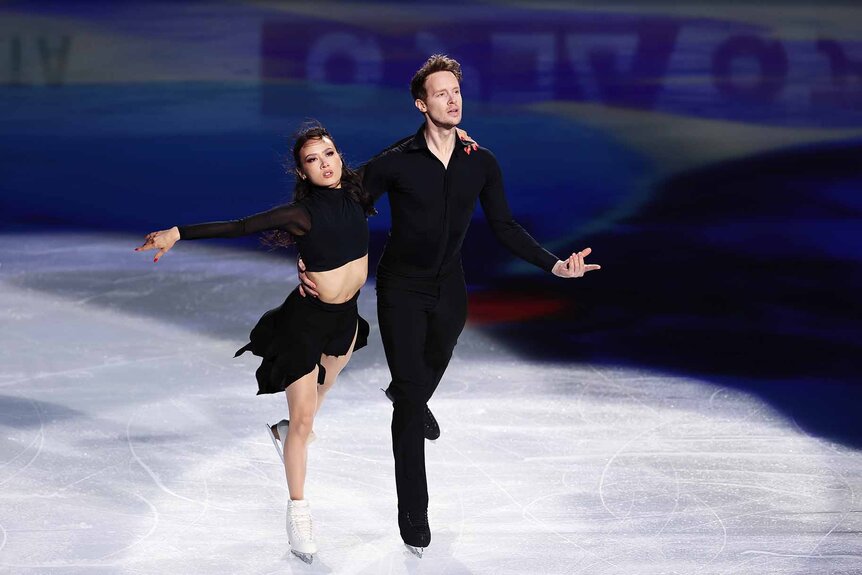
For American fans, the delicious tension was that Chock and Bates didn’t fold under that pressure — they answered it with a rhythm dance that was poised, powerful, and unmistakably them. Skating last, they leaned into a Lenny Kravitz-inspired rhythm dance that had rock-and-roll swagger without turning sloppy or rushed, the kind of program where the attitude is a layer on top of control rather than a substitute for it. They were fast without looking frantic, expressive without looking busy, and clean in a way that made the skating feel “quietly expensive.” The score flashed: 89.72. Second place — and less than half a point off the lead.
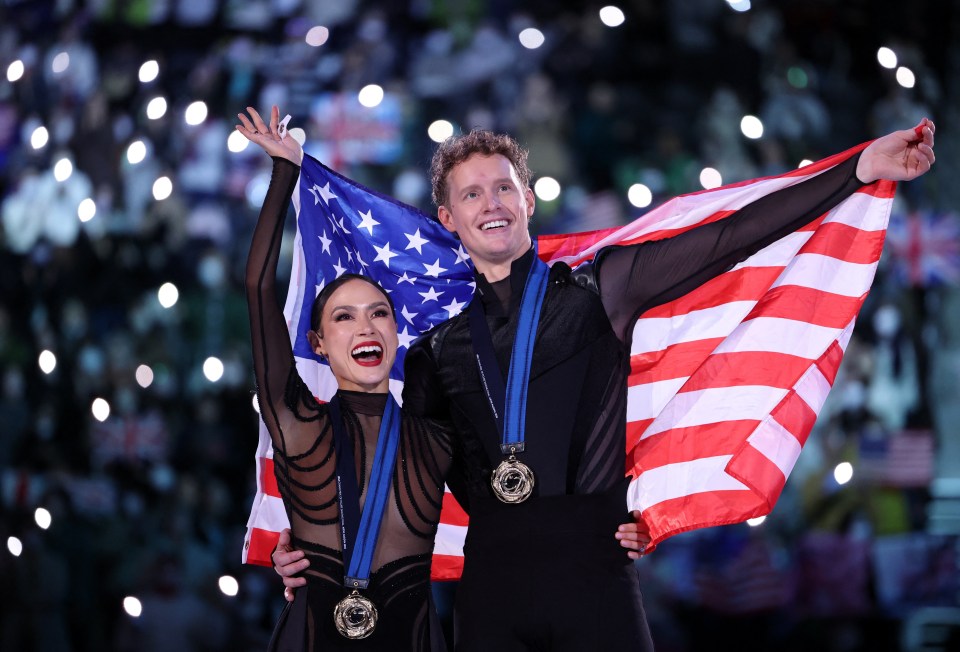
That tiny gap is where the Olympics turn microscopic, and the reason it stayed tiny is because this wasn’t a “they were off” night. It was a “the math got them” night. A technical review downgraded one of their key elements, the pattern step, from Level 4 to Level 3 — the kind of change that can feel brutal because it’s not about vibes or reputation, it’s about boxes getting checked in real time. The effect was immediate: a fraction of a point that separated first from second, and a moment of reality that elite teams know well. You can skate brilliantly and still get nicked by the margins, because ice dance lives in the margins.
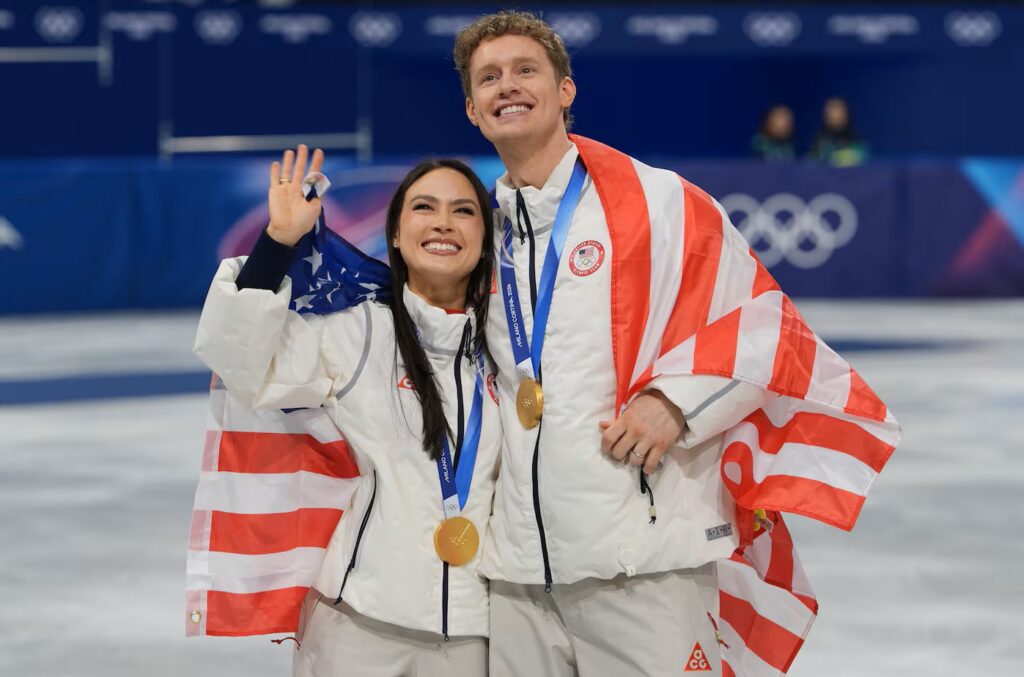
What made the moment feel special, though, was how Chock and Bates talked and acted like athletes who understand the long game of a two-part event. There was no visible panic, no “we need to reinvent everything overnight” energy. Their posture was basically: we’re still right there, we know what we did, and we know what we can do next. That’s the luxury of experience — not complacency, but clarity. They’ve been in enough title fights to understand that the rhythm dance can set a tone, but the free dance is where the story gets written in ink. The message coming out of their camp was steady: bring the best free dance, let the totals sort themselves out.
The contrast with the field only amplified that sense of maturity. In the rhythm dance, plenty of teams leaned into speed, theatrical punches, or “big” moments that read clearly on broadcast — which can be smart, because the Olympics reward memorability. But Chock and Bates were operating on a different frequency: transition quality, timing, control, and that hard-to-define connection where two skaters look like one idea. Their lifts looked unforced, their edges didn’t wobble, and their rhythm never slipped into a sprint. It was the kind of performance that doesn’t beg you to notice it — it assumes you will, because everything is placed exactly where it should be.
Behind them, the race had its own drama. Canada’s Piper Gilles and Paul Poirier slotted into third with 86.18, close enough to smell the podium but far enough to know they’d need something special in the free dance to threaten the top two. Great Britain’s Lilah Fear and Lewis Gibson sat right on the edge of the conversation too, and Italy’s Charlene Guignard and Marco Fabbri gave the home crowd plenty to roar about, hovering in striking distance. That kind of depth is what makes Olympic ice dance feel like a thriller instead of a parade: one small mistake, one twizzle hiccup, one shaky key point, and the medals can flip.
It also helped that this wasn’t Chock and Bates’ first time lighting up this Olympic ice during the week. In the team event rhythm dance earlier in the Games, they had delivered a world-best 91.06, a score that served as both a warning and an advertisement: if they’re clean, they can separate. That earlier number became part of the rhythm dance storyline almost immediately — not as a complaint, but as proof of how day-to-day judging, key points, and razor-thin calls can tilt the scoreboard. The Olympics don’t always reward your best version if it didn’t happen on that specific night. That’s what makes them so addictive and so cruel.
As if the week didn’t already have enough chaos, figure skating in Milan also picked up a strange side plot that sounded like satire until organizers had to address it: the podium surface at the team medal ceremony. An anti-slip surface reportedly damaged skaters’ blades, forcing re-sharpening and triggering angry reactions online. It was the kind of logistical mistake that athletes quietly fear, because skates are not “equipment” in the abstract — they’re the point of contact between years of training and five minutes of performance. Chock and Bates were among the athletes mentioned in coverage of the incident, and the organizers said they would replace the surface and coordinate sharpening support.
That bizarre podium episode ended up reinforcing the broader theme of the week: control is precious, because so much is out of your hands. You can prepare for pressure, you can drill key points, you can refine your edges until the ice feels like a blueprint — and then the Olympics throw you a curveball, whether it’s a technical review or something as mundane as a surface you never asked to step on. The best teams don’t just skate well; they absorb volatility. And in that sense, Chock and Bates looked like veterans not only in the way they performed, but in the way they moved through the surrounding noise without letting it rewrite their mood.
Meanwhile, Fournier Beaudry and Cizeron’s lead carried its own kind of electricity: the freshness of a partnership arriving at the Olympics with something to prove and nothing to protect. Cizeron, already an Olympic champion from his previous career, has spoken about this chapter as “bonus time,” and that energy can be dangerous in the best way — it can make a performance feel fearless. Fournier Beaudry’s path to being eligible for France added another layer of narrative weight, and suddenly the “favorites” storyline wasn’t a straight line anymore. The rhythm dance turned into a duel: established greatness versus a new pairing surging at the perfect moment.
And that’s the real reason the night felt special, even without a gold medal being handed out yet: the competition didn’t resolve the story — it sharpened it. The gap between first and second was so small it basically demanded a free dance showdown. In ice dance, the free dance carries more time, more space, more opportunity for teams to show why their skating should be remembered rather than merely scored. It’s where connection becomes a weapon, where speed has to be married to softness, where one tiny stutter can echo through a whole element. The rhythm dance didn’t crown anyone; it loaded the stage.
What fans responded to in Chock and Bates wasn’t just “clean skating,” because plenty of teams skate clean. It was the feeling of two athletes who don’t look like they’re bargaining with the moment. Their control reads as trust — in each other, in the program, in their training, and in the idea that they don’t have to sell you the performance with extra noise. The internet loves explosive moments, but Olympic ice dance often gets decided by the teams who can make difficulty look normal. Their performance had that “grown” quality viewers talk about: the ability to be expressive without being hectic, confident without being aggressive.
Now the arena shifts from reaction to anticipation. The free dance will decide whether the French lead was a first-act surprise or the start of a real Olympic takeover, and whether Chock and Bates can convert that calm into the kind of performance that closes arguments. The rhythm dance already showed the ingredients: a crowd that feels the difference, a scoreboard tight enough to make everyone hold their breath, and two teams at the top skating with completely different kinds of momentum. One has the jolt of the upset. The other has the steadiness of champions who believe the story still ends where they planned it.
Even before the free dance happens, the rhythm dance in Milan has already done the thing great Olympic moments do: it made an entire sport feel understandable in human terms. One team found the night of their lives, one team skated brilliantly and still got clipped by a technical detail, and the margin between “leading” and “chasing” became a fraction small enough to fit on the edge of a blade. That’s why people kept saying they could feel the difference — not because the performance was louder, but because it was heavier. In a week of spectacle, Chock and Bates turned restraint into a headline, and the Olympics rewarded it with the most compelling prize of all: unfinished drama.