Winning Before Kickoff: How Budweiser Redefined the Super Bowl Ad Playbook
The strange thing about the Super Bowl ad race is how predictable it’s become. Every year, brands behave like they’re waiting for permission to matter, as if relevance only counts when it arrives inside a thirty-second window on the biggest night of American television. They save their “big swing” for kickoff night, stack their creative teams like a championship roster, and try to overwhelm the audience with spectacle. That’s why Budweiser’s move with “The Soul of Icons” felt so disruptive. It didn’t ask to be crowned. It arrived early, calm, almost casual, and then it started winning in the only way that truly lasts: people felt it, shared it, and talked about it as if it belonged to them.

Dropping a Super Bowl-style ad weeks ahead of the game sounds, on paper, like breaking an unwritten rule. You’re supposed to wait your turn. You’re supposed to let the event carry you. You’re supposed to spend the final days hyping the “premiere” like a movie studio. But “The Soul of Icons” used the opposite logic: if you want to own the moment, don’t fight in the loudest arena where every other brand is screaming. Pick a quieter room, dim the lights, and let the message land without competition. That’s what made it feel less like a commercial and more like a story that found you while you were scrolling.
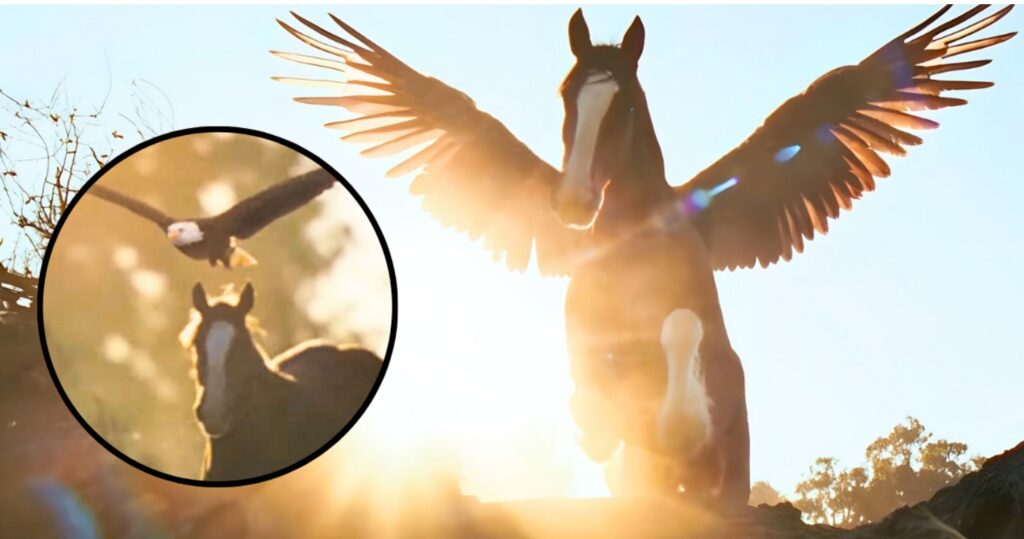
The creative premise is almost suspiciously simple: a Clydesdale foal and a bald eagle chick growing up side by side. No twist ending that winks at the camera. No celebrity to distract from the emotion. No hyperactive editing designed to beat the audience into applause. Instead, it leans into slow, deliberate pacing that trusts the viewer’s attention span. It’s a risky bet in the era of short-form dopamine hits, and that risk is exactly why it stands out. The ad isn’t trying to win the internet with a punchline. It’s trying to win something harder: a quiet emotional reaction that people don’t fake.

The song choice is the other piece that turns “simple” into “devastating.” “Free Bird” isn’t just a classic rock staple; it’s cultural muscle memory. Even people who wouldn’t call themselves fans know what that slow burn feels like. The track carries a sense of open road, longing, inevitability, and release. When you pair that with an animal story about growth, trust, and the first brave attempts at flight, the music does what the best film scores do: it tells your body how to feel before your brain catches up. Goosebumps happen first. Analysis comes later.
And then there’s the symbolism, which Budweiser understands better than almost any American brand. The Clydesdales are not random horses; they’re a myth the company has been building for decades. They represent tradition, labor, warmth, and the kind of nostalgic Americana that feels like a postcard from a calmer time. The bald eagle is even more loaded, a national icon that comes with instant emotional weight, whether you read it as pride, freedom, protection, or simply “America” in a single glance. Putting the two together is a narrative shortcut, but a smart one: you don’t need exposition when the audience already knows what these images mean.
That’s also why the ad doesn’t feel like it’s “selling beer” in the usual way. It’s selling belonging. It’s selling shared memory. It’s selling the idea that certain symbols still mean something even when the country feels split into a thousand arguments. Plenty of people will roll their eyes at that, and that skepticism is valid. But the power of the ad is that it doesn’t preach. It doesn’t tell you what to think. It lets the images do the talking. If you’re receptive, you’ll feel warmth. If you’re not, you’ll still understand what it’s trying to do. Either way, it stays in your head.
Releasing it early amplified that effect. When an ad appears on Super Bowl night, it’s trapped inside a crowded playlist of other brands trying to “win the night.” Viewers expect manipulation. They brace themselves for a sales pitch with extra glitter. But when an ad like this drops outside the circus, it hits differently. It feels like discovery instead of interruption. People don’t say, “this brand is trying hard.” They say, “have you seen this?” That subtle shift turns viewers into distributors. The audience does the marketing for you because it feels like sharing a moment, not spreading an ad.
The internet loves fights, and brands love to pretend the only way to go viral is to be louder, funnier, or more shocking than the competition. “The Soul of Icons” takes a different path: it goes emotional, clean, and timeless. That’s why it can “win” without a hype tour. It doesn’t need a barrage of teasers. It doesn’t need a superstar cameo to create a headline. It only needs one thing: enough sincerity for people to lower their defenses. Once that happens, the content spreads through a different network than typical marketing spreads through. It travels through family group chats, nostalgic friends, and the kind of late-night scroll where you’re more vulnerable than you admit.
The pacing matters more than people realize. The ad gives you time to watch the foal’s awkward early movements and the chick’s fragile beginnings. It doesn’t rush to the “big moment” because the big moment only works if you’ve been emotionally warmed up. That’s basic storytelling craft, the kind that most commercials ignore because they’re terrified you’ll look away. Here, Budweiser is betting that the viewer will lean in. That confidence reads as maturity. It says, “we don’t need to sprint; we can walk and still hold you.” In a media world full of frantic energy, a calm story can feel almost revolutionary.
There’s also a deeper reason it landed: it taps into a hunger people don’t always articulate. Many viewers are exhausted by culture-war advertising, exhausted by brands trying to prove they’re cleverer than the audience, exhausted by nonstop irony. A straight-faced, emotional piece becomes a relief. It’s not asking you to pick a side. It’s not trying to dunk on anyone. It’s just saying, “here’s something beautiful.” That’s why people describe reactions like chills and tears without embarrassment. In a way, it gives permission to feel, and that permission is rare in modern advertising.
Of course, not everyone will read it the same way. Some will see it as manufactured nostalgia, a corporation borrowing national symbols to wrap itself in sentiment. That critique is real, and it’s worth saying out loud. But even that criticism points to the ad’s effectiveness: it creates a reaction strong enough to argue about. The worst advertising disappears. The best advertising creates a conversation and dares people to interpret it. The ad’s visuals are simple, but the meanings audiences project onto those visuals are not. That’s what makes it feel larger than thirty seconds.
The early drop also created a psychological advantage over the rest of the Super Bowl ad field. When people see a slate of game-night commercials, they evaluate them in a row like judges on a panel. Everyone gets compared. Everyone blends. But when Budweiser released “The Soul of Icons” ahead of time, it became its own category. It didn’t compete against twelve other brands in real time; it competed against the audience’s mood. And once it won that mood, everything else was forced to chase an emotional standard that’s hard to match with jokes or celebrity cameos.
That’s why the line “too early” misses what actually happened. This wasn’t early; it was strategic. If you land a cultural moment weeks before the event, you don’t just get attention. You get ownership. You become the reference point people use to judge what comes next. Viewers start saying, “it’s good, but it didn’t hit like Budweiser’s.” That’s a brand’s dream: not just to be liked, but to become the yardstick. Once you’re the yardstick, you’ve already won, even if the official game hasn’t started.
There’s a quiet confidence in the “no flashing lights” approach. Modern ads often feel like they’re screaming, terrified they’ll be ignored. “The Soul of Icons” doesn’t scream. It trusts the audience to recognize craft and heart. That trust is part of why it feels premium. When you don’t beg for attention, attention comes to you. It’s the same principle that makes a great film scene unforgettable: you remember the moments where the director didn’t over-explain, where the camera simply held on something honest and let you do the emotional work.
If you step back, Budweiser’s real achievement isn’t just making a tearjerker. It’s demonstrating that the Super Bowl ad “battle” doesn’t have to happen on Super Bowl night. The event is still massive, but the cultural conversation now starts earlier and lasts longer. In a world where clips circulate for weeks, the timeline has changed. Budweiser didn’t break the rules; it recognized the rules were outdated. The “premiere” isn’t the time slot. The premiere is the moment people decide they care. Budweiser grabbed that moment first.
And that’s why it feels like they won without showing up. Not because they avoided the Super Bowl, but because they made the Super Bowl play their game. They made everyone else react to their emotional baseline. They made quiet feel louder than spectacle. They reminded brands that the strongest flex isn’t budget. It’s restraint. When a message lands in the chest, people don’t ask what channel it aired on. They just remember how it made them feel.
In the end, “The Soul of Icons” isn’t a magic trick. It’s a simple story executed with discipline: iconic imagery, patient pacing, a song that carries cultural gravity, and a release strategy that lets the emotion breathe outside the noise. That combination is rare, and rarity is what creates obsession. If Super Bowl advertising is supposed to be about owning a moment, Budweiser proved you don’t have to wait for the spotlight to turn on. Sometimes the smartest move is to light your own stage, weeks early, and let the rest of the world walk in.