YUNGBLUD’s Unforgettable “Changes” Tribute in Sydney Became One of 2026’s Defining Live Moments
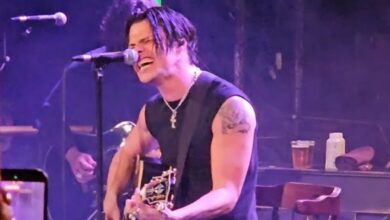
Sydney’s first big rock moment of 2026 didn’t begin with a bang—it began with a breath. At Qudos Bank Arena on January 10, YUNGBLUD opened the night by pulling the room into a shared hush, then snapping it wide open with the kind of command that makes an arena feel personal. The show had the energy of a homecoming and the pace of a statement: this wasn’t just another tour stop, it was a reset button—loud, emotional, and built to be remembered.
Part of the story was already written before anyone hit the stage. The gig was originally slated for the Hordern Pavilion, but demand pushed it into the much larger Qudos Bank Arena, setting a tone of “bigger than expected” from the start. Even outside, it sounded like Sydney was leaning into extremes—sweltering heat, lines that started early, and a crowd that arrived ready to sing first and think later. It felt like the whole day was stretching toward the moment the lights would drop.
Dune Rats handled support duties, and they didn’t treat it like a warm-up. Their set came in hot, fast, and relentlessly upbeat—punk-ish adrenaline that worked like a primer for the main event. The vibe was throwback in the best way, like a late-’90s/early-2000s soundtrack you forgot you loved until the first chorus hit. The arena loosened up, strangers started moving together, and the night’s “we’re all in this” feeling began forming long before YUNGBLUD appeared.
One of the most talked-about surprises of the support set was the guest moment: Dune Rats brought out Murray Cook (the original “Red Wiggle”) and the room reacted like it had just been handed a secret Australian handshake. It wasn’t just novelty—it was that rare multi-generational spark where people who grew up in completely different cultural lanes suddenly share the exact same grin. In an arena setting, those moments land like proof that live music still has its own kind of magic.
When it was time for the headliner, the shift was immediate and cinematic. Screens flashed a simple “Hello” in multiple languages, a quick signal that this show sees its crowd as a global tribe, not just a local audience. Then came the confetti—an opening exhale—and YUNGBLUD launched into “Hello Heaven, Hello” like he was kicking open a door. From the first minutes, he performed like someone determined to reach the back row emotionally, not just sonically.
The production leaned into theatrical detail without losing its rawness. Fire jets and dramatic lighting pushed the spectacle, but what really shaped the show’s atmosphere was the sense of intention—everything looked designed to support momentum, not distract from it. There was also an orchestral element in the mix that gave the arrangements extra depth, especially in the transitions. The result was a set that felt bigger than a rock gig and more like a narrative you moved through together.
After the opener, “The Funeral” kept the pace high, sharpening the edge and reminding everyone how good YUNGBLUD is at turning chaos into choreography. This part of the set had the “arena frontman” muscles fully flexed—big gestures, quick crowd engagement, and that slightly reckless charisma that makes fans feel like the show could spill off the stage at any second. It wasn’t messy, though. It was controlled in the way a great performance always is, even when it looks wild.
Then came “Idols Pt. I,” which played like a mood shift rather than just another track. The energy didn’t drop—it deepened. The performance leaned into atmosphere, letting the audience sit inside the emotion for a moment, the way an arena ballad can feel like a confession projected on a massive screen. You could feel the crowd recalibrate, less like they were watching a performer and more like they were participating in a shared memory being created in real time.
“Lovesick Lullaby” brought the pulse back in, but with a more melodic, bittersweet shine. This is the kind of song that works live because it invites movement and reflection at once—people can jump and still feel something heavy in their chest. You could sense how carefully the set had been built: not just a string of fan favorites, but a deliberately paced emotional arc. It’s the difference between a concert and an experience, and this night clearly aimed for the latter.
One of the intriguing moments in the setlist was “My Only Angel,” credited as an Aerosmith & YUNGBLUD song. In the context of the night, it landed like a bridge between classic rock lineage and modern identity—one foot in heritage, one foot in reinvention. That’s a theme YUNGBLUD understands instinctively: he can honor rock history without feeling like he’s cosplaying it. In an arena, that balance matters, and here it worked.
By the time “strawberry lipstick” hit, the room shifted into that familiar surge of collective release—one of those tracks that turns an audience into a single shouting organism. It’s loud, it’s bright, and it carries that “this is who we are” energy that long-time fans show up for. The performance felt less like a song and more like a ritual: people screaming the words at the ceiling, letting the beat carry whatever they walked in holding.
“fleabag” and “Lowlife” kept the set moving with contrast—sharp edges, emotional punch, then a different kind of swagger. These mid-set sections often decide whether a show stays exciting or turns into autopilot, and Sydney didn’t feel like autopilot for a second. The pacing suggested someone who knows exactly where the audience needs oxygen and where they need impact. It also showed how a modern rock set can be dynamic without losing cohesion.
And then came the moment you asked about: “Changes.” YUNGBLUD framed it as more than a cover—Rolling Stone Australia notes he dedicated it to “my friend up in the sky,” referring to Ozzy Osbourne, and the room seemed to understand instantly that this was a tribute, not a detour. The performance moved with restraint, letting the emotion sit front and center instead of chasing volume. In a loud arena, that kind of quiet focus can feel even louder than distortion.
After that emotional center, “Fire,” “Tin Pan Boy,” “braindead!,” and “Loner” pushed the show back into motion—like the night exhaled and then decided to run again. This is where the setlist felt curated for maximum live payoff: a run of songs designed to keep bodies moving and voices loud, while still carrying that thread of meaning established earlier. It’s a difficult balance—party and purpose—and it’s what separated this show from a standard tour date.
The encore choices sealed the narrative. “Ghosts” arrived like a final reflective chapter, and “Zombie” closed the night with the feeling of a statement—something the crowd could carry out into the street with them. The overall structure made sense: start big, go deep, hit the emotional core, then let the finale feel triumphant without pretending the heaviness never existed. That’s the kind of arc that makes people call a show “unforgettable” the next day.
If you want the simple answer to “what else did he sing?” here’s the Sydney setlist in one breath: Hello Heaven, Hello; The Funeral; Idols Pt. I; Lovesick Lullaby; My Only Angel; strawberry lipstick; fleabag; Lowlife; Changes (Black Sabbath cover); Fire; Tin Pan Boy; braindead!; Loner; then the encore Ghosts and Zombie. As a whole, it read like the opening chapter of a new year—equal parts celebration and tribute, with a clear message underneath: rock and roll still works when it’s built on real feeling.