Yungblud’s “Ghosts” Turns Adelaide Into a Unified Roar on January 15, 2026
Adelaide had been building toward this night for days, the kind of slow-burn anticipation that turns a concert into an event you can feel across a whole city. Fans reportedly camped out for prime spots and treated the wait like a pilgrimage, swapping stories, sharing snacks, and counting down the hours as if the queue itself was part of the show. By the time the doors finally opened, the mood wasn’t casual excitement anymore. It was that charged, collective certainty that something big was about to happen.
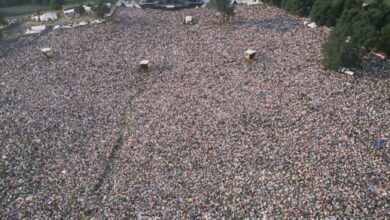
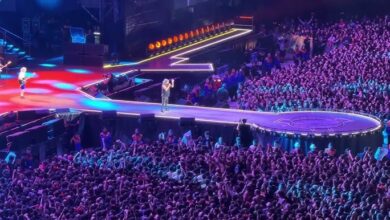
The setting mattered. The Adelaide Entertainment Centre Arena has a way of making a crowd look endless, and on January 15, 2026, it became a black-clad ocean of bodies, boots, eyeliner, band tees, and nervous grins. People weren’t just there to hear songs. They were there to belong to something for a couple of hours, to be loud on purpose, to sing without apologizing, and to leave with the kind of ringing ears that feel like proof you were alive in the right place.
Even before the headliner appeared, the night had momentum. Dune Rats hit first with a surf-punk punch that didn’t politely “warm up” the arena so much as kick the doors in. The crowd responded instantly because the room was already primed—everyone had been holding energy in their chest all day, and now they finally had permission to release it. It felt less like an opening act and more like a fuse being lit, the audience growing louder with every minute.
When the house lights shifted and the intro rolled in, it wasn’t subtle. Reports from the show describe Black Sabbath’s “War Pigs” used as the walk-in, a classic move that frames the moment like a heavyweight entrance rather than a normal stage arrival. Then he appeared, and the room snapped into focus: phones up, screams up, hearts up. The transformation from waiting crowd to roaring mass was immediate, like the venue itself inhaled and didn’t breathe out.
From the first stretch of the set, the show leaned into scale: big visuals, big gestures, and a pace that refused to drift. Descriptions from the night point to confetti and pyrotechnics early, the kind of spectacle that says, “We’re not saving anything for later.” But it didn’t feel like empty fireworks. It felt like punctuation for emotion—every blast reinforcing the idea that this wasn’t a polite performance. It was an arena-sized release.
Part of what makes a Yungblud night hit differently is how much he treats the crowd like a character in the story. He doesn’t just perform at people; he recruits them. He pushes for noise, movement, chaos—in the best way—turning the arena into something closer to a shared ritual than a concert with spectators. The energy becomes circular: he gives, they give back louder, and the whole thing climbs without needing a breather.
That sense of inclusion reportedly reached a peak when he pulled a young fan onstage to play guitar during “fleabag,” a moment that works because it isn’t polished in the corporate way. It’s messy, human, and electric—someone’s once-in-a-lifetime memory happening in real time under arena lights. Moments like that don’t just entertain the crowd; they remind everyone why rock shows still matter. It’s not perfection. It’s participation.
As the set moved deeper, the night balanced adrenaline with meaning. There was a moment of tribute and reflection when he covered “Changes” and dedicated it to the late Ozzy Osbourne, giving the room a pause without killing the momentum. In a show packed with movement and volume, that kind of slowdown can either deflate things or deepen them. Here, it reportedly deepened—turning the arena’s noise into something more emotional, like everyone realized they weren’t just there for a party.
The run of songs leading toward the end had that “everything is peaking” feeling, where each track lands like it could be the last. Accounts from the night describe the crowd singing full-voice, not in a cute singalong way, but in that all-or-nothing way that turns the chorus into a wall of sound. It’s a particular arena phenomenon: thousands of people singing the same words for different reasons, and somehow it still feels personal.
By the time the main set wrapped, the air had that post-storm quality—hot, loud, and buzzing with expectation. Everyone knows the encore is coming, but you still feel that tiny fear that it might not. That tension is part of the architecture of a great show: you’re exhausted, you’re exhilarated, and you’re not ready to let go. In Adelaide, the encore didn’t arrive gently. It arrived like a second ignition.
And then it happened: “Ghosts” opened the encore, and the arena shifted from wild to locked-in. According to a local live review, he conducted the crowd through the song in a way that echoed classic frontman showmanship—less “watch me” and more “we’re doing this together.” Red confetti reportedly poured out over the mosh, turning the moment into a floating storm of color while the chorus hit like a wave that kept coming back.
“Ghosts” works as an encore choice because it carries both lift and weight. It’s not a throwaway victory lap; it’s a track built for arena emotion, the kind that lets people scream a line and feel like they’ve said something they couldn’t say anywhere else. On record, it runs 6 minutes and 26 seconds, long enough to stretch into something cinematic, long enough for a crowd to fully sink into it and make it theirs.
In Adelaide, the song’s power wasn’t just in the notes—it was in the way the room responded. The confetti, the conducting, the roar of thousands leaning into the hook: it created the illusion that the chorus belonged to everyone at once. That’s the moment fans mean when they say a performance is “bigger than the song.” You don’t walk away remembering only what you heard. You remember what you felt in your ribs.
The night didn’t end on “Ghosts,” either. The finale was “Zombie,” another emotional heavy-hitter, and reports describe the crowd belting the chorus in a cathartic, communal way. After an encore that began with “Ghosts” and closed with a song centered on mental health and self-love themes, the show’s emotional arc landed cleanly. It wasn’t just loud. It was purposeful—like the party had a heartbeat underneath it.
Zoom out, and the Adelaide date fits into a wider Australia run that had already made noise in Melbourne and Sydney, with media noting how visible and headline-grabbing the tour’s moments had been across cities. But Adelaide’s “Ghosts” moment stands out precisely because it captured the whole thesis of a great Yungblud show: scale without losing sincerity, chaos without losing intention, and a crowd treated not as customers, but as co-creators.
If you’re trying to explain why people leave nights like this calling it one of the best concerts they’ve ever seen, you can’t reduce it to a setlist or a stage design. It’s the feeling of being part of something that makes strangers look at each other like friends. In Adelaide on January 15, 2026, “Ghosts” didn’t just close the gap between stage and floor—it erased it for a few minutes, and that’s why it’s the clip people will keep replaying.