Robert Plant Revives “Going to California” for the First Time Since 2019 in a Stunning Night at The Met Philadelphia (April 4, 2026)
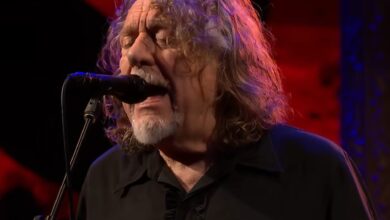
On April 4, 2026, Robert Plant stepped onto the stage at The Met Philadelphia with a quiet confidence that immediately set the tone for the evening. This wasn’t a nostalgia-driven arena spectacle—it was something far more intimate, almost spiritual in its pacing and intent. Backed by his evolving project Saving Grace, Plant arrived not to relive the past, but to reinterpret it. The audience, a mix of lifelong fans and curious newcomers, seemed to understand that from the very first note.
The Spring Fever 2026 tour had already built a reputation for its stripped-down arrangements and genre-blending sensibilities. Drawing from folk, Americana, blues, and gospel, the setlist reflected Plant’s decades-long journey away from the towering shadow of Led Zeppelin. Yet, as the night unfolded in Philadelphia, there was a quiet anticipation lingering in the room—an unspoken hope that something from that legendary past might resurface in a new form.
The venue itself played a crucial role in shaping the experience. The Met Philadelphia, with its grand yet warm acoustics, felt less like a concert hall and more like a cathedral for storytelling. Every subtle instrumental detail—every plucked string, every breath between lyrics—carried effortlessly across the room. This environment perfectly matched the ethos of Saving Grace, a band built not on volume, but on texture and nuance.
The core lineup behind Plant brought a rich, layered sound that felt organic and deeply rooted. Suzi Dian’s presence added a haunting vocal counterpoint, while musicians like Tony Kelsey and Matt Worley filled the arrangements with delicate instrumentation—mandolin, banjo, and acoustic guitar weaving together like threads in a tapestry. It was a sound far removed from the thunder of Zeppelin, yet equally compelling in its emotional depth.
As the main set progressed, the band moved fluidly through a mix of original material, traditional songs, and carefully selected covers. Tracks from the group’s recent work blended seamlessly with older influences, creating a sense of continuity rather than contrast. The audience remained fully engaged, not through explosive energy, but through attentive stillness—a rare and powerful dynamic in live performance.
One of the defining aspects of the evening was Plant’s approach to his own legacy. Rather than leaning into familiar arrangements, he reshaped songs with subtlety and restraint. His voice, aged but expressive, carried a different kind of power now—less about range, more about storytelling. Each lyric felt considered, lived-in, and deeply personal.
Then came the moment that would define the night.
After a 13-song main set, the band left the stage briefly, only to return for the encore. The atmosphere shifted instantly. There was a sense that something special was about to happen, though few could have predicted exactly what. Plant addressed the crowd with a reflective tone, referencing his long history with Philadelphia—a city he had first played with Led Zeppelin back in 1969.
As the lights softened, Matt Worley began to pick out the opening chords on guitar. It was a gentle, almost tentative introduction—but for those who recognized it, the reaction was immediate. A wave of anticipation swept through the audience as the unmistakable structure of “Going to California” began to take shape.
For many in the room, it was a moment they had waited years to witness. The song had not been performed by Plant since 2019, making this its long-awaited return after nearly seven years.
When Plant finally stepped in with the opening line, the crowd erupted—not with chaos, but with a surge of emotional recognition. His voice, softer now, gave the song a new dimension. Where the original carried a sense of youthful searching, this version felt reflective, almost meditative—like a conversation between past and present.
The arrangement itself was beautifully reimagined. Tony Kelsey took on the mandolin parts, while the rest of the band supported the melody with subtle, layered instrumentation. Suzi Dian added delicate textures, including accordion elements that gave the performance an almost Appalachian folk character.
What made the performance truly remarkable was its restraint. There were no dramatic flourishes, no attempts to replicate the original grandeur. Instead, the band leaned into simplicity, allowing the song’s emotional core to shine through. Every note felt intentional, every pause meaningful.
The audience response mirrored this approach. Rather than shouting along, many simply listened—absorbed in the moment. It was the kind of silence that only happens when a performance truly connects, when the boundary between artist and audience begins to dissolve.
In that space, “Going to California” transformed from a classic rock staple into something far more intimate. It became a reflection on time, memory, and artistic evolution. Plant wasn’t just revisiting the song—he was reinterpreting it through decades of experience, giving it a weight that the original version never carried.
As the final notes faded, the reaction was immediate and overwhelming. The applause wasn’t just loud—it was sustained, almost reverent. It was clear that everyone in the room understood they had witnessed something unique, something that couldn’t be replicated.
The encore continued with a closing performance of “Everybody’s Song,” but it was “Going to California” that lingered in the air long after the show ended.
In the end, the April 4, 2026 performance at The Met Philadelphia stood as more than just another tour stop. It was a moment of reconnection—between an artist and his past, between a song and its audience, and between memory and reinvention. Robert Plant didn’t just bring back “Going to California.” He transformed it into something entirely new, proving once again that true artistry isn’t about repetition—it’s about evolution.