Metallica’s “Leper Messiah” in Frankfurt on May 24, 2026 Became a Brutal Snake Pit Masterclass in Pure Thrash Metal Chaos
Inside the center of Metallica’s massive 360-degree M72 stage at Deutsche Bank Park, the Snake Pit crowd found itself trapped in the middle of absolute sonic warfare when the opening riffs of “Leper Messiah” exploded through Frankfurt on May 24, 2026. Surrounded from every direction by towering amplifiers, blinding lights, and tens of thousands of screaming fans, the legendary deep cut transformed the stadium into something far darker and heavier than a standard arena rock concert. For the lucky fans packed inside the Snake Pit itself, the performance felt less like watching Metallica and more like surviving them.
Unlike the giant anthem singalongs that dominate many Metallica stadium moments, “Leper Messiah” carried a more menacing atmosphere from the very beginning. The song has always occupied a unique place within the band’s catalog — cynical, aggressive, politically sharp, and fueled by some of the heaviest riffing on Master of Puppets. In Frankfurt, that darkness hit even harder because of the intimate violence created by the Snake Pit layout. Instead of watching from a distance, fans stood only feet away from James Hetfield, Lars Ulrich, Kirk Hammett, and Robert Trujillo as the band circled the stage like predators.
The M72 setup made the experience unlike almost any other modern stadium tour. Metallica’s massive circular stage sits directly in the center of the stadium floor, with the Snake Pit placed inside the ring itself. That design means the band constantly rotates around the audience, creating moments where fans suddenly find Hetfield screaming directly in front of them before he disappears toward another side of the stage. During “Leper Messiah,” those movements made the song feel especially intense, almost claustrophobic despite the gigantic size of Deutsche Bank Park.
As soon as the opening riff hit, the atmosphere inside the Snake Pit changed instantly. Videos filmed from within the crowd captured fans screaming directly into one another’s faces while bodies slammed against the barricades separating the inner circle from the surrounding floor audience. Unlike casual stadium spectators, Snake Pit attendees tend to be the most obsessive Metallica fans in the venue, and Frankfurt’s crowd treated “Leper Messiah” like a sacred thrash ritual rather than just another song in the setlist.
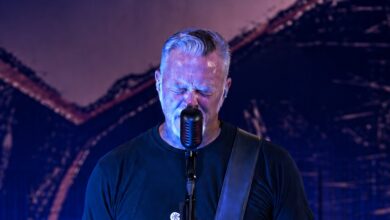
James Hetfield’s vocal performance became one of the defining aspects of the night. At over sixty years old, Hetfield still delivered the track with frightening authority, barking each lyric with the same bitter aggression that made the song legendary back in the 1980s. Fans near the stage described the physical impact of hearing his voice from only a few feet away as almost surreal. Through fan-shot 4K videos circulating online afterward, every growl and rhythmic punch cut through the stadium mix with shocking clarity.
Musically, the performance sounded enormous. Lars Ulrich’s drums echoed violently through Deutsche Bank Park while Robert Trujillo’s bass rumbled beneath the song like an earthquake. Kirk Hammett’s lead work added bursts of chaos between Hetfield’s machine-like rhythm guitar attacks, and the combined sound turned “Leper Messiah” into one of the heaviest moments of the entire Frankfurt weekend. Fans online quickly began calling it one of the standout deep-cut performances of the European 2026 tour.
The crowd reaction also reflected how much Metallica’s audience values older material from the band’s classic era. While mainstream listeners often focus on songs like “Enter Sandman” or “Nothing Else Matters,” hardcore fans inside the Snake Pit exploded when “Leper Messiah” appeared because it represented the raw thrash identity many longtime listeners still associate most strongly with Metallica. The performance felt designed specifically for those fans rather than casual radio audiences.
Another fascinating detail surrounding the Frankfurt show was the contrast between the song’s dark themes and the almost celebratory atmosphere inside the Snake Pit. “Leper Messiah” famously criticizes manipulation, greed, and blind devotion, yet thousands of fans screamed every lyric back toward the stage with euphoric intensity. The contradiction somehow made the performance even more powerful, transforming the song from cynical social commentary into communal catharsis.
The lighting design amplified the heaviness dramatically. During “Leper Messiah,” the stage became drenched in harsh red and white flashes while giant towers of light erupted around the circular setup. Because the Snake Pit sits directly inside the production itself, fans were constantly surrounded by strobes, smoke, heat, and moving equipment. Videos from inside the crowd made the performance look less like a normal concert and more like some industrial metal battlefield unfolding in real time.
One reason the performance spread so rapidly online afterward was the quality of fan-shot footage emerging from the Snake Pit itself. The M72 stage design allows audience members inside the pit to capture extraordinarily close footage of the band from constantly changing angles. In Frankfurt, multiple 4K uploads immediately began circulating online, showing Hetfield practically towering over fans while hammering through the song’s crushing riff structure. Those clips quickly gained traction among Metallica communities and reaction channels.
The Frankfurt concerts already carried huge anticipation before “Leper Messiah” ever appeared. Metallica’s return to Germany as part of the M72 World Tour represented one of the biggest metal events of spring 2026, with two nights at Deutsche Bank Park featuring completely different setlists and support acts. The atmosphere surrounding the city throughout the weekend felt more like a festival takeover than a standard concert stop.
For longtime fans, hearing “Leper Messiah” in such an aggressive environment felt like reconnecting with a darker chapter of Metallica’s history. While modern stadium production has elevated the band into one of the world’s biggest live acts, performances like this reminded audiences that Metallica’s roots remain deeply tied to underground thrash metal intensity. Frankfurt’s Snake Pit essentially became a collision point between giant-scale stadium spectacle and old-school metal violence.
The physicality of the crowd added another layer to the performance. Inside the Snake Pit, fans constantly shifted, jumped, screamed, and collided with one another as the band circled the stage overhead. Yet despite the chaos, there was also an unmistakable sense of unity among everyone packed into the inner circle. Strangers grabbed one another to stay upright, screamed lyrics together, and celebrated every riff change like they were witnessing something historic.
One of the most talked-about moments came during the song’s breakdown sections, when Hetfield leaned directly toward the Snake Pit crowd while hammering out the rhythm parts only feet away from the audience. Fan-shot footage captured dozens of hands reaching upward toward the stage as thousands of fans outside the pit roared around them. The visuals perfectly demonstrated why the M72 setup has become one of the most immersive live productions in modern rock and metal.
The performance also reinforced why Metallica continues to dominate live metal decades into their career. Many legacy acts eventually become nostalgia machines relying entirely on predictable greatest-hits performances, but “Leper Messiah” proved Metallica still understands how to weaponize deep cuts for maximum impact. Instead of simply replaying familiar radio staples, the band used Frankfurt to remind audiences how dangerous and heavy their music can still feel in the right environment.
As the final riff crashed to an end inside Deutsche Bank Park, the reaction from the Snake Pit crowd looked almost feral. Fans screamed toward the stage while Hetfield grinned at the chaos unfolding directly beneath him. Around them, more than fifty thousand people continued roaring through the stadium as smoke drifted upward into the Frankfurt night sky. For those trapped inside the center of the madness, “Leper Messiah” was not merely another song on the setlist — it felt like surviving a living piece of thrash metal history.