Fans Turn to 3 Doors Down’s “Away From the Sun” After Brad Arnold’s Death — and the Lyrics Now Feel Like a Farewell
Brad Arnold, the lead singer and founding member of 3 Doors Down, has died at the age of 47, following a battle with advanced kidney cancer. The news has hit the band’s audience with a particular kind of shock: not the distant sadness of losing a celebrity you only knew from headlines, but the closer feeling of losing a voice that’s been riding along in people’s lives for more than two decades.
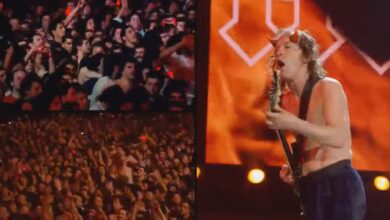
In the hours after the reports spread, one song kept surfacing again and again in fan conversations: “Away From the Sun,” especially the band’s live Houston performance that many listeners describe as the emotional peak of Arnold’s vocals. It’s not hard to understand why fans reached for that moment. When grief is fresh, people instinctively search for something that already knows how to speak the feelings they can’t organize yet.
“Away From the Sun” has always been one of 3 Doors Down’s most quietly heavy songs. It doesn’t rely on bombast to make its point. It feels like a confession delivered in plain language, the kind of track that doesn’t demand attention but holds it anyway. In a catalog filled with radio-sized hooks, this one stands out because it carries a weight that is more internal than anthemic.
The phrase fans keep circling back to is the emotional core of the song: the sense of being trapped in a cycle where you climb, you fall, and you get pushed down again. Arnold once described it as reflecting a period when he felt he was back at the bottom repeatedly, and eventually didn’t even feel like climbing anymore because he expected to be knocked down again. That isn’t just general sadness. It’s the specific exhaustion of fighting the same fight over and over until the fight starts to feel larger than you.
That context changes the way the song is heard after his death. When someone passes away after a serious illness, listeners often reinterpret older lyrics through the lens of that final chapter, even when the song wasn’t written about illness at all. “Away From the Sun” becomes less about one difficult stretch in a musician’s life and more like a universal language for people who are tired, scared, or trying to find light while feeling far from it.
The title itself is a powerful metaphor when placed next to the reality of terminal disease. “Away from the sun” doesn’t just suggest sadness; it suggests distance from warmth, normalcy, and the simple promise of tomorrow. That’s why the song has always resonated with people dealing with depression, burnout, grief, or addiction. And it’s why, right now, it’s resonating as a soundtrack to loss.
Fans are also specifically returning to the Houston performance because live versions have a different kind of truth. Studio recordings can be polished into perfection, but live performances show you the human being inside the song. In that Houston moment, the track becomes less like a recording and more like a diary entry read out loud in front of thousands of people, which is exactly the kind of intimacy that grief makes people crave.
There’s another reason “Away From the Sun” fits this moment: it contains no ego. It doesn’t posture. It doesn’t claim victory. It simply admits how hard it is to keep getting back up. When someone dies young, especially someone whose work was associated with perseverance and the working-band grind, fans don’t always want the loudest song. They want the one that feels honest enough to hold their sadness without trying to fix it.
Arnold’s death also reframes 3 Doors Down’s entire era for a lot of listeners. The band rose during a time when mainstream rock specialized in emotional directness: songs you could scream in a car, or play at midnight when you couldn’t sleep. That era produced music that became personal property for fans. People don’t just remember those songs; they attach them to deployments, breakups, recovery, family losses, and long drives where the chorus felt like company.
That’s why fan behavior right now isn’t just “sharing a hit.” It’s memorial-building through music. When fans post the Houston performance, they’re not only praising his voice. They’re creating a communal place to grieve. It’s a way of saying: this is where I first felt what his music could do, this is what I don’t want to forget, this is how I’m marking the moment.
There’s a delicate line in moments like this: the temptation to treat a death like a narrative climax. But what makes Arnold’s story so affecting is that it doesn’t need myth-making. The reality is strong enough. Reports say he fought advanced cancer after publicly sharing his diagnosis, and that his passing was peaceful and surrounded by loved ones. That kind of ending is both heartbreaking and quietly human, and it makes the public’s urge to hold onto one meaningful performance feel almost inevitable.
“Away From the Sun” also carries an unusual kind of hope, even when it’s drenched in darkness. Not the shiny, motivational kind of hope, but the hope that comes from naming the problem accurately. Sometimes the only way people survive a hard season is by hearing someone else say the words out loud first. In that sense, the song becomes less a eulogy and more a reminder of why people loved Arnold: he could make heavy feelings feel speakable.
And then there’s the uncomfortable truth that grief always brings: the music keeps going, even when the person doesn’t. The Houston performance will keep circulating because it’s now more than a favorite clip. It’s a living artifact of a voice that meant something to millions. Every replay is both a comfort and a sting, because it proves how close a recorded voice can feel even after the singer is gone.
What happens next for 3 Doors Down is unknown, and it’s too soon for anyone to demand answers. But the fan reaction already says something important: Brad Arnold’s legacy isn’t just a list of hits, awards, or chart positions. It’s the way a song like “Away From the Sun” can suddenly become a shared language for mourning, and the way a single live performance can feel like a place people return to when they don’t know where else to put their feelings.
The question now isn’t only how the band will respond in the future. It’s whether listeners, years from now, will still feel the same shiver when that chorus arrives live on a screen, and whether that feeling will remain painful, healing, or somehow both at once.