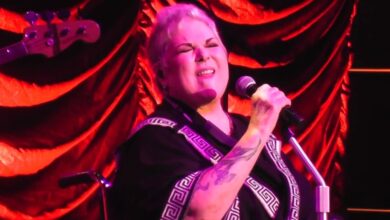
The Space Between Jack Black’s Words Is What Makes Him Sound Like Ozzy
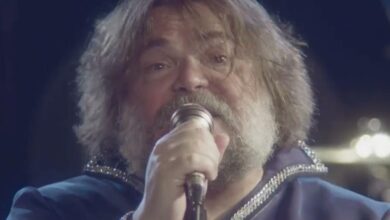
There is a quick test for a cover of “Mr. Crowley.” Close your eyes for the first verse and notice whether the singer lets you finish one phrase in your head before the next phrase arrives. Ozzy Osbourne gives the familiar melody enough space for it to sound like a direct address. Jack Black keeps that spacing in his tribute at Back to the Beginning. Some of his vowels are broader and there is a recognizable roughness at the edge of his voice. What sounds immediately familiar is where he puts those sounds against the band.
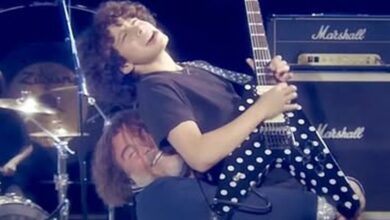
Black’s version is enjoyable as a visual recreation, from the familiar shirt to the way the young players are introduced through the camera angles. But the archived response that Jack came especially close to Ozzy’s sound makes an argument worth taking seriously on its own terms. For a song with a dramatic singer and dramatic guitar playing, there is a surprising amount of silence for both people to work with. Every time a voice ends a line, there is room for another instrument to speak. That space has as much to do with the character of the original as the famous voice does.
Black stretches a word just long enough to make the next one feel newly placed. The habit is particularly noticeable in the early part of the performance, before the lead guitar takes a larger share of the space. With the band giving him a steady pulse, he can let an ending linger for a little while and still arrive cleanly for the next line. If you know Ozzy’s studio recording well enough to sing it through from memory, your own instinct about where a phrase ought to land is a useful clue to why Black sounds familiar here.
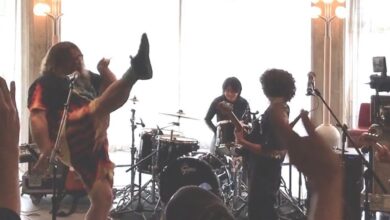
It helps that he has musicians willing to hold that space. Hugo Weiss brings in the keyboard colors that announce the song. Yoyoka Soma and Revel Ian supply much of the forward motion when the band is underneath the singer. Roman Morello can then use short guitar ideas between vocal phrases and bigger ones when his moment comes. The arrangement gives everybody boundaries, and Black’s voice is particularly effective when it works inside them. A great cover often begins with the players agreeing about what a song needs from each of them at a given moment.
Ozzy made a distinctive impression with the economy of his phrasing on the studio version. He can make a single vowel sound uneasy and then turn the next line into something almost conversational. Black’s personality is audible in the way he digs into the note, but the outline of Ozzy’s phrasing still comes through. The distance between two words can carry just as much recognition as the first shouted note. This is the part of the cover that rewards a little attention even after the novelty of seeing Black in the outfit has worn off.
The tribute appeared in connection with Birmingham’s Back to the Beginning. Part of its pleasure is watching younger musicians and a singer with his own well-established showmanship agree on the sound of a record that arrived long before some of them were born. Play the opening verse and follow Black’s breath through it. You can hear how much room he leaves for the guitar to give a little response after a line ends. He sounds closest to Ozzy at moments when the rest of the band is helping him complete the thought.
Watch the performance
What to compare between the singers
Start with the way each singer presents the title. The two recordings give that address something like the same dramatic weight. Black sometimes puts a little extra muscle into the attack, and Ozzy’s delivery often feels like it leans forward of its own accord. You can follow both against the same fundamental arrangement. Imagine filling the gap after every sentence with another sung line and the song starts to feel different almost immediately. A performance that preserves those intervals brings back a great deal of the original feeling before you have compared the voices themselves.
The guitar entrances make the comparison easier. Once Roman has room to play, the lead can go much higher and quicker than the vocal. That contrast was already part of the relationship between Ozzy and Randy Rhoads. It makes the quiet seconds after a sung phrase matter. The singer can use a narrow movement in pitch and a great deal of character while the guitar opens the melodic space much further. Black’s instinct to leave the handoff intact lets listeners hear the thing they remember about the original, even when a younger player makes the phrase his own.
There is a small reward in trying the cover on headphones after you have seen all the jokes and visual callbacks. Put the screen down for the first part and you can hear the musicians making room for one another. Black’s tone sounds recognizable because of how it is framed. The quick reaction that he came close to nailing Ozzy’s sound is also a reaction to a whole band creating the right conditions for that impression. Every part contributes a little to the effect, and the spaces between the parts contribute too.
Two more versions
The original studio recording is the clearest place to hear the first line in the context in which it became familiar. Don Airey’s keyboards establish the mood before the singer arrives, and the weight of Bob Daisley and Lee Kerslake leaves the melody clear. The details of the rhythm differ from the newer clip. When you listen for the separation between the vocal phrases, it becomes obvious which parts of the original Black and the younger musicians decided to preserve.
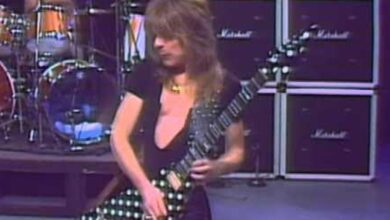
In the live 1981 take, the band has to create that same kind of space with the camera and the musicians moving around one another. The voice pulls your focus during the verse and the guitar carries it away when Rhoads steps in. That change of attention is just as audible as it is visible. It explains why Jack’s tribute can recall Ozzy even when the strongest thing happening in the frame is Roman Morello’s playing.