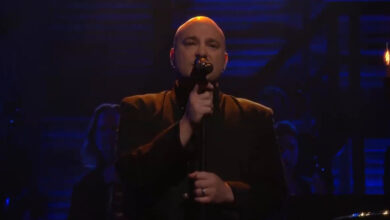
Johnny Depp Lets the Guitars Do the Talking on David Bowie’s ‘Heroes’ at Montreux
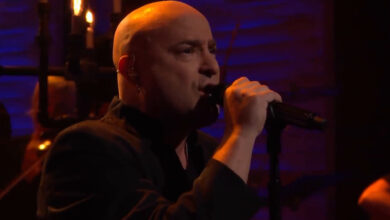
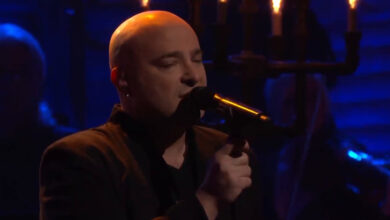
Johnny Depp is already close to the microphone when “Heroes” begins to take shape at Montreux. He keeps his voice low enough that the first lines feel almost unguarded, and the guitar behind him has room to hang in the air. There is plenty to look at onstage with Hollywood Vampires, but the opening directs your ear to a single voice. What follows is a performance built around how much a singer can let happen around him while keeping the words in focus.
The footage comes from the band’s appearance at the Montreux Jazz Festival in 2018. It reached a broader audience when the official live release brought that set into circulation. The distinction matters because the video feels immediate enough to be mistaken for a new concert. The band were already making the song part of their live repertoire then, and the filmed set catches Depp in a role that listeners could follow before the cover reached the group’s 2019 album, Rise.
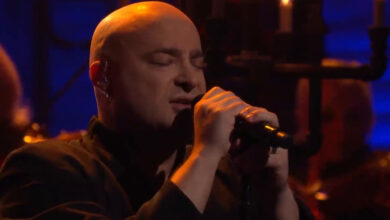
What makes the lead vocal unusual is how plainly Depp sings the opening. He has a rough edge that catches on longer syllables, especially when he leaves a little air around the end of a phrase. Bowie’s melody is familiar enough that a small change in emphasis draws your attention immediately. Depp works within the shape of the song and lets his own speech-like delivery bring some of the lines closer to the listener.
There is a good reason to pay attention to the guitar while he sings. Its held notes fill the spaces around the melody, giving the performance some of the glow that made the Bowie recording so distinctive. The sound stays broad enough for the song to feel like an anthem while the voice stays close. That balance is a large part of the arrangement. When the guitars open up, the performance can grow without the singer having to push every phrase in the same direction.
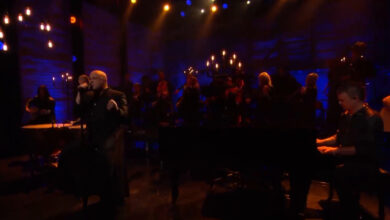
Alice Cooper, Joe Perry and Tommy Henriksen are part of the musical setting that makes the handoff work. A stage full of strong personalities can pull a viewer’s attention in several directions at once. Here the group lets the guitar lines and the lead vocal carry the scene together. Put your ear on the spaces between the words and the band’s part becomes easier to follow. The arrangement is already gathering weight while Depp keeps his own delivery deliberately measured.
The most revealing stretch comes when that measured beginning turns into something a whole room can sing along with. Depp’s voice still has the same rough texture, but the rest of the band gives it a larger frame. The live film makes that shift easy to follow because the opening has left somewhere for the song to go. It is a performance worth hearing from the first lines through to the finish.
Watch the performance
The guitar matters because Robert Fripp’s sound is one of the first things many listeners remember about Bowie’s “Heroes.” Its persistence gives the original recording an almost continuous current beneath the singing. A live cover can preserve that feeling in a different room with a different set of hands. The Montreux performance does so through the way the guitars sustain around the vocal, keeping the arrangement connected to the record even when the grain of Depp’s voice takes it somewhere else.
Bowie wrote “Heroes” with Brian Eno and released it in 1977. It is closely associated with Hansa Studios in Berlin, a connection Hollywood Vampires made tangible when they recorded their own version for Rise at the same studio. The Montreux recording predates the release of that album. Taken together, the two versions show how the band worked with the song in front of an audience and later let the studio setting deepen its connection to Bowie’s recording.
Depp also sang “Heroes” with the group on Jimmy Kimmel Live in 2019. Their label described the appearance as his television debut as their lead singer on the Bowie song. In that setting the vocal had to register immediately for a television audience. The Montreux film gives a different impression of the same performer, with time for the opening to settle and for the band to build toward the song’s bigger moments.
One viewer on the official Montreux video imagined that Bowie would have approved. It is an opinion about the tribute, and it makes sense alongside comments about how much emotion viewers hear in Depp’s delivery. Another way to approach the performance is to focus on how little the singing insists on being the center of attention. Even with the camera on him, Depp leaves room for the guitar and for listeners’ own memories of the original.
“Heroes” also has a special place in this particular live set. The Montreux release includes the attack of “Ace of Spades” and familiar classic-rock material like “Baba O’Riley” and “Sweet Emotion.” Bowie’s song supplies a pause inside that broader range. It gives a group capable of filling the entire stage with sound an opportunity to begin on a smaller scale, so that the lift in the arrangement feels earned when it arrives.
Revisiting the footage now brings out details that a short social clip can pass over. The microphone catches the consonants and the scuffed ends of the lines. The guitar has an identity that becomes clearer between phrases. The light on the stage leaves the two sounds at the center of the frame. Each of those things gives the performance a little more to hold on to when you go back for a second listen.
The official Rise video shows the song through the band’s studio-era presentation. Footage from the Greek Theatre in 2019 gives an audience perspective on another live rendition. Both make an interesting comparison after Montreux. For this performance, the moment that gives the whole thing its shape is the opening: a familiar guitar sound, a quiet vocal and just enough time for the words to find the room.
Two more versions
The official video for the Rise recording takes the song back to Hansa Studios in Berlin, where David Bowie recorded the original. The studio setting makes it easier to focus on what Depp leaves between the lines and how the guitars sustain around him. Go back to the Montreux performance after hearing this version and you can pick out the same restraint in the opening, before the live band lets the song swell to fill the room.
The fan-filmed performance from the Greek Theatre puts you out in the audience, where Depp’s voice and the guitars reach you together. That change of perspective makes the build into the chorus easier to hear as a whole. In the Montreux film, the close-ups bring you back to the singer and the rough edge of individual phrases. The two recordings let you hear how the same arrangement works from opposite sides of the stage.