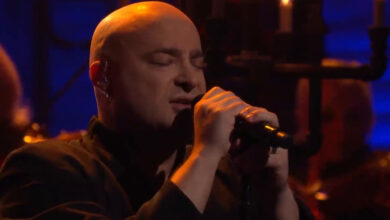
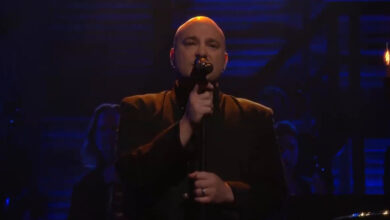
James Hetfield Sings Harmony as Miley Cyrus Leads Metallica’s ‘Nothing Else Matters’
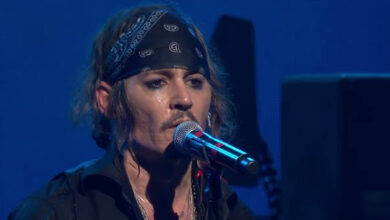
The first striking decision on the Howard Stern Show is who gets the opening. “Nothing Else Matters” is immediately recognizable, and James Hetfield is there with the band that made it famous. But the first voice you follow is Miley Cyrus’s. She sits low in the melody and leaves room at the ends of the phrases. The arrangement takes a song closely tied to one singer’s voice and briefly lets a different person tell the story, with Metallica close enough to respond to her phrasing.
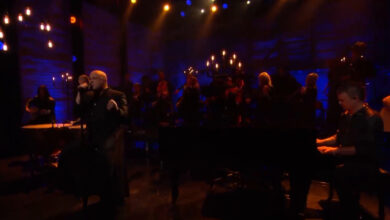
The live collaboration came in September 2021, around the thirtieth anniversary of Metallica’s self-titled album, better known as the Black Album. Cyrus had already made a studio recording for The Metallica Blacklist. The Stern session puts her in a different setting, singing with Metallica in the SiriusXM Garage. It is a rare chance to hear what a guest does with a familiar song while the musicians who know its contours best are playing it beside her.
The first verse gets much of its character from the bottom of her range. Cyrus lets the words sit close to the rhythm while the guitar pattern keeps moving beneath them. The roughness in her voice is especially audible when a quiet line lasts long enough for you to hear how she ends it. The performance makes a strong case for following those details because the arrangement gives each small decision somewhere to land.
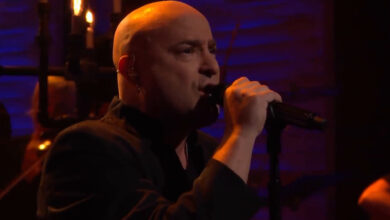
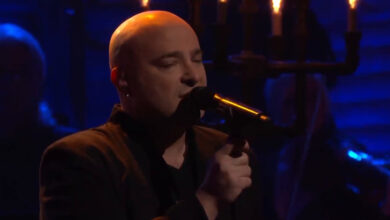
Hetfield’s entrance changes the center of the recording without taking the lead away from Cyrus. The two voices have very different textures, and you can hear both in the same phrase. His sound supplies some of the familiarity listeners bring to the song. Her phrasing determines how the line moves this time. The chorus gives them enough room to hold those roles at once, which is a more interesting musical decision than simply trading entire verses.
One widely liked comment under the Stern video pointed out that covering a song by Metallica and playing that song with Metallica are two different experiences. A second listener focused on Hetfield making room to harmonize. Those reactions pick up on the same choice from different directions. The musicians are close enough to change the balance of the song together, and the chemistry comes through most clearly when you can hear the vocal arrangement without having to think about it.
Watch the performance from the first verse through the point where the voices meet. The band keeps the pacing steady as Cyrus leans into the low lines, and the move into the chorus comes with a recognizable voice entering a different place in the arrangement. That is the moment the session becomes something only these particular musicians could have made together.
Watch the performance
Hetfield originally wrote “Nothing Else Matters” as a personal song. Its association with missing home goes a long way toward explaining why it can sound so exposed even inside a full-band arrangement. At the time it was a marked shift for musicians whose reputation had been built on speed, force and an unusually focused guitar sound. Bringing the song into the Black Album made that gentler side part of the sound listeners now recognize as Metallica.
Cyrus brought her own history to the song. She had performed it at Glastonbury in 2019 and spoke about how its message reached her at a point when she had a lot to sort through. The words allow a listener to come to the same song from a different set of circumstances. That is part of what her vocal makes audible. She sings the first lines with the restraint of someone who is comfortable letting the listener come closer.
The Blacklist recording puts a larger set of colors around her voice. It brings together musicians including Elton John, Yo-Yo Ma and Chad Smith alongside Robert Trujillo and WATT. The Stern video gives you the immediate physical relationship between the lead vocal and a working band in the same space. Compare the openings and you can hear how the surroundings change the way her low register comes through. The words are the same, and each version gives them a different scale.
It is worth following the instrumental parts in the Stern performance even once you know where the two voices meet. The guitar keeps the melody grounded before the chorus and during the stretches when Cyrus lets a word trail off. The band’s timing gives the vocal room to hang while maintaining the pulse. The performance feels spacious because the players keep track of which part of the arrangement already has the listener’s attention.
The appeal of hearing Hetfield harmonize is that the familiar sound of the original is still there, in a different role. A voice listeners have associated with the song for decades becomes one part of a shared performance. The shift is easy to miss on a casual listen because both singers fit comfortably inside the chorus. Once you hear which part each voice is carrying, the arrangement holds together in a new way the next time it comes around.
Cyrus’s earlier live rendition and the Blacklist version also make clear how much expression she can put into the same material in different rooms. A festival crowd changes the scale of the song. A studio arrangement can use instruments that have their own color and their own place in the mix. On Stern, the focus keeps coming back to the space between Cyrus and Hetfield’s microphones. The arrangement gives the camera and the ear the same place to look.
Metallica’s own Stern performance from 2013 is another way to hear the original band’s balance before revisiting the guest version. Then return to 2021 and follow the first place Hetfield’s voice sits beneath Cyrus’s. The attraction of the newer session is in that small change of position. Both voices remain easy to recognize, and for a few minutes the song makes room for the experiences each singer brings to it.
Two more versions
On The Metallica Blacklist, Elton John’s piano and Yo-Yo Ma’s cello give Cyrus a different backdrop for those quiet opening lines. The arrangement makes it easy to hear how comfortable she is leaving space in the lower part of her range. Bring that detail back to the Stern performance, where the guitars give her an equally steady foundation, and the moment Hetfield adds his voice feels even more distinct.
Metallica’s 2013 Stern performance lets you hear how Hetfield carries the melody when the entire vocal is his to shape. Pay attention to when he bears down on a line and when he lets the guitar finish the thought. Those choices are a useful reference for the 2021 session. When Cyrus takes the lead and Hetfield comes in alongside her, you can hear exactly how much space he gives her while keeping his own sound in the chorus.