Noon of Resistance: How “Killing in the Name” Turned First Avenue Into a Rally Cry for Minneapolis
It started the way urgent moments often do now: fast, direct, and impossible to ignore. A last-minute announcement rippled across social feeds, framed less like a tour stop and more like a call-up. A “Concert of Solidarity & Resistance to Defend Minnesota” was suddenly real, suddenly imminent, and suddenly everyone was doing the same mental math—how do you rearrange your day to make it to a noon show at the most storied room in the Twin Cities? The details were strikingly simple: cheap tickets, an early door time, and a promise that the money would go where it mattered. The mission was the headline, the music the megaphone.
The timing itself was part of the statement. Doors at 10:30 a.m., show at noon—those aren’t rock hours, they’re civic hours. It felt like the concert was deliberately stepping into the space where press conferences and courthouse steps usually live, except this one had amps, guitars, and a crowd that came ready to sing. That daytime start shifted the atmosphere from “night out” to “show up.” People weren’t arriving buzzed and drifting; they were arriving focused, layered up for winter, carrying that tight, shared expression you see at protests and memorials—equal parts grief, anger, and determination.
And then there was the price point: $25. In an era where the average big-name ticket can feel like a luxury bill, the number read like a handshake—come in, stand together, put your money toward something concrete. The official event listing laid out the framework and made the intention unmissable, including the teased “very special guest” that instantly lit up rumor engines. That tease wasn’t just marketing, it was electricity: the sense that something rare might happen because the moment demanded it, not because it was scheduled six months ago.
Outside First Avenue, the line had the particular vibe of a crowd that knows it’s part of a one-off. It wasn’t just fans swapping setlist predictions; it was people swapping updates, trading context, checking phones for any new development, and locking eyes with strangers in that quick, silent way that says, “you too?” Inside, the room’s famous star-covered walls felt less like décor and more like witnesses. This is a venue built for legends and loud nights—but on January 30, it also became a gathering place for urgency.
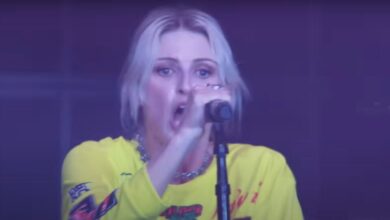
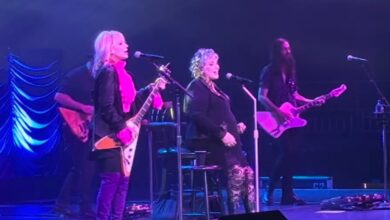
The lineup was a blend that made sense if you read it as a coalition rather than a bill. Rise Against brought the kind of melodic fury that has always fit protest spaces. Al Di Meola added virtuosity and a different kind of intensity—the kind that doesn’t need slogans to feel confrontational. Ike Reilly carried the working-class storytelling thread that turns politics into people. The point wasn’t genre unity; it was purpose unity, each act speaking a different dialect of the same message.
From the jump, the room was responsive in a way that felt less like entertainment and more like participation. Between songs, you could sense the crowd listening for more than jokes or banter—they were listening for direction, for meaning, for something to hold onto. The night-before feeling of helplessness that hangs over bad news was replaced by something more muscular: agency. Not because music fixes anything overnight, but because it can snap people out of isolation, remind them they’re not alone, and turn private anger into a shared rhythm.
As the sets rolled forward, the show’s structure kept reinforcing its core identity: this was a benefit, and it was openly about the why. Reporting around the concert described the fundraiser’s aim as support for the families of Renée Good and Alex Pretti, tied to recent federal shootings that had inflamed tensions and protests in Minneapolis. In that context, every guitar break felt like more than a flourish; it felt like a sentence in a collective statement. When a room is packed with people who showed up for the cause first and the music second, the performance energy changes—it becomes sharper, louder, and strangely tender.
Then came the moment everyone in that room seemed to be waiting for, whether they admitted it or not: the trigger-pull riff, the immediate recognition, the snap of attention when the song starts and the crowd realizes, “this is the one.” When the performance launched into the iconic anthem associated with Rage Against the Machine, it didn’t land like a nostalgia trip. It landed like a tool being pulled from the toolbox. The chorus wasn’t just a hook; it was a chant with history, sharpened by context, and you could feel it turn the room into a single voice.
That’s the thing about this particular song in a moment like this: it collapses the distance between stage and floor. People don’t politely watch it—they occupy it. Videos from the show capture a crowd that isn’t waiting for permission, shouting back with the kind of force you normally hear outside, not inside. The performance became a pressure valve and a flare at the same time, releasing rage while also signaling outward: we’re here, we’re together, and we’re not pretending everything is normal.
What made it special wasn’t just volume, though. It was the way the song functioned as a bridge—between generations, between subcultures, between “concert people” and “movement people.” In that room, you didn’t have to explain the message; you could see it on faces. Some looked furious. Some looked shaken. Some looked relieved to finally be in a space where their fear and anger weren’t being minimized. And because it was midday, it felt like it was happening in the same timeline as the news, not after-hours escapism.
The “very special guest” question hung over everything like a storm cloud and a spotlight. When Bruce Springsteen did, in fact, appear—confirmed by multiple outlets and local coverage—the room reportedly tipped from “intense” into “historic.” A surprise guest is always exciting, but this one had narrative weight: an artist freshly connected to Minneapolis via a new protest song, stepping into the city rather than commenting from afar. Suddenly the benefit didn’t just feel like a local flashpoint; it felt like a national symbol with a soundtrack.
Springsteen’s presence also changed the emotional palette. Where the earlier moments hit with punk-speed urgency and slogan-grade clarity, his set carried that wide-lens storytelling—songs that make you feel the human cost behind the headlines. Coverage noted him performing his new protest track and also joining Morello on material that already has activism baked into its DNA. The afternoon’s message got bigger without getting vaguer, because it kept returning to specifics: the city, the families, the stakes, the refusal to accept silence as the default.
There’s a special kind of power in watching artists from different worlds lock into the same purpose on the same stage. Reports described a set that included shared moments and communal singalongs, including a group take on Power to the People, and a collaboration around The Ghost of Tom Joad—a reminder that protest music isn’t a trend, it’s a lineage. The show wasn’t trying to be subtle. It was trying to be useful.
And it worked because it never pretended music alone was the solution. The benefit’s practical structure—low ticket price, rapid announcement, packed room, proceeds directed toward families—kept pulling the energy back from symbolism into action. Even the venue’s official details reinforced that this was organized like a response, not a spectacle: tight timeline, early doors, and a lineup built for impact. You could feel the crowd understanding that they weren’t just witnessing something; they were funding something.
By the end, the story people carried out wasn’t “I saw a famous person,” even though they did. It was “I was in a room that decided to matter.” The song at the center of your prompt is only a few minutes long, but that’s the trick: when a crowd takes it over, it becomes longer than time. It becomes a signal. And on January 30, 2026—at noon, in Minneapolis—that signal didn’t just echo off the walls. It felt like it pushed back.
What made the event special, ultimately, was the way it fused urgency and joy without watering either down. It honored grief while refusing paralysis. It gave anger a melody without turning it into theater. It proved that a benefit show can be both catharsis and contribution, both loud and precise. And it reminded everyone there why certain songs never die: because when the world turns cruel, people keep reaching for the same words, the same riffs, the same collective shout—until the silence finally breaks.