Metallica Opens Las Vegas’s Sphere With “Battery” and a Massive Visual Spectacle
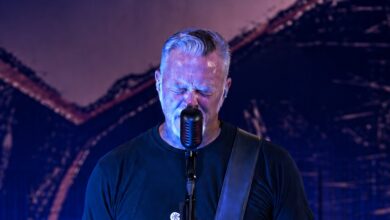
Metallica opened their Life Burns Faster residency at Las Vegas’s Sphere with “Battery,” giving a familiar thrash classic an extraordinary new setting. James Hetfield, Lars Ulrich, Kirk Hammett, and Robert Trujillo stepped into a venue where images can fill the space above and around the audience. The opening-night footage captures the appeal immediately: a band whose songs already carry enormous physical energy performing inside a room designed to make that energy feel larger.
“Battery” is a particularly revealing choice for an entrance. Its gentle acoustic introduction creates anticipation before the electric arrangement comes crashing through. That movement gives a concert an unmistakable starting point, allowing the audience to feel the change in pressure as the full band arrives. At Sphere, the song’s structure provides a natural foundation for a visual reveal, bringing the production and the music into the same dramatic conversation.
The opening also connects the residency to one of Metallica’s defining records. “Battery” begins Master of Puppets, the album that helped establish the band’s ambitious approach to thrash. Returning to that material in a new environment makes the choice feel purposeful. A song built around speed, precision, and momentum becomes the first statement of a production exploring how those qualities can occupy a room in different ways.
Hetfield’s role remains essential to that statement. His rhythm guitar gives Metallica’s music its firm center, while his voice and stage presence provide a direct connection with the crowd. The attraction of watching him in this setting lies in the relationship between a recognizable performer and an unfamiliar scale of presentation. The surrounding imagery changes what the audience sees, while the riffs give everyone something immediate and familiar to hold onto.
For viewers discovering the show online, the audience-filmed recording of “Battery” offers an early look at that encounter. It carries the perspective of someone inside the room, with the stage and production sharing the frame. That perspective is useful for understanding why Sphere footage attracts attention: the surroundings become part of the performance. The recording gives distant viewers a glimpse of the opening, even though a phone video can only suggest the experience of being there.
The evening’s visual ideas continued beyond the opening number. During “Now That We’re Dead,” the screen formed a towering gothic cathedral, with stained-glass imagery connected to individual band members. The setting gave the song a striking architectural frame. Its steady, forceful movement suited a scene that seemed to rise around the musicians, inviting the audience to read the room as part of the arrangement and follow the details within it.
“Wherever I May Roam” took another direction, placing the audience inside a simulated train journey past recognizable landmarks before arriving at Sphere. The idea fits a song so closely associated with movement and life on the road. It also shows how different pieces of Metallica’s catalogue can suggest different visual stories. The residency gives those stories enough space to develop around the audience while the band continues performing at their center.
There was also something for listeners following the setlist as closely as the screen. “…And Justice for All” returned to the concert repertoire after an absence stretching back to 2014. For longtime fans, hearing that title again adds a different kind of excitement to the opening-night conversation. Its presence gives the show a reason to matter beyond its new surroundings, rewarding attention to the music and the choices within the set.
“The Call of Ktulu,” dedicated to the late Cliff Burton, brought Metallica’s history into the evening in another way. An instrumental leaves room for listeners to follow the guitars, bass, and drums without a vocal directing the experience. Its place in the show gave the production an opportunity to work with atmosphere and musical development. The dedication also grounded the large-scale presentation in a personal connection that remains part of the band’s identity.
The first reactions reflected the scale of the occasion. Radio host Eddie Trunk described the opening by saying, “Epic would be an understatement.” Other attendees praised the visuals and celebrated the closing performance of “Master of Puppets.” Those responses help explain the footage’s immediate appeal: viewers are sharing individual moments from a concert with several different attractions. A familiar riff, an unexpected song, or an overwhelming image can each become someone’s reason to watch.
The residency builds on Metallica’s No Repeat Weekend format, with different songs across each paired Thursday and Saturday show. That gives a second night its own musical identity and makes the setlist an ongoing part of the conversation. The band had already used the approach on the M72 tour. Bringing it to Sphere connects an established concert idea with a venue that offers a different set of possibilities for presenting the catalogue.
There is a useful tension in that combination. Metallica’s songs depend on recognizable musical details: the attack of a rhythm guitar, the shape of a lead passage, the space before a change in tempo. A spectacular environment can draw attention to those details when it follows their movement. The opening-night clips invite viewers to consider that relationship, watching how a production built on enormous images interacts with music whose impact starts in four musicians playing together.
Metallica’s “Master of Puppets” performance at Lollapalooza in Chicago offers a rewarding companion to the Sphere opening. In the band’s official concert video, the song unfolds across a festival stage, giving its riffs and extended arrangement room to build in front of a large outdoor audience. Watching it alongside “Battery” brings two songs from the same album into different settings. It is a useful reminder of how much dramatic movement already exists inside the music.
For another side of Metallica’s ability to change the scale of a song, their “Nothing Else Matters” performance with the San Francisco Symphony from S&M2 is worth revisiting. Recorded as part of the concerts at Chase Center, it places the familiar melody inside an orchestral arrangement. The additional instruments open up the song’s quieter passages and broad emotional sweep. Beside the Sphere footage, it offers another example of the band giving its catalogue a fresh concert setting.
The strongest invitation in Metallica’s Sphere debut is to follow the songs through that new setting. “Battery” supplies an immediate entrance, while the rest of the evening moves through spectacle, rarer material, and connections to the band’s past. The clips are already giving fans plenty to discuss and revisit. For anyone curious about how a long-established metal band approaches a room built around immersive presentation, this opening provides a compelling place to begin.