When “War Pigs” Took Over the Grammys — And Why Fans Now See a Super Bowl Halftime Moment in the Making
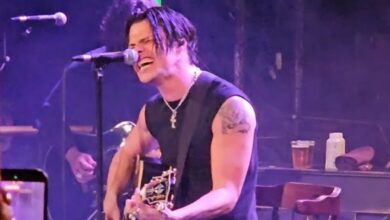
The 2026 Grammys didn’t just nod respectfully at heavy metal history; it let metal walk straight into the center of the room and speak at full volume. During the In Memoriam segment at Crypto.com Arena in Los Angeles, a rotating cast of stars—Post Malone out front, with Slash, Duff McKagan, Chad Smith, and Andrew Watt locking in behind him—tore into Black Sabbath’s “War Pigs” as a tribute to Ozzy Osbourne. It was loud, confrontational, and intentionally uncomfortable in the best way, the kind of song choice that refuses to become background music. For an awards show built on polish, “War Pigs” arrived like a weather system: fire, smoke, riff, and warning siren.
What made the moment instantly feel larger than a one-off performance was how many musical worlds collided without turning into a gimmick. Post Malone has always worn his rock and metal fandom openly, but here he wasn’t visiting the genre—he was carrying the message, letting the lyrics do the heavy lifting. Slash’s guitar tone brought that unmistakable arena bite, while Duff and Chad anchored the whole thing with a veteran confidence that kept it from tipping into chaos. Andrew Watt stitched the pieces together so the performance sounded like a real band, not a collection of famous names.
The emotional core of the performance was sitting just offstage. Ozzy Osbourne’s family—Sharon, Kelly, and Jack—watched from the audience, and their reactions carried the weight of a loss that still felt raw. This wasn’t nostalgia for a legend long removed from the spotlight; it was a public farewell to someone whose presence had never really faded. “War Pigs,” already an indictment of power and hypocrisy, became something more intimate in that moment: a song that allowed grief, anger, and pride to exist in the same space without softening any of them.
The Grammys have historically struggled with how to handle rock and metal, often treating them like side attractions rather than cultural pillars. That’s why this choice mattered. “War Pigs” is not a polite tribute song. It’s slow, heavy, and accusatory, with lyrics that still feel uncomfortably relevant decades after they were written. Choosing it signaled that Ozzy’s legacy isn’t just about shock value or wild stories—it’s about music that challenged authority and reshaped what mainstream sound could tolerate.
Musically, the performance understood restraint. The band let the song breathe, leaning into its ominous pacing rather than rushing toward big moments. The riff landed with weight, the drums marched instead of sprinted, and the vocals focused on emphasis rather than imitation. Post Malone didn’t try to sound like Ozzy; he treated the lyrics seriously, letting their meaning come through. That decision alone separated the tribute from countless covers that miss the point by chasing surface-level accuracy.
Visually, the staging reinforced the gravity. Flames, dark lighting, and a sense of scale framed the song as something monumental rather than nostalgic. It matched the mythology Black Sabbath created decades ago—music that feels dangerous, theatrical, and larger than life. Nothing about the presentation tried to make metal more “palatable.” Instead, it trusted the audience to meet the performance where it was, and that confidence paid off.
Almost immediately after the broadcast, conversation shifted from what had just happened to what could happen next. Viewers began floating the idea that this tribute felt like the opening chapter of something bigger—specifically, a Super Bowl halftime show. The reasoning was simple: the performance already had the bones of a halftime moment. Recognizable stars, a song that announces itself within seconds, and staging that could easily scale to a stadium. More importantly, it carried emotional momentum, the kind that leaves people wanting a continuation rather than closure.
That reaction speaks to a broader shift in how audiences respond to live music moments. The most talked-about performances today aren’t always the slickest; they’re the ones that feel committed. This tribute didn’t wink at the crowd or apologize for being heavy. It let the song be exactly what it has always been. In an era where many televised performances feel engineered down to the second, that sense of authenticity stood out sharply.
“War Pigs” has endured because it was never tied to a single moment in time. When it first appeared in 1970, it was a blunt response to war, power, and moral hypocrisy. Musically, it rejected speed in favor of menace, building tension slowly before unleashing it. That structure makes it endlessly reusable in moments of reflection or unrest. It doesn’t comfort the listener; it confronts them. That quality is exactly why it still resonates on modern stages, from arenas to award shows.
What separated the Grammys rendition from a standard cover was its refusal to modernize the song unnecessarily. There were no pop flourishes, no attempts to smooth the edges. Slash’s guitar added a sharper, more aggressive texture than the original Sabbath sound, but the core remained intact. The performance treated the song as a warning, not a throwback. That approach kept it from feeling like nostalgia and instead positioned it as something still alive and relevant.
Looking back at early live versions of “War Pigs” reveals how much of its power comes from feel rather than perfection. The song lurches, swells, and breathes in ways that make it feel unstable, almost threatening. That instability is part of its message. The Grammys performance captured that spirit by allowing roughness and weight to remain. It didn’t chase technical cleanliness at the expense of atmosphere, and that decision made it feel authentic.
Later-era performances of the song carry a different energy—one shaped by legacy. As the years passed, “War Pigs” became less of a provocation and more of a communal ritual, with crowds chanting along in shared recognition. That ritual quality hovered over the Grammys tribute as well. Even in a room not known for metal devotion, the performance created a sense of collective attention, a brief suspension of everything else happening on the broadcast.
The idea of expanding this tribute into a Super Bowl halftime show also makes sense from a generational perspective. Post Malone represents a modern audience that moves fluidly between genres, while Slash and Duff embody the lineage of rock superstardom that followed Sabbath’s blueprint. Chad Smith brings rhythmic authority that reads instantly in a stadium, and Andrew Watt bridges classic rock credibility with contemporary production instincts. Together, they form a lineup that could speak to multiple audiences at once without diluting the music.
More than anything, the performance worked because it treated Ozzy Osbourne’s legacy as living culture rather than a museum exhibit. “War Pigs” wasn’t softened, shortened, or reframed to fit a safer narrative. It was allowed to be dark, confrontational, and powerful. That honesty is what sparked the imagination of viewers who saw more than a tribute—they saw the possibility of a rare thing in modern television: a rock performance big enough, serious enough, and meaningful enough to command the world’s largest stage without compromise.