The Night the Grammys Went Heavy: “War Pigs” as a Real Goodbye, Not a Polite Segment
In a show built on tight cues, quick smiles, and shiny acceptance speeches, the Ozzy moment arrived like a sudden weather change—thicker air, darker lighting, and a collective pause you could practically hear. The tribute unfolded during the In Memoriam portion of the 2026 Grammys, when the ceremony stops selling celebration and starts confronting absence. Instead of choosing something soft, the producers went for impact: Black Sabbath’s “War Pigs,” a song that doesn’t comfort so much as confront. That decision alone made the performance feel less like a TV memorial and more like a real-world sendoff, built for volume and truth rather than easy sentiment.
The stage reset carried the kind of tension you usually associate with a headliner set, not an awards-show interlude. Screens, lighting, and camera framing hinted that this wasn’t going to be a quick nod before moving on. The In Memoriam section can sometimes blur into montage and soft-focus emotion, but this one had a different posture—more like the show was making room for rock’s language of grief, which is often loud, defiant, and proudly unpolished. It didn’t feel like the Grammys trying to “do metal.” It felt like the Grammys acknowledging that some legacies can’t be honored in whispers, because they were never built that way in the first place.
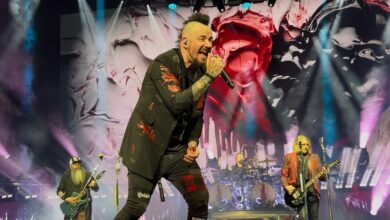
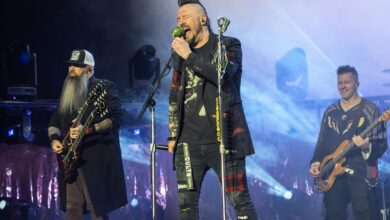
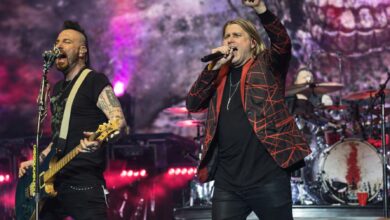
Then the lineup snapped the room into focus. Post Malone fronting the tribute wasn’t just a flashy booking—it was a statement about reach, about how Ozzy’s shadow stretches across genres and generations. Backing him were players whose names alone carry a lifetime of arena noise: Slash, Duff McKagan, Andrew Watt, and Chad Smith. It read like a deliberate collision of worlds—modern stardom meeting classic rock muscle—built to make the tribute feel alive rather than archival.
The moment they launched into “War Pigs,” the performance made its first promise and kept it: this would not be a sanitized, TV-friendly “greatest hits” skim. The riff landed with the blunt force the song requires, and the arrangement stayed focused—tight enough for broadcast pacing, but heavy enough to feel like it belonged in an arena, not a soundstage. That balance is harder than it looks. Go too polished and the song loses teeth. Go too chaotic and it starts to feel like a messy jam. This performance threaded the needle by treating the track as living music, not a museum plaque—something you play because it still says something, not because it once did.
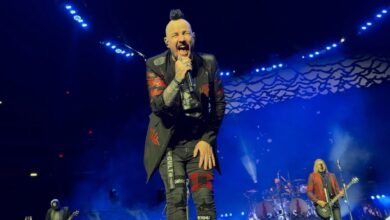
Visually, the tribute leaned into fire and scale, and it didn’t come off like generic awards-show flash. It felt like symbolism chosen for a man whose career lived in theatrics, danger, and the thrill of making conservative rooms uncomfortable. Flames and heat behind the players weren’t there to decorate the segment; they amplified the idea that this was a farewell delivered in the language Ozzy’s world understands: loud, dramatic, and unapologetically big. In a ceremony that often aims for “nice,” the tribute chose “powerful.” It didn’t ask the music to behave, and that choice made the whole moment feel more respectful, not less.
Vocally, the smartest move was what didn’t happen: there was no impersonation. Post didn’t try to sound like Ozzy Osbourne, and that’s why it worked. Tribute performances collapse when the singer treats the original as a costume. Here, the approach was grit and conviction—more “I’m carrying this moment” than “I’m recreating a recording.” “War Pigs” needs belief more than perfection; it’s a protest anthem disguised as a riff monster, and the vocal has to sound like it’s coming from a place of urgency. The performance hit because it sounded committed, not cute.
On guitar, Slash provided the kind of authority that instantly shifts a room’s energy. His tone is its own signature—recognizable in a second—and it gave the tribute a spine. The riffs stayed thick and menacing, but the details kept it from turning into a blunt object: bends that screamed without drifting, sustained notes that felt like alarms, and that sense of control that still leaves a little danger at the edges. In these “all-star” situations, it’s easy for players to sound like they’re taking turns. Here, the guitar sounded like it was speaking for the song, and the song sounded like it was speaking for the legacy.
Post Malone tribute to Ozzy Osbourne at the Grammys. pic.twitter.com/UvlIeZh5YN
— Junior (@RIDDICK325) February 2, 2026
The bass-and-drums foundation did the invisible work that separates a real performance from a famous-photo moment. Duff’s bass anchored the track with low-end inevitability—the march underneath the riff that keeps the whole thing from floating away. Chad Smith’s drumming brought force without sloppiness, driving the groove forward with the kind of punch that reads “live” even through a TV mix. That tightness mattered because it made the group feel like a band, not a lineup. And when a tribute feels like a band, the emotion lands harder, because the audience stops watching “names” and starts feeling music.
Sharon and Kelly Osbourne tear up as Post Malone and Slash honor Ozzy Osbourne at the 2026 #Grammys. ❤️🩹 pic.twitter.com/AvUzLDVeG2
— Elite Daily (@EliteDaily) February 2, 2026
Andrew Watt’s role added a different layer—less obvious to casual viewers, but huge in terms of meaning. He’s closely tied to Ozzy’s later-career studio world, which makes his presence feel personal rather than ceremonial. That kind of connection changes the temperature of a tribute. Instead of sounding like a committee-approved selection of stars, the performance reads like peers showing up for someone they actually knew, someone whose work they touched in real rooms, not just in headlines. That intimacy is one reason the segment felt grounded: it wasn’t only honoring myth; it was honoring a person whose influence still moved through modern sessions and modern careers.
The emotional center arrived in the reaction shots—because grief, when it’s real, doesn’t look like awards-show drama. Sharon Osbourne, Kelly Osbourne, and Jack Osbourne were shown in the audience visibly moved. Those moments didn’t feel like the cameras hunting for content; they felt like the cameras acknowledging reality. When the person being honored is someone you lived with, worried about, laughed with, and lost, every cheer is complicated. Pride and pain share the same space, and the tribute became heavier because the room could see that weight in real time.
That contrast is what made the performance special: “War Pigs” is a confrontational song, but the context turned it into something tender without softening its bite. It’s one thing to play a classic; it’s another to make it sound like it still matters right now, in this room, with this family watching. The tribute didn’t try to reframe the track as a gentle lullaby for television. It let the song remain sharp—because that sharpness is part of Ozzy’s musical DNA. The Grammys didn’t ask heavy music to become something else for primetime. It let heavy music be heavy, and that’s why it felt like respect.
The pacing also helped. In Memoriam segments are usually designed to keep moving, and yet this tribute didn’t feel rushed. Not because it was long, but because it was focused. It didn’t wander into extended showboating; it delivered the core impact and moved on, which made it hit harder rather than lighter. That discipline gave the performance a sense of purpose: not “look how many stars we can fit onstage,” but “this is the statement we’re making.” When tributes become medleys, they can feel like summaries. This felt like a single, clear sentence spoken at stadium volume.
There’s also a bigger cultural reason the tribute landed: it showed how Ozzy’s influence lives outside strict genre boundaries. Putting Post Malone at the center wasn’t a random crossover—it was a signal that the legacy isn’t locked in a metal-only room. Ozzy’s presence in pop culture has always been unusually broad, and this performance put that truth on a live stage: a modern megastar channeling a foundational heavy anthem, surrounded by rock lifers, in front of a mainstream audience. It functioned as both tribute and bridge—one of those moments that sends younger viewers backward into the catalog and older viewers forward into the new generation.
And “War Pigs” was the perfect vehicle because it isn’t just famous; it’s meaningful. Even people who only know the opening riff can feel the song’s moral weight—its anger at power, its refusal to romanticize violence. In a memorial context, that message becomes even more potent, because it reminds the audience that Ozzy’s legacy isn’t only an icon image or a wild headline. It’s music that said something, music that shaped how heaviness could carry ideas. The tribute didn’t just celebrate a voice. It celebrated an attitude: confront the world, don’t prettify it, and if you’re going to go out, go out loud.
By the time the last hit landed and the cameras pulled back, the tribute had achieved what most award-show rock moments struggle to do: it felt like a real performance first, and a televised segment second. That’s why people will replay it. Not just because the lineup was stacked, but because the emotion wasn’t manufactured and the intensity wasn’t diluted. It sounded like musicians listening to each other, locking in, and letting the grief exist without explaining it. Loud enough to feel true. Tight enough to feel earned. Human enough to hurt in the way that makes a tribute matter.