Yungblud Delivers A Raw And Emotional “Zombie” At Circuit Kingston Late Show On April 4, 2026
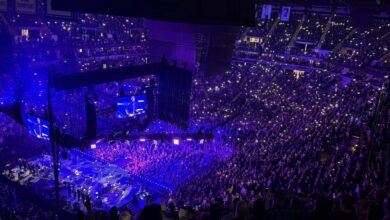
The late show at Circuit Kingston on April 4, 2026, became one of those rare nights that seemed to stretch beyond the limits of a typical concert. Yungblud walked on stage with a restless intensity that immediately separated this set from the earlier performance that evening. The room felt tighter, heavier, as if the crowd instinctively knew they were about to experience something more than just another stop on a tour. There was no rush, no over-the-top entrance—just a slow burn of anticipation that settled into the venue before a single note was played.
From the opening moments, the atmosphere leaned into something far more emotional than explosive. The audience, already energized from the earlier show, shifted into a quieter, more focused presence. Instead of shouting and pushing forward, many stood still, watching closely, almost studying every movement. Yungblud responded to that energy immediately, holding back just enough to let the tension build, letting silence become part of the performance rather than something to be filled.
“Zombie,” a song already known for its raw emotional weight, took on an entirely different identity in this setting. Rather than delivering it with polished precision, he leaned into imperfection. His voice cracked in places, stretched thin in others, and instead of correcting those moments, he embraced them. Each lyric felt less like something memorized and more like something being discovered in real time, giving the performance a sense of urgency that no studio recording could replicate.
The pacing of the song played a major role in shaping its impact. Instead of following the expected structure, he slowed certain sections down, allowing lines to linger longer than usual. This created a feeling of suspension, as if time itself had stretched within the room. The instrumentation followed his lead, staying minimal when needed and gradually expanding only when the emotion demanded it, never overwhelming the vocal delivery.
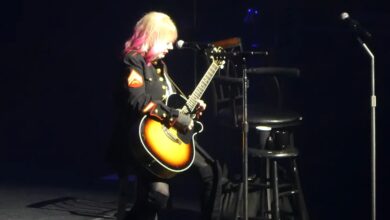
Visually, the stage design reinforced the intimacy of the moment. The lighting remained subdued, avoiding dramatic flashes or high-energy color changes. Instead, soft shadows and dim tones wrapped around the stage, isolating Yungblud in a way that made the performance feel almost private despite the packed venue. It created the illusion that the audience was witnessing something personal rather than something staged.
The crowd’s reaction became one of the most defining elements of the night. Rather than the usual chaos associated with his shows, there was a shared restraint, an understanding that this was a moment to absorb rather than dominate. Some fans sang along quietly, others simply watched, visibly moved. The connection between artist and audience felt unusually direct, as if every person in the room was part of the same emotional current.
As the performance progressed, the intensity began to rise in subtle but powerful ways. Yungblud’s movements grew more restless, more unpredictable. He stepped away from the microphone at times, letting the music carry itself, then returned with renewed force, delivering lines with a sharp, almost desperate energy. This push and pull created a rhythm that went beyond the structure of the song, turning it into something alive and constantly shifting.
Instead of building toward a massive, explosive finale, the performance chose a different path. Just as the energy seemed ready to peak, everything was stripped back once again. The final moments felt fragile, almost unfinished, as if the song had been left open rather than closed. That choice gave the ending a lingering effect, leaving the audience in silence for a few seconds before the inevitable applause broke through.
Compared to the studio version, this live interpretation revealed a completely different side of the song. The original recording, while powerful, carries a level of control and balance that naturally comes with production. Every element is placed carefully, every sound refined. In contrast, the Circuit Kingston performance felt unpredictable, shaped by emotion rather than structure, and that unpredictability became its greatest strength.
Looking at other live renditions of “Zombie,” it becomes clear that the song has evolved alongside Yungblud himself. Earlier performances often leaned into high energy and crowd interaction, turning the track into a more explosive experience. This version, however, moved in the opposite direction, pulling everything inward and focusing on vulnerability rather than volume.
The timing of this performance within the tour also played a crucial role. By this point, Yungblud had spent weeks on stage, refining his set and experimenting with different approaches. That experience gave him the confidence to step away from expectations and reshape the song in a way that felt honest in the moment, rather than relying on what had worked before.
The emotional impact of the night didn’t stay confined to the venue. Almost immediately, fans began sharing their reactions, describing the performance as one of the most genuine and affecting moments they had witnessed. The absence of spectacle became a talking point, with many noting how refreshing it was to see a performance driven purely by emotion rather than production.
There was also a noticeable shift in how the audience viewed the song afterward. What had once been seen primarily as a powerful track became something more layered, more personal. The live version revealed nuances that weren’t as apparent in the studio recording, giving listeners a deeper understanding of its emotional core.
In the broader scope of Yungblud’s career, this performance felt like a turning point. It suggested a growing willingness to take risks on stage, to prioritize authenticity over perfection. That shift not only changes how songs are performed, but also how they are experienced by those watching.
Ultimately, the late show at Circuit Kingston wasn’t defined by volume, spectacle, or technical perfection. It was defined by its honesty. “Zombie” became more than just a song—it became a moment that unfolded differently for everyone in the room, leaving behind an impression that extended far beyond the final note.